
How to Identify the Chinese Empire Silver Dollar (Hsuan Tung Dragon)
A late Qing dynasty dollar issued under the Hsuan Tung reign, identified by its elaborate coiled dragon reverse and bilingual Chinese/English inscriptions.
Read the full Chinese Empire Silver Dollar (Hsuan Tung Dragon) encyclopedia entry →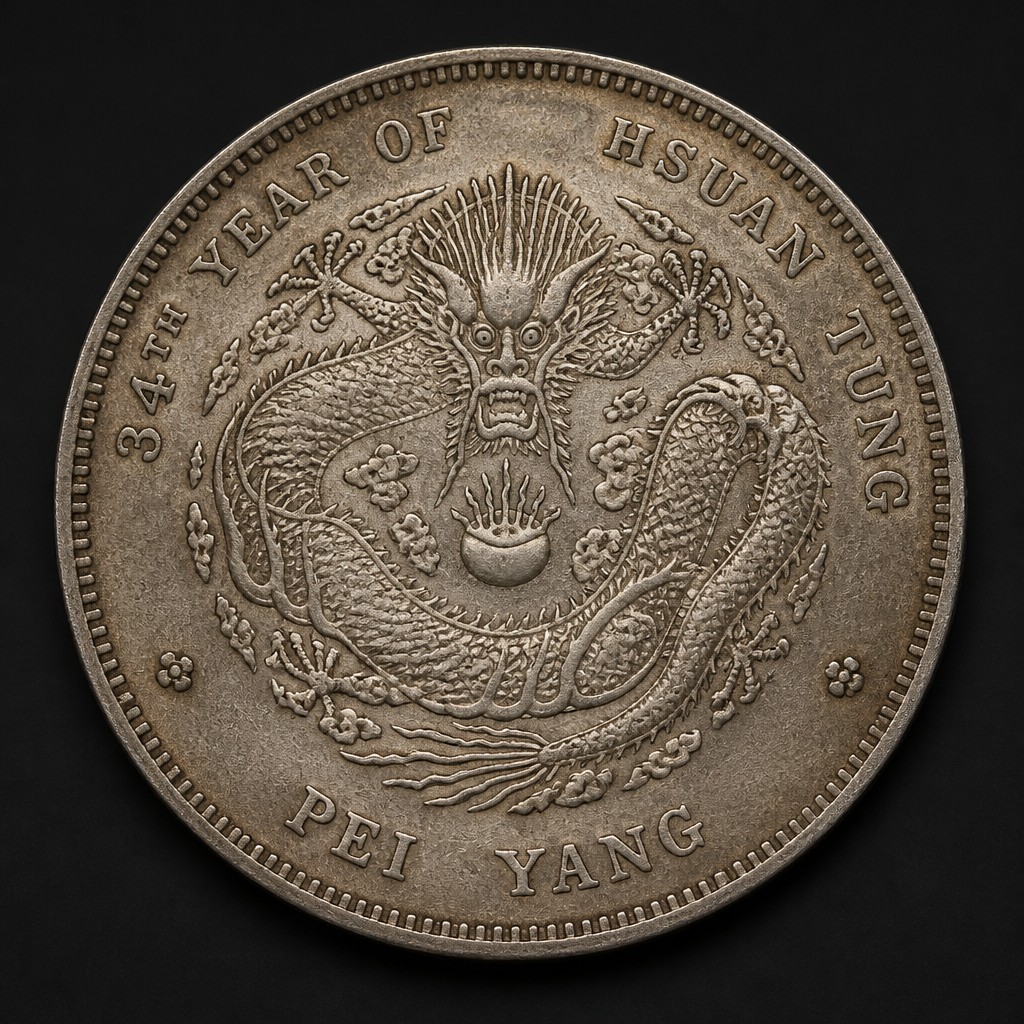
What It Is
This silver dollar was issued in the final years of the Qing dynasty, during the reign era known as Hsuan Tung (the reign name of the last emperor, Puyi), shortly before the dynasty's fall and the founding of the Republic of China. It represents one of the last imperial coinages of China.
Obverse Design
The obverse is dominated by Chinese script rather than a portrait. Central characters identify the coin as a "Great Qing" silver coin, with surrounding text naming the Hsuan Tung reign period. There is no Western-style numeral date; the reign name itself indicates the era of issue.
Reverse Design
The reverse features an elaborate coiled dragon, shown in strong relief with detailed scales, whiskers, and claws, encircling a pearl or flaming pearl motif. An English-language legend runs around the border identifying the piece as a silver coin of the Chinese empire. Several dragon-style varieties exist, differing in the dragon's tail and whisker details, which collectors use to classify subtypes.
Size, Weight, and Metal
The coin is silver, generally weighing close to 26.7 to 27 grams with a diameter near 39 millimeters, though fineness and exact specifications vary slightly by mint and variety. The edge is typically reeded.
Mint Marks and Varieties
Because several regional mints produced dragon dollars under the same reign name, subtle differences in dragon design, lettering style, and border details distinguish one mint's output from another. Careful side-by-side comparison of the dragon's tail curl and whisker count is the most reliable way to sort varieties.
Telling It Apart from Similar Coins
This coin is easily confused with other Chinese dragon dollars from earlier reigns (such as those naming a different reign era on the obverse). The key identifier is the specific reign-name characters on the obverse — always confirm the reign text rather than relying on the dragon design alone, since dragon styles were reused and revived across different periods.
Judging Condition
High-grade pieces show crisp dragon scales and sharp, fully formed Chinese characters with no flat or mushy areas. Wear first shows on the dragon's raised back and the high points of the Chinese characters. Cleaned or polished coins lose the coin's natural luster and show hairline scratches under angled light.
Authenticity Red Flags
Chinese dragon dollars, including Hsuan Tung issues, are among the most heavily counterfeited coins in the world, from both older "tourist" fakes and modern deceptive replicas. Warning signs include incorrect weight, a dragon design that looks slightly "off" compared to reference examples, blurry or uneven Chinese characters, a dull or artificially shiny surface, and edge reeding that looks too uniform or machine-perfect compared to period-correct examples. Given the counterfeiting risk, professional grading or expert comparison is strongly advised before assuming a piece is genuine.
Frequently asked questions
How can I tell this coin apart from other Chinese dragon dollars?
Read the reign-name characters on the obverse. The Hsuan Tung issue names that specific reign era rather than an earlier emperor's reign, which is the most reliable distinguishing feature.
Why is there no Western date on the coin?
Qing dynasty coins used the reigning emperor's era name instead of a numeric calendar year, so the coin is dated by reign period rather than a specific number.
Are Hsuan Tung dragon dollars commonly faked?
Yes, Chinese dragon dollars overall are among the most frequently counterfeited world coins, so weight, dragon detail, and surface texture should all be checked carefully.
What do the different dragon tail styles mean?
Variations in the dragon's tail and whiskers reflect different die varieties or mint sources used during the same reign, and collectors use these details to classify specific types.