
How to Identify the Chinese Dragon Dollar
A general term for late Qing dynasty silver dollar-sized coins struck by various Chinese provincial mints, easily recognized by the coiled or striding dragon on the reverse.
Read the full Chinese Dragon Dollar encyclopedia entry →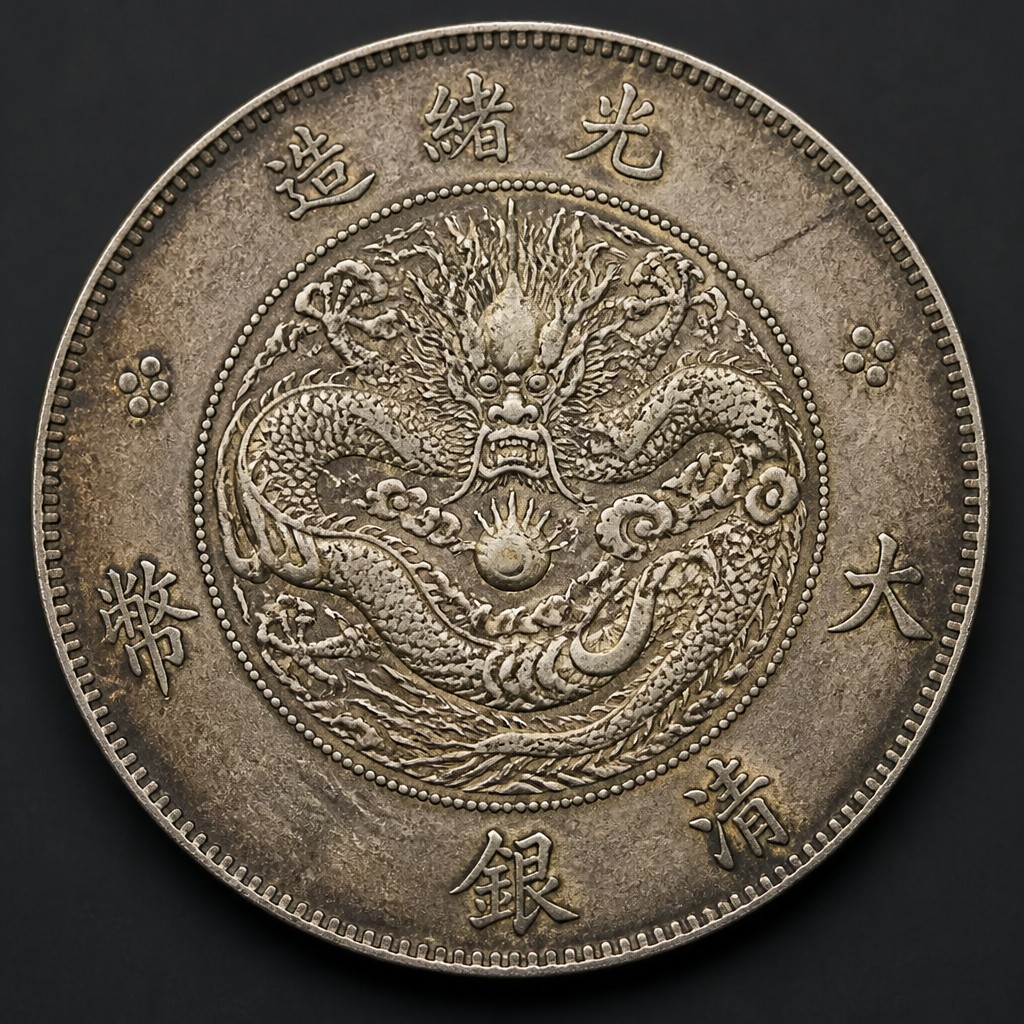
What the Coin Is
During the final decades of the Qing dynasty, from the 1890s until the fall of the empire in 1911, numerous provincial mints across China began striking Western-style silver dollar coins to modernize the currency system and compete with foreign trade dollars already circulating in Chinese commerce. These coins are broadly known as "dragon dollars" for their common reverse motif.
Obverse Design & Inscriptions
The obverse typically features Chinese characters identifying the era name and the issuing authority, often referencing the reigning emperor, such as Guangxu or Xuantong, along with the province name where applicable. Some issues also include Manchu script in the center and an English-language legend around the rim naming the province and denomination.
Reverse Design & Inscriptions
The reverse shows a dragon, either coiled or striding depending on the specific mint and period, surrounded by an English-language legend restating the province name and the coin's value, typically expressed as "7 MACE AND 2 CANDAREENS," the traditional Chinese weight units equivalent to a standard silver dollar.
Size, Weight, Metal & Edge
These coins generally measure about 39mm in diameter and weigh approximately 26.7 to 27.2 grams, with silver fineness varying by mint and period, commonly in the range of roughly .82 to .90 fine. Edges are typically reeded, matching the Western dollar coins these pieces were designed to compete with.
Mint Marks & Where to Find Them
Rather than a small mint mark letter, Chinese dragon dollars identify their origin through the full province name spelled out in both Chinese characters and English around the coin's border, such as Kwangtung, Hupeh, or Fengtien, making the mint of origin one of the most visible design elements.
Telling It Apart From Similar Coins
Differences in dragon style, border decoration, and the exact wording of the English legend help distinguish coins from different provinces and years. Compare the dragon's pose, scale detail, and surrounding cloud or flame motifs carefully, since design variations were common even within the same province over time.
Judging Condition at a Glance
Examine the dragon's scales and whiskers, along with the central Chinese characters, for smoothing or loss of detail from circulation. A well-struck, lightly worn example shows individual scales clearly defined and crisp, legible lettering around the border.
Authenticity Red Flags
Dragon dollars are among the most heavily counterfeited historical coins, both as contemporary counterfeits made during the Qing era and as later reproductions and cast fakes sold to collectors. Check for a proper reeded edge, a ringing sound consistent with genuine silver when the coin is gently tapped, and sharp, well-defined dragon scales rather than a soft, blurred design, and be wary of visible casting seams or a porous surface texture.
Frequently asked questions
Why is it called a 'dragon dollar'?
The reverse of these Qing dynasty silver dollars typically features a dragon design, giving rise to the popular collector nickname.
How do I know which province minted a given coin?
The province name is spelled out in both Chinese characters and English around the coin's border, serving as the main identifier of its mint of origin.
What does '7 MACE AND 2 CANDAREENS' mean?
It is a traditional Chinese weight measurement roughly equivalent to a standard silver dollar's weight, commonly inscribed on these coins alongside the denomination.
Are dragon dollars commonly counterfeited?
Yes, they are among the most frequently faked historical coins, including cast reproductions, so checking edge quality, weight, and design sharpness is important.