
How to Identify the Chinese Cash Coin (Qing Dynasty 'Kangxi Tongbao')
A round cast bronze coin with a square center hole from the Qing dynasty, identified by the four Chinese characters 'Kangxi Tongbao' read top-bottom-right-left around the hole.
Read the full Chinese Cash Coin (Qing Dynasty 'Kangxi Tongbao') encyclopedia entry →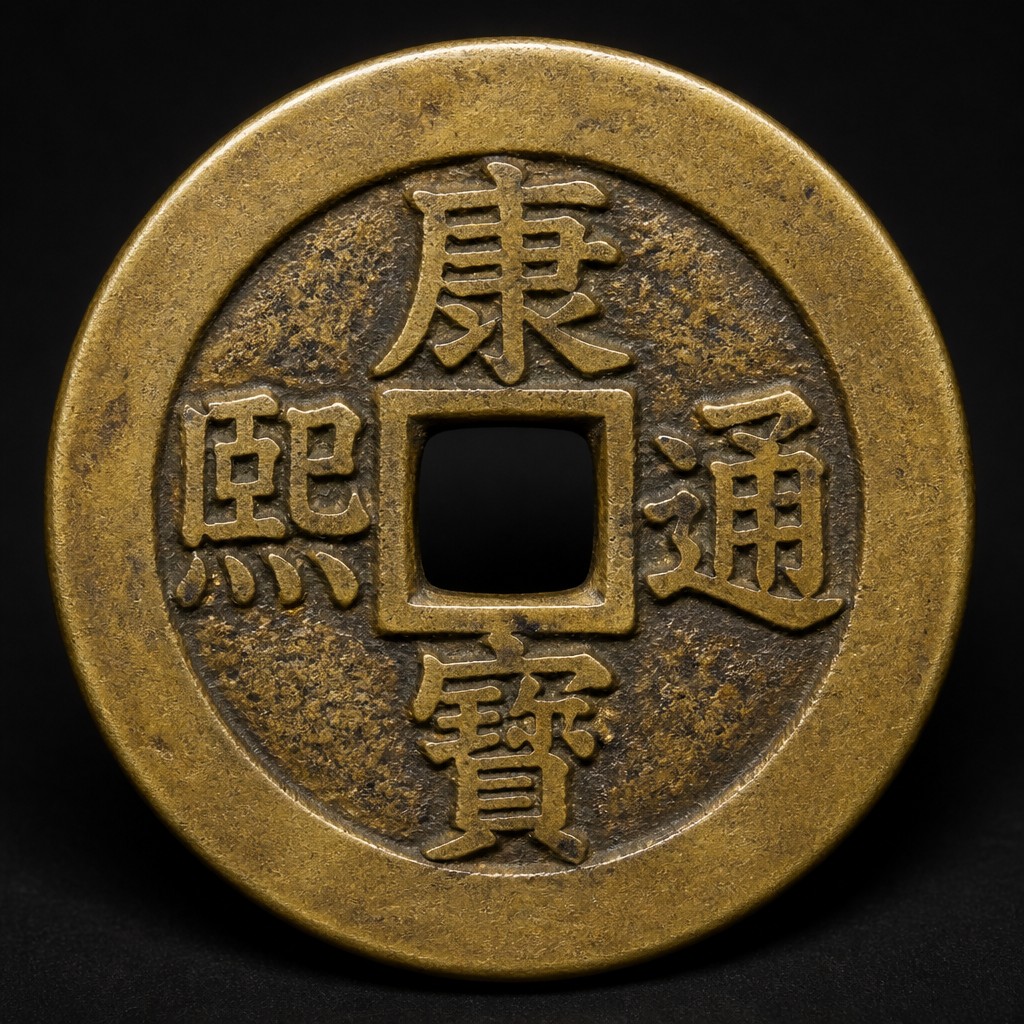
What This Coin Is
The Kangxi Tongbao cash coin was cast during the reign of the Kangxi Emperor, one of the longest and most stable reigns of China's Qing dynasty, spanning the late seventeenth into the early eighteenth century. Cash coins of this general round-with-square-hole design had been used in China for many centuries, and Kangxi-era pieces are among the most commonly encountered historical Chinese coins today due to the long reign and widespread production.
Obverse Design
The obverse carries four Chinese characters arranged around the central square hole, read in the traditional top-bottom-right-left order: "Kang Xi Tong Bao" (康熙通寶), meaning roughly "circulating treasure of the Kangxi era." The calligraphy style of these characters can vary somewhat between different casting locations.
Reverse Design
The reverse is typically plain or carries one or two small characters, often in Manchu script (the language of the ruling Qing dynasty), positioned to the left and right of the square hole, identifying the specific provincial mint that cast the coin.
Size, Weight, Metal, and Edge
Kangxi cash coins are cast in bronze or brass, are relatively thin and lightweight compared to modern coinage, and have a plain, unmilled edge consistent with the traditional Chinese casting method used for cash coins over many centuries.
Mint Marks and Where to Find Them
The Manchu characters on the reverse function as the mint identifier, denoting the specific provincial mint (such as those known by Manchu names like Boo-Chiowan or Boo-Yuwan) responsible for casting that particular coin; comparing these small reverse characters against a reference chart is the standard way to identify the exact mint.
Telling It Apart from Similar Coins
Kangxi Tongbao coins are easily confused with cash coins from other Qing emperors' reigns (such as Shunzhi, Yongzheng, or Qianlong), which share the same general round-with-square-hole format but carry different reign-name characters on the obverse. Careful reading of the four obverse characters is the reliable way to identify the specific reign.
Grading at a Glance
Because these coins were cast rather than struck, even high-grade examples show the somewhat soft, rounded character edges typical of casting rather than the crisp lines of a struck coin; grading instead focuses on how clear and legible the characters remain, the coin's overall surface condition, and whether the square hole and rim are intact and well-formed.
Authenticity Red Flags
Given how commonly these coins were produced and how many genuine examples survive, most are inexpensive, but modern reproductions and later-cast "fantasy" pieces exist; warning signs include characters that look too crisp or stylistically modern for a traditional cast coin, an unnaturally smooth or shiny surface lacking honest handling wear, and incorrect Manchu reverse characters that don't match any known genuine mint combination.
Frequently asked questions
How do I read the characters on the coin?
The four obverse characters are read in the order top, bottom, right, then left around the square hole, spelling out the reign name and 'Tongbao' (circulating treasure).
What are the characters on the back for?
Small Manchu-script characters on the reverse identify the specific provincial mint that cast the coin.
Why does the coin have a square hole?
The square hole is a traditional feature of Chinese cash coins for many centuries, originally used to string coins together on a cord for handling and counting.
Are Kangxi cash coins rare?
No, because Kangxi's reign was very long and mints were widespread, these coins survive in large numbers and are generally common and affordable.