
How to Identify the Chinese Auto Dollar (Kweichow, 1928)
A Republic-era Kweichow province silver dollar famous for depicting an automobile, one of very few world coins with a motor vehicle design.
Read the full Chinese Auto Dollar (Kweichow, 1928) encyclopedia entry →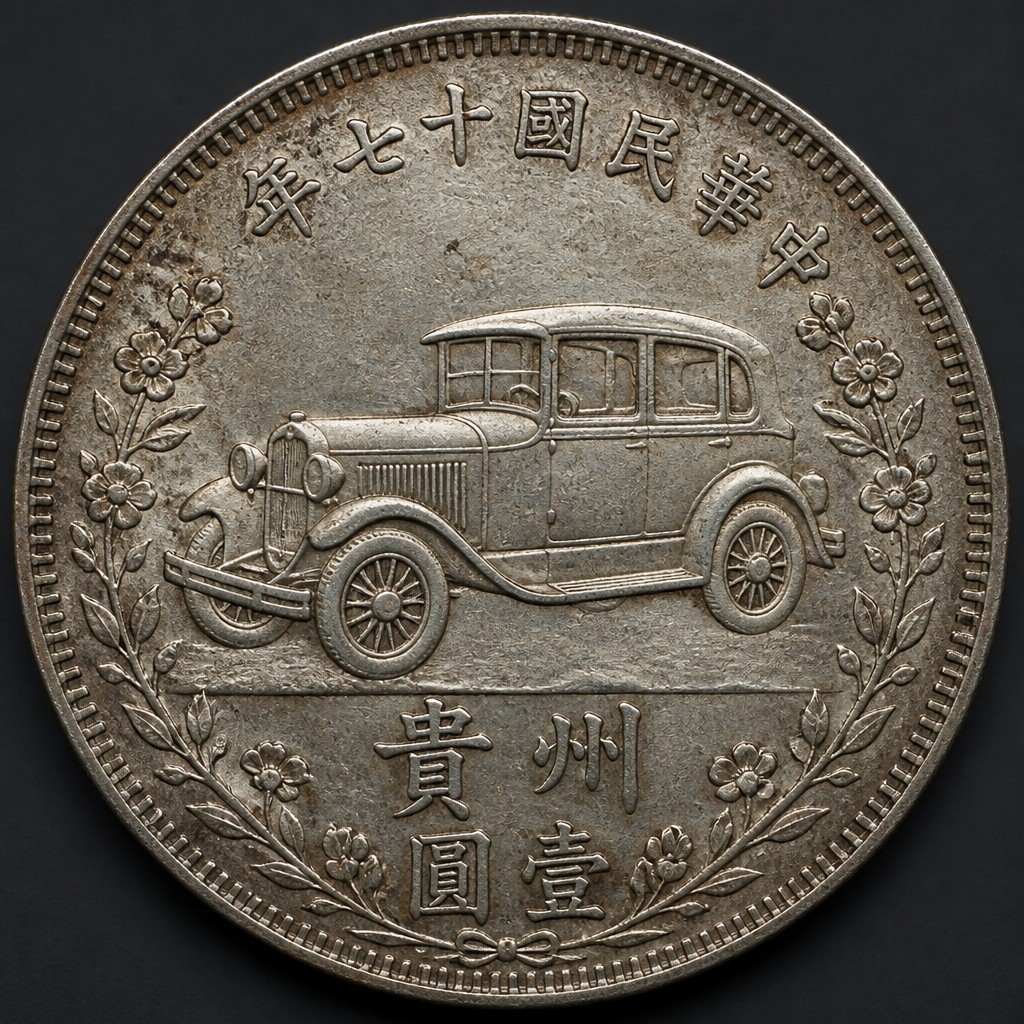
What It Is
This silver dollar was issued by Kweichow (Guizhou) province during the Republic of China era, dated to the 17th year of the Republic (1928). It is famous among collectors as one of very few coins in the world to feature an automobile, and genuine examples are considered scarce. Kweichow was a remote, mountainous province, and the coin's imagery is generally understood to celebrate a newly completed motor road, an unusual and forward-looking subject for a provincial silver dollar of that era.
Obverse Design & Inscriptions
The obverse shows an open touring automobile facing left, with a sun rising over mountains in the background. Chinese characters around the border read "Made in Kweichow Province" and give the Republic year, "17th Year of the Republic of China."
Reverse Design & Inscriptions
The reverse displays two crossed flags tied with a ribbon (the Republic's five-bar flag and the party flag) above the Chinese denomination for "one dollar," flanked by floral sprays.
Size, Weight, Metal & Edge
It is a silver dollar roughly 39mm in diameter, weighing approximately 26.6-26.8 grams. Fineness is generally reported lower than many other Chinese silver dollars of the period, commonly cited around .750. The edge is reeded.
Mint Marks & Where to Find Them
There is no discrete mint-mark letter; the issuing province is named directly in the obverse legend. Because the type was produced only briefly, there is little variation in the basic design between examples, so authentication generally focuses more on overall weight, diameter, and strike quality than on hunting for subtle die differences.
Telling It Apart from Similar Coins
The automobile motif is unique to this issue and cannot be confused with dragon dollars or standard Sun Yat-sen dollars. When comparing examples, check that the car's body style, wheel placement, and the mountain-and-sun background match the proportions seen on documented genuine dies.
Judging Condition at a Glance
Examine the roofline and wheels of the car and the sun rays over the mountains for wear or weak striking, which can occur even on genuine pieces due to die wear during the original minting. On the reverse, look at the crossed flags and the ribbon knot tying them together, since these raised elements typically show the first visible signs of circulation.
Authenticity Red Flags
This is one of the most heavily counterfeited Chinese coins because of its rarity and strong collector demand. Check that weight and diameter match known standards, and examine whether design details look sharp and naturally struck rather than soft or mushy. Given how widespread reproductions of this type are, careful comparison against verified genuine examples or professional evaluation is strongly advisable before treating a piece as authentic.
Frequently asked questions
Why does this coin show an automobile?
The design commemorates a road built in Kweichow province around that time; the automobile motif makes this one of the most distinctive designs among Republic-era Chinese silver dollars.
Is the Auto Dollar rare?
Original mintage was limited, and genuine examples are considered scarce, which has also made the coin a frequent target for modern counterfeits.
How is the silver fineness different from other Chinese dollars?
Kweichow's Auto Dollar is often reported with a somewhat lower silver fineness, around .750, compared to many contemporary provincial dollars.
What is the safest way to check if one is genuine?
Compare weight, diameter, and the fine details of the car and background against verified genuine examples, and consider professional evaluation given how common reproductions of this design are.
What does the reverse show?
Two crossed Republic-era flags above the Chinese characters for "one dollar," flanked by floral decoration, similar to other Republic dollar reverses of the period.