
How to Identify the Chilean Peso Silver 'Condor'
The Chilean silver peso, nicknamed the 'Condor' type, features the national condor perched on the Chilean shield on its reverse and a Liberty-style bust or star-and-shield design on the obverse.
Read the full Chilean Peso Silver 'Condor' encyclopedia entry →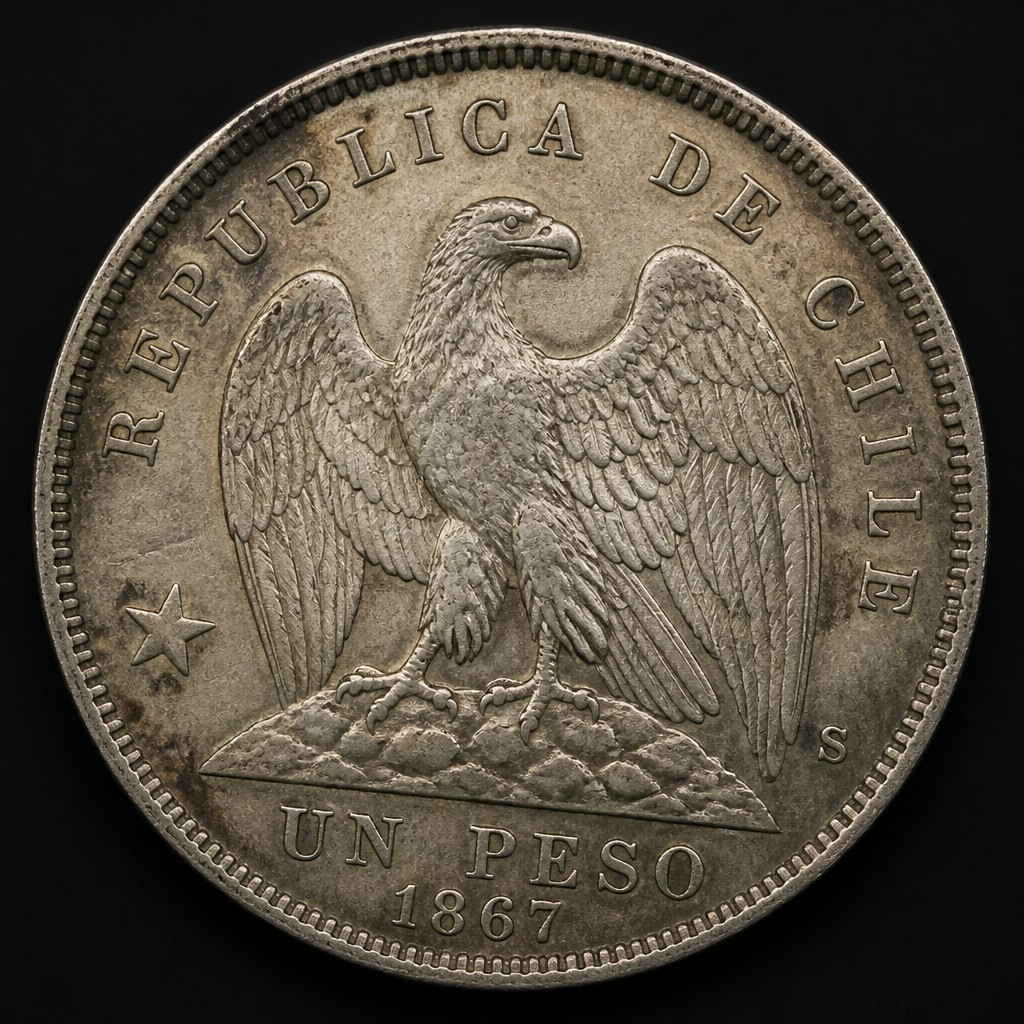
What the Coin Is
This silver peso is part of Chile's long-running national coinage, minted from the 19th into the early 20th century, and is commonly nicknamed after the condor, Chile's national bird, which appears prominently perched atop the shield on many varieties of the coin.
Obverse Design & Inscriptions
Depending on the specific year and type, the obverse may show either a Liberty-style female bust or the Chilean star-and-shield emblem with the legend "REPUBLICA DE CHILE" arched around the rim and the date below the central design.
Reverse Design & Inscriptions
The reverse centers on the Chilean coat of arms: a shield flanked by a huemul (an Andean deer) and a condor, with the condor typically perched on top of the shield, wings often spread. The denomination "UN PESO" appears around or below the arms, sometimes accompanied by the national motto "POR LA RAZON O LA FUERZA."
Size, Weight, Metal, Edge
Struck in silver, generally .900 fine, the peso weighs around 25 grams with a diameter close to 37 mm, in line with other regional silver crown-sized coins. The edge is reeded.
Mint Marks & Where to Find Them
The Santiago mint struck the great majority of these coins; look for a small mintmark, often near the date or at the base of the shield, along with assayer initials that can help pin down the specific year of striking.
Telling It Apart from Similar Coins
Confirm the specific combination of the huemul and condor supporting the shield, along with the "REPUBLICA DE CHILE" legend, since neighboring countries' coins use different national animals and mottos. Comparing the obverse bust or star-and-shield style also helps date the coin to its correct design period.
Judging Condition at a Glance
Look at the condor's wing and feather detail and the huemul's fine features for early wear, as well as the highest points of the obverse bust or star design. A sharply struck coin shows individual feather lines on the condor; a well-circulated example flattens these into a smoother silhouette.
Authenticity Red Flags
Be cautious of coins with soft, indistinct feather and fur detail, incorrect weight or diameter, or a magnetic response (genuine silver is non-magnetic). A properly struck coin has even, crisp reeding on the edge; a wavy, inconsistent edge pattern can indicate a cast counterfeit.
Frequently asked questions
Why is it called the 'Condor' peso?
The nickname comes from the Andean condor depicted perched atop the shield on the coin's reverse, a prominent national symbol of Chile.
What animals appear supporting the shield?
A huemul (an Andean deer) and a condor flank and top the Chilean coat of arms on the reverse.
What is the coin's silver content?
It's typically struck in .900 fine silver, weighing about 25 grams with a diameter near 37 mm.
Where is the mintmark located?
Check near the date on the obverse or at the base of the shield on the reverse for a small Santiago mint identifier and assayer initials.
What does the motto on the coin mean?
'POR LA RAZON O LA FUERZA' ('By reason or by force') is Chile's national motto, sometimes inscribed around the coat of arms.