
How to Identify the Chile Peso (Condor)
A Chilean silver peso featuring the national condor perched on a rock, one of the most recognizable Latin American coin designs of the 19th and 20th centuries.
Read the full Chile Peso (Condor) encyclopedia entry →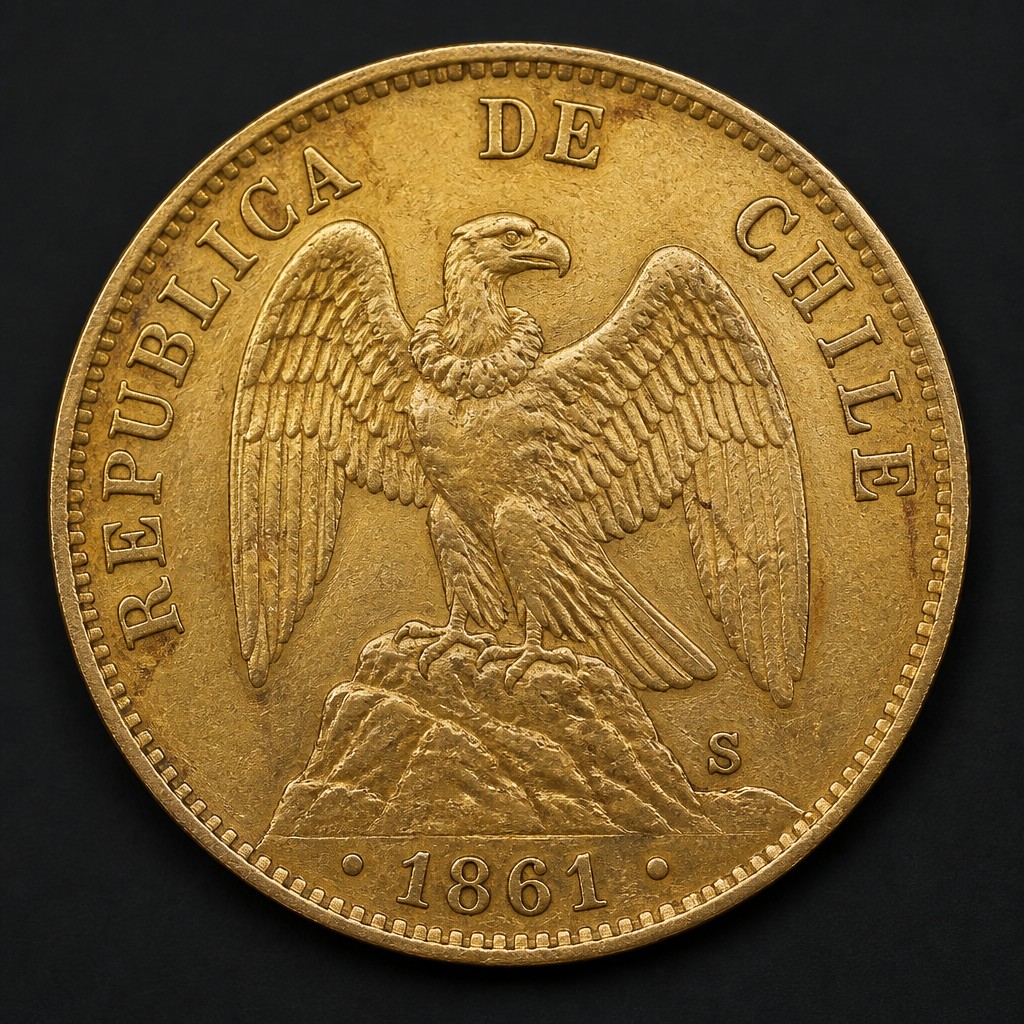
What This Coin Is
The Chile Peso, commonly nicknamed the "Condor" peso by collectors, is a silver coin of the Republic of Chile that features the Andean condor as its central reverse motif. Various sizes and dates of this design were struck from the mid-19th century into the 20th century as Chile's standard silver peso, and the same condor imagery was later echoed on smaller subsidiary coins as well.
Obverse Design & Inscriptions
The obverse typically shows the Chilean national arms, featuring a huemul deer and a condor as shield supporters flanking a five-pointed star, with the national motto "POR LA RAZON O LA FUERZA" (By reason or by force) below. "REPUBLICA DE CHILE" or similar text usually appears around the border along with the date.
Reverse Design & Inscriptions
The reverse is the coin's signature image: a large condor standing on a rocky outcrop with wings partly spread, symbolizing Andean strength and liberty. The denomination "UN PESO" appears below or around the condor, sometimes accompanied by small decorative elements or a value in centavos on subsidiary denominations.
Size, Weight, Metal, and Edge
Silver peso coins of this type generally measure around 37 mm in diameter for full peso pieces, with fractional denominations scaled down proportionally, and fineness commonly around .900. The edge is typically reeded, and weight varies by date range as Chile adjusted its coinage standards over time.
Mint Marks and Where to Find Them
Coins were struck primarily at the Santiago mint, and a small mintmark or assayer's initials may appear near the date on the obverse. Because Chile used a single main mint for most of this series, mintmark variety is limited compared to countries with multiple striking facilities.
Telling It Apart From Similar Coins
Other South American silver pesos, such as those of Bolivia or Peru, share a similar size but use different national arms and animals; the condor perched on rock with wings spread is uniquely Chilean. Later 20th-century Chilean coins moved to different reverse designs, so the condor motif itself helps date a piece to its specific series.
Judging Condition at a Glance
Examine the condor's wing feathers and the fine details of the national arms for wear, since these raised areas flatten first with circulation. A coin with full, unbroken luster and sharp feather lines on the condor grades higher than one with a smooth, worn bird silhouette, and the rocky perch beneath the bird should also show clear texture on better-preserved examples.
Authenticity Red Flags
Watch for coins with indistinct or mushy feather detail on the condor, incorrect diameter or weight for the stated date, or a grainy cast texture rather than crisp struck detail. Compare the coin's edge and rim to known genuine examples, since counterfeit pieces often show a seam or uneven rim from mold casting.
Frequently asked questions
Why is this coin called the 'Condor' peso?
Collectors nicknamed it after the large Andean condor standing on a rock that dominates the reverse design.
What metal is the Chile Peso made of?
It is typically struck in silver, commonly around .900 fine, though fineness and weight shifted somewhat across different issue years.
Where was the coin minted?
The vast majority were struck at the Santiago mint in Chile.
How can I tell a genuine coin from a fake?
Check for crisp, well-defined condor feathers and national arms detail; blurry or grainy surfaces along with an off weight are common signs of a cast counterfeit.