
How to Identify the Chiconcuautla 20 Centavos
A collector's checklist for the 1915 copper Chiconcuautla 20 centavos: the numeral 20, national eagle, copper fabric, local-issue traits, and authentication cautions.
Read the full Chiconcuautla 20 Centavos encyclopedia entry →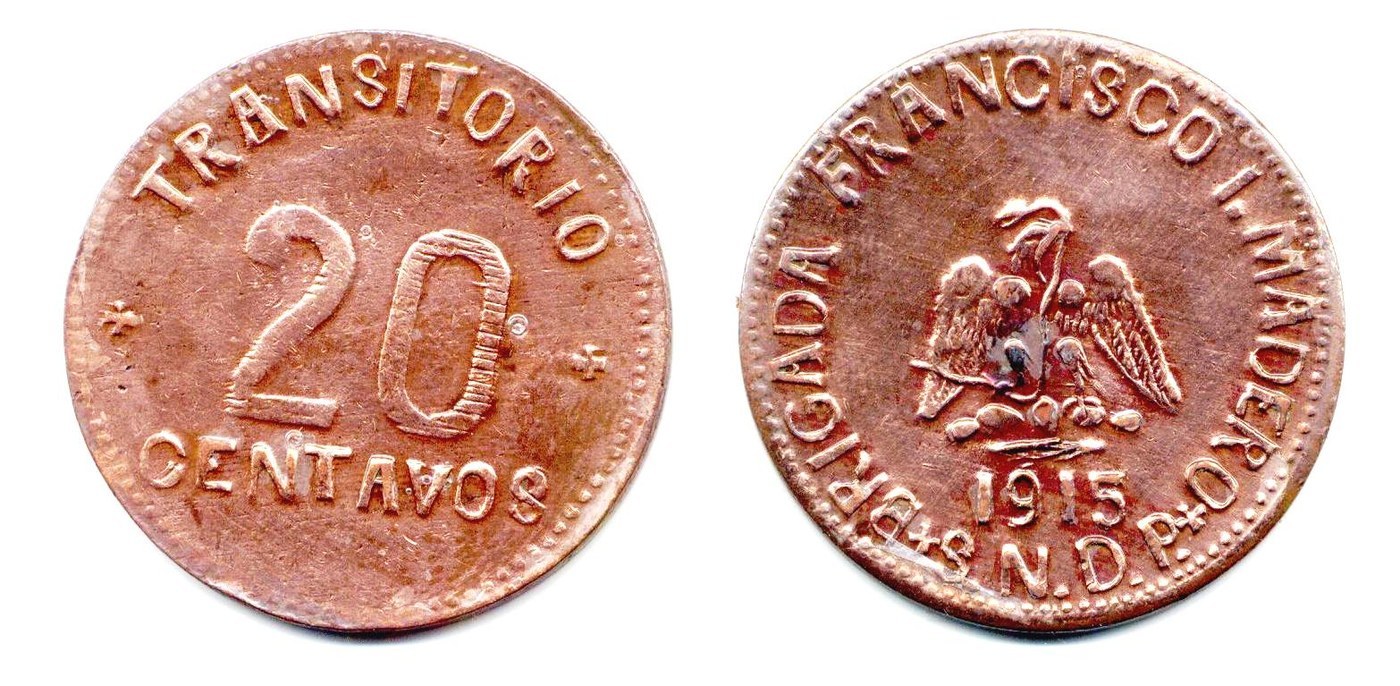
Begin with the two design elements that define the type. One side carries a large numeral 20 in a plain, transitional style, marking the twenty-centavo value; the other shows the Mexican national eagle with the eagle's head clearly rendered. On a copper coin dated 1915, that pairing points to a Mexican revolutionary-era 20 centavos, of which the Chiconcuautla issue is one example.
Read the fabric, not just the images. Local revolutionary coins were struck with limited equipment, so expect surfaces, rims, and lettering that are less uniform than on federally minted coins of the period. Brown to reddish-brown copper color, slightly uneven centering, and a hand-produced look are consistent with a genuine local issue rather than a machine-perfect federal strike.
Confirm the denomination and date. The numeral 20 fixes the value at twenty centavos, and the 1915 date places the coin in the Revolution. Compare the diameter and weight against published figures for the specific issue; a copper coin that is far outside the expected range for a 20 centavos of this type warrants closer scrutiny.
Attribute the coin carefully, because look-alikes are common. Many Mexican towns and factions produced copper centavo coins in 1915 with a numeral and a national eagle, so the general design alone does not prove a Chiconcuautla origin. Match legends, style, and detail to a specialized reference on Mexican revolutionary coinage before settling on the attribution.
Watch for copies and altered pieces. Emergency coinages are sometimes reproduced, so be alert to cast fakes with seam lines, grainy or bubbly surfaces, and soft, blurred detail, as well as to coins whose dates or legends may have been reworked. When a coin's value or surfaces raise doubt, get an opinion from a specialist in Mexican revolutionary issues.
Frequently asked questions
What confirms this as a revolutionary 20 centavos rather than a federal coin?
The combination of a plain numeral 20, the national eagle, an 1915 date, and a hand-produced copper fabric with less uniform rims and lettering points to a local revolutionary issue rather than a machine-struck federal coin. Attribution to Chiconcuautla is then confirmed against a reference.
How do I separate Chiconcuautla from other 1915 local coppers?
Many towns issued similar numeral-and-eagle coppers in 1915, so the broad design is not enough. Match the exact style, legends, and detail of your coin to published listings for Chiconcuautla, since only the specifics distinguish it from other localities' issues.
What size and metal should I expect?
It is a copper small-change piece, brown to reddish-brown where original surface survives. Weigh and measure it and compare against published figures for the issue; a large deviation in diameter or weight is a reason to look more closely.
How can I spot a fake?
Look for signs of casting such as seam lines, grainy or pitted surfaces, and mushy lettering, and for evidence that a date or legend has been altered. Genuine local strikes look hand-made but not cast. For valuable examples, seek specialist authentication.