
How to Identify the Chervonets (Soviet Gold)
An identification guide to the Soviet gold chervonets, covering the iconic Sower design, the Soviet state emblem, weight and purity, and how modern restrikes differ from originals.
Read the full Chervonets (Soviet Gold) encyclopedia entry →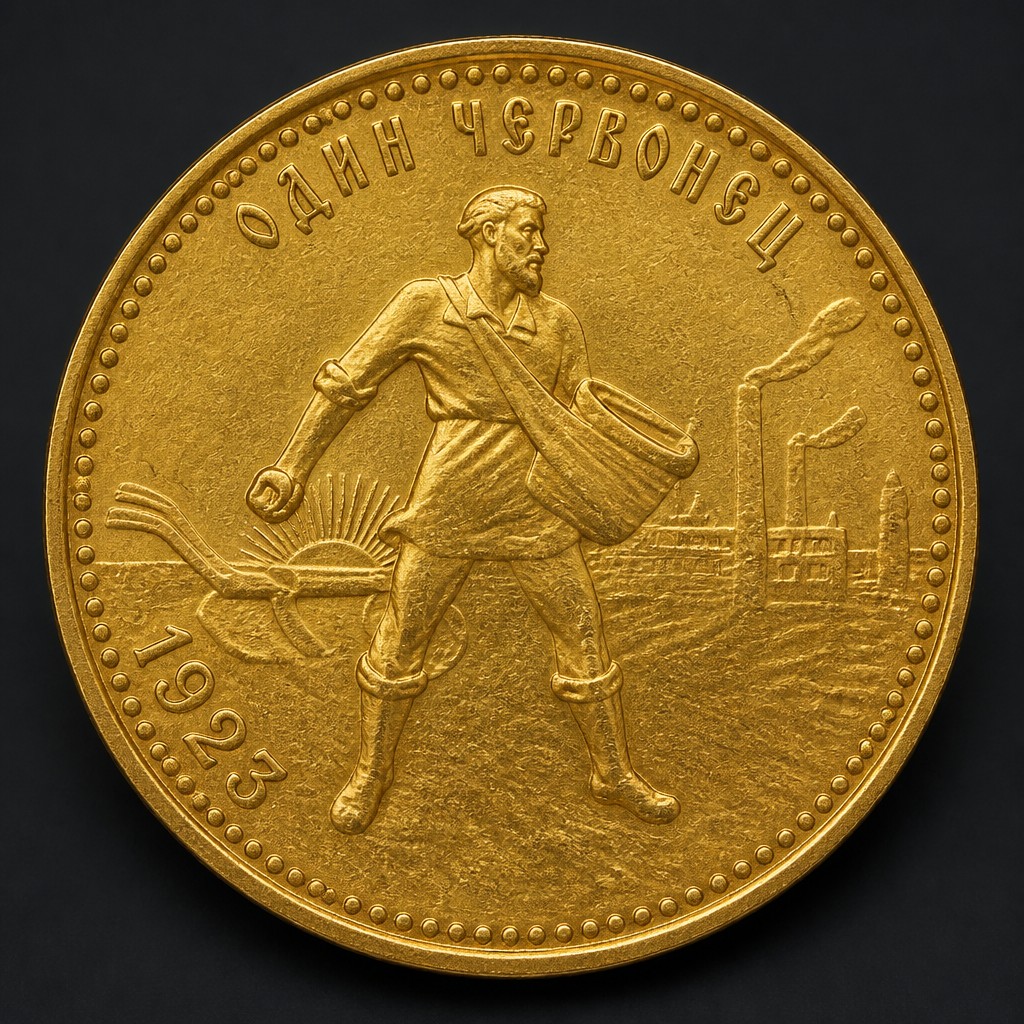
What Is a Chervonets?
The chervonets is a Soviet gold coin first issued in 1923, valued at 10 gold rubles, created during the Soviet Union's early currency reforms to provide a stable, internationally recognized gold-backed unit alongside the new paper chervonets notes. It is sometimes called the "Sower" coin because of its obverse design.
Obverse Design
The obverse depicts a peasant sower striding across a field, scattering seed by hand, with the sun rising behind him and factory smokestacks visible on the horizon. This design, created by sculptor Ivan Shadr, symbolized the new Soviet worker-and-peasant state and closely echoes the sower motif used on earlier French coinage of the period.
Reverse Design
The reverse displays the Soviet coat of arms as used in the early 1920s: a hammer and sickle over a globe, surrounded by wheat sheaves and banners bearing the motto "PROLETARIANS OF ALL COUNTRIES, UNITE!" in Russian, along with the denomination "ONE CHERVONETS" and the year of issue.
Size, Weight, and Metal
The chervonets is struck in .900 fine gold, weighs approximately 8.6 grams, and measures about 22.6 mm in diameter, closely matching the specifications of the pre-revolutionary Imperial 10-ruble gold piece it was designed to replace in international trade.
Mint Marks and Issue Dates
Original chervonets were dated 1923 and struck at the Leningrad (formerly and later St. Petersburg) mint. Because the Soviet government continued producing chervonets with the 1923 date for decades afterward for gold reserve and trade purposes, the date alone does not confirm the actual striking year; mint records and die characteristics are used by specialists to separate original 1920s strikes from later restrikes.
Telling It Apart from Similar Coins
The Soviet chervonets should not be confused with the Imperial Russian 10-ruble gold piece, which carries a tsar's portrait rather than the Sower design, or with the French 20-franc "Rooster" and "Sower" gold coins, which share a similar sower motif but different denomination, legend language, and reverse design. The Soviet coat of arms on the reverse, with its globe and wheat wreath, is the clearest confirmation of a genuine chervonets type.
Judging Condition
Because chervonets were often struck for bullion and reserve purposes rather than circulation, many surviving pieces show minimal wear; grade is assessed by the sharpness of the sower's robe folds and facial features and the clarity of the small lettering in the Soviet emblem's banners. Original mint luster and bag marks (small surface nicks from handling) are common and expected on bullion-grade pieces.
Authenticity Red Flags
Because chervonets are actively restruck and also widely counterfeited due to their gold content, checking exact weight, diameter, and specific gravity against the official specification is essential. Pieces that are noticeably underweight, have soft or blurred design details, or show an incorrect edge reeding pattern should be treated with caution and verified by a qualified dealer or grading service before assuming they are of any particular vintage.
Frequently asked questions
What does the design on a chervonets show?
The obverse shows a peasant sower scattering seed with the sun and factory smokestacks behind him; the reverse shows the early Soviet coat of arms with a hammer, sickle, globe, and wheat sheaves.
Is a chervonets dated 1923 always from 1923?
Not necessarily. The Soviet Union restruck chervonets with the 1923 date for gold reserve and trade purposes for many years, so the date alone does not confirm the actual minting year.
What is the gold content of a chervonets?
It is struck in .900 fine gold, weighing about 8.6 grams, matching the specification of the earlier Imperial 10-ruble gold coin.
How is the chervonets different from a French Sower coin?
Both use a sower motif, but the chervonets carries Russian text and the Soviet coat of arms on the reverse, while French Sower coins show a denomination in francs and different reverse imagery.