
How to Identify the Charles II Twopence
A collector's guide to recognizing the Charles II twopence by its profile portrait, crowned mark of value, tiny size, and milled fabric.
Read the full Charles II Twopence encyclopedia entry →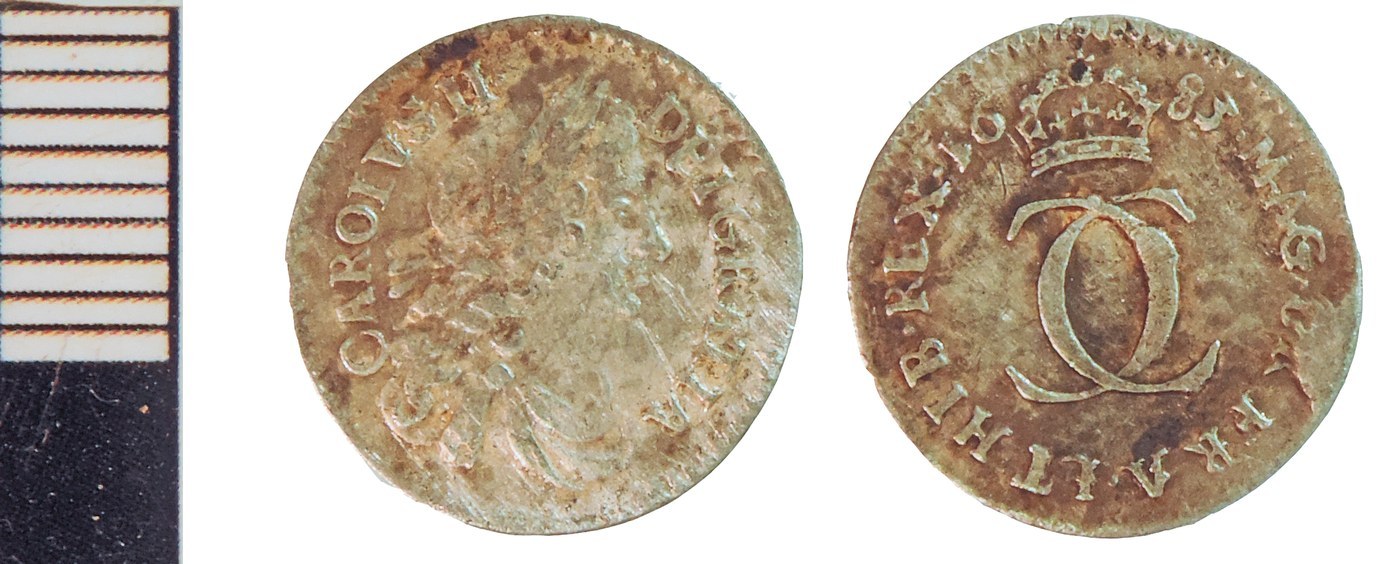
Start with the portrait. The obverse of a Charles II Twopence carries a profile bust of the king in fine, machine-cut relief, with an abbreviated Latin legend naming Charles around the rim. Confirm a clear profile bust with this style of legend first; the portrait was updated during the reign, so noting its exact form helps date the coin within 1660 to 1685.
Read the reverse. The key diagnostic is a crowned mark of value, the numeral two beneath a crown, framed by a short legend, rather than the full heraldic shields used on larger coins. This crowned numeral confirms the denomination at a glance; where a date is present it sits in the reverse legend, so read both sides together before attributing the coin.
Check size and fabric. This is a very small, light coin with a regular round flan, an even rim, and the crisp, uniform detail of milled striking. Weigh and measure the piece and compare it against published specifications for the denomination, since the tiny size and machine-made fabric are what separate it from both the larger coins of the same coinage and the irregular hammered small change of earlier reigns.
Watch for look-alikes. Charles II struck several small denominations with similar profile portraits, so rely on the reverse mark of value and the coin's size to confirm it is a twopence rather than a penny, threepence, or fourpence. Reading whatever survives of the legends, and comparing diameter, helps separate the closely related minor coins.
Authenticate with care. Small early milled coins are copied, and cast reproductions, tooled pieces, and modern replicas exist. Look for casting seams, surface bubbles, unnaturally smooth fields, incorrect weight or diameter, and lettering or portraiture that lacks the sharpness of genuine milled work. For any coin of meaningful value, obtain an opinion from a specialist in early milled British coinage or a reputable grading service before purchase.
Frequently asked questions
Which side is the obverse?
The side showing the profile portrait of Charles II with the Latin legend is the obverse. The side with the crowned mark of value, the figure two beneath a crown, is the reverse.
How do I tell it from other small Charles II coins?
The reverse mark of value is the surest guide: a twopence shows the figure two beneath a crown. Compare the coin's diameter as well, since the penny, threepence, and fourpence share a similar portrait but differ in size and numeral.
Does a worn or partly missing legend mean it is fake?
No. Weak or partly legible lettering is normal for a small coin that circulated centuries ago. Wear and softness of detail reflect age and handling, not necessarily a problem with authenticity.
How can I spot a cast copy?
Genuine milled coins show crisp, even detail, a regular round flan, and correct weight and diameter. Casting seams, air bubbles, mushy lettering, or wrong specifications are warning signs, and specialist authentication is advised when value is at stake.