
How to Identify the Charles II Halfpenny
A collector's guide to recognizing the Charles II copper halfpenny by its laureate bust, seated Britannia, copper fabric, date placement, and common look-alikes.
Read the full Charles II Halfpenny encyclopedia entry →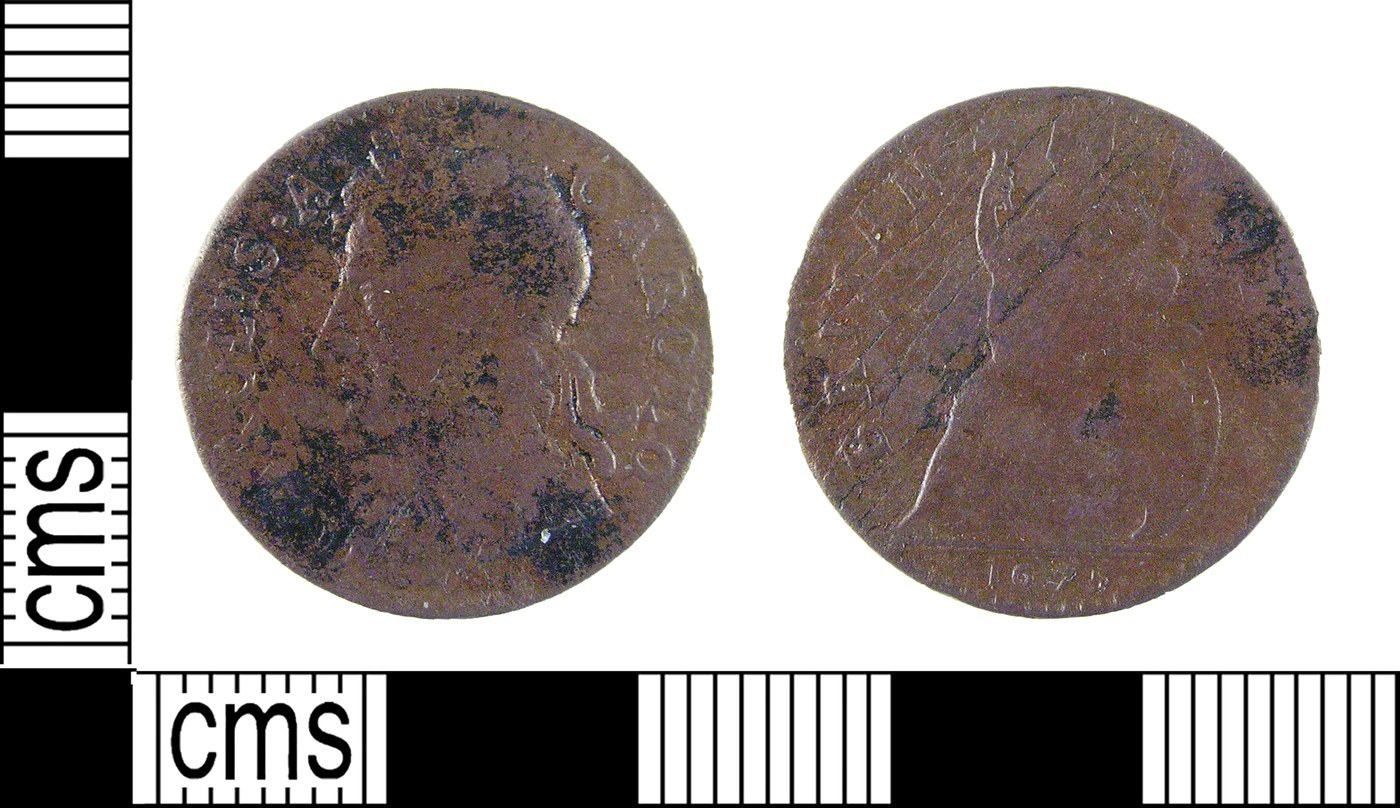
Begin with the portrait. The obverse of a Charles II halfpenny shows a laureate, draped bust of the king facing left, encircled by the Latin legend CAROLVS A CAROLO ("Charles son of Charles"). A left-facing, laurel-wreathed bust with this legend is the first confirmation of the type and separates it from the busts and legends of later Stuart and Hanoverian copper.
Read the reverse. Look for Britannia seated left, holding an olive spray in one hand and a spear in the other, with an oval shield beside her and the word BRITANNIA in the surrounding legend. The date sits in the exergue beneath Britannia — 1675 on this coin — and is what fixes the year, since halfpennies of the same design were struck across several dates in the 1670s. Confirm both sides together before attributing.
Check size, metal, and fabric. This is a copper halfpenny, larger and heavier than the farthing that shares the same design, so weigh and measure it against published specifications to confirm the denomination. Because it is milled rather than hammered, expect a reasonably round flan and an even, machine-made strike; genuine circulated pieces usually show brown, honestly worn copper rather than crisp bright surfaces.
Watch for look-alikes. The Charles II farthing carries the same laureate bust and seated Britannia and is easily confused with the halfpenny — size and weight are the deciding factors. The seated-Britannia reverse also continued under later monarchs, so verify that the obverse legend and bust are those of Charles II and not James II, William and Mary, or a later ruler. Tin issues with a copper plug and differing legends belong to a later period and should not be mistaken for this copper type.
Authenticate with care. Copper corrodes, so inspect for pitting, active green corrosion, tooling, or heavy cleaning that can mask problems or hide added detail. Be wary of cast copies (look for seams, bubbles, and soft, mushy lettering) and of coins where the date appears re-engraved. For any better-grade or higher-value example, weight, dimensions, and surface quality should be checked against references, and a specialist opinion is worthwhile before purchase.
Frequently asked questions
Which side is the obverse?
The side with the laureate, left-facing bust of Charles II and the CAROLVS A CAROLO legend is the obverse. The seated Britannia with the BRITANNIA legend and the date below is the reverse.
How do I tell the halfpenny from the Charles II farthing?
The two share the same bust and seated-Britannia design, so size and weight decide it. The halfpenny is the larger and heavier of the copper pair; compare against published specifications to confirm.
How do I confirm the date and reign?
Read the date in the exergue below Britannia to fix the year, and check that the obverse bust and legend are those of Charles II. The seated-Britannia design continued under later monarchs, so the obverse is what confirms the reign.
What condition problems should I watch for?
Because it is copper, look for corrosion, pitting, and green verdigris, as well as tooling or harsh cleaning. These affect both authenticity assessment and value far more than ordinary honest wear does.