
How to Identify the Charles II Fourpence
A collector's walkthrough for attributing a small milled Charles II silver fourpence by bust, cipher reverse, national emblems, size and date.
Read the full Charles II Fourpence encyclopedia entry →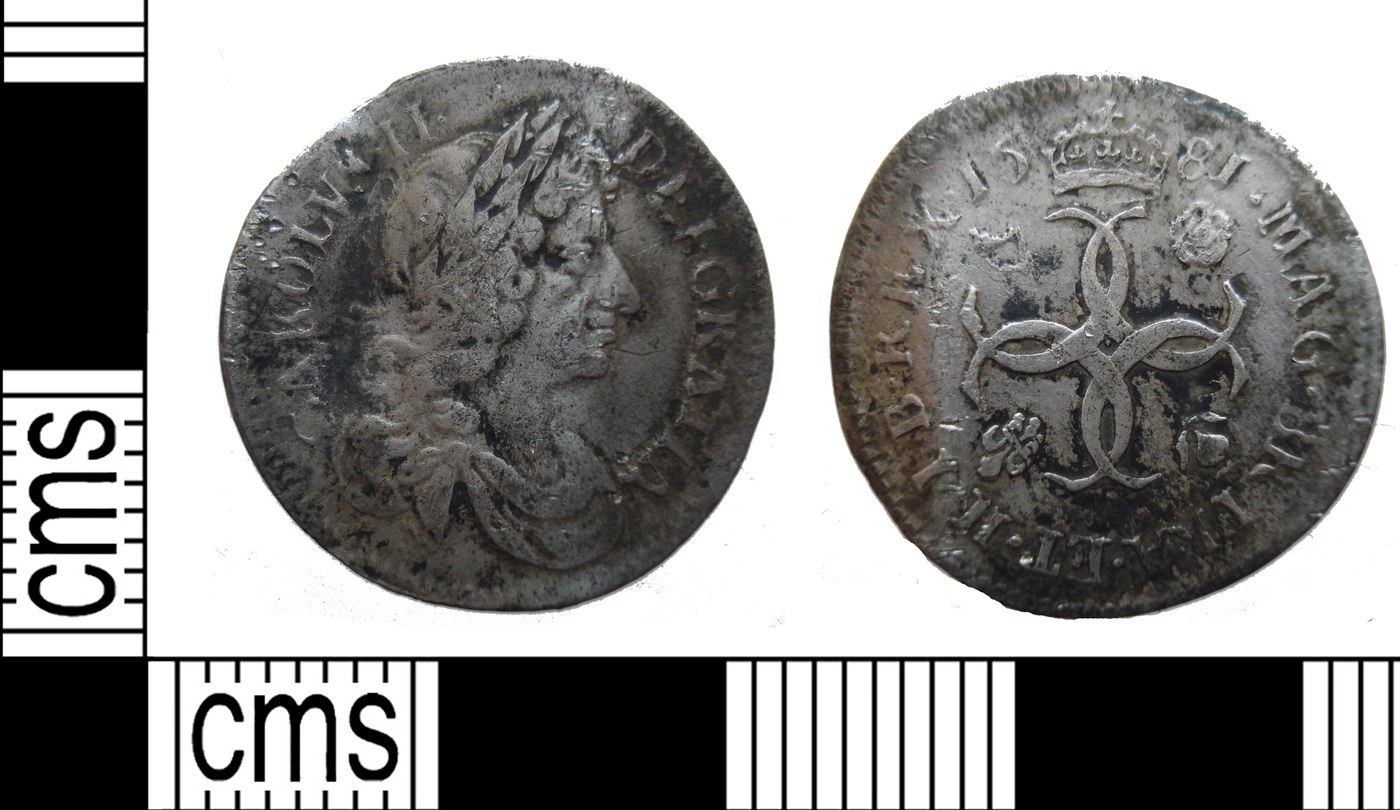
Begin with metal and size, because the small silver of Charles II is easy to muddle. A genuine fourpence is struck in .925 sterling silver on a neat, round, milled flan of roughly 19 mm and about 2 grams. It should look and feel like a small silver coin with even, machine-made edges; a piece that is base metal, badly out of round, or clearly hammered by hand is either a different type or a problem coin. The fourpence is the largest of the small quartet of fourpence, threepence, twopence and penny, so measuring the diameter is the single most useful step.
Read the obverse next. You should see a laureate and draped bust of Charles II facing right, with the legend CAROLVS II DEI GRATIA around the edge. The laurel wreath and the rightward profile are diagnostic for the milled Restoration coinage; a leftward or crowned bust points to a different reign or an earlier hammered issue.
Confirm the reverse carefully, as it is the clearest single marker of the type. Look for a crowned device of four interlinked C ciphers, with the rose, thistle, fleur-de-lis and harp tucked into the angles, a crown at the top dividing the date, and the legend MAG BR FRA ET HIB REX around the rim. This is not the four-shields cruciform reverse of the larger shilling and crown; it is the smaller cipher-and-emblems design reserved for the minor silver. The date, such as 1681, reads across the top and should be checked against catalogue listings.
Watch for look-alikes and pitfalls. The threepence, twopence and penny of Charles II carry almost the same design, so rely on diameter and weight rather than the picture alone to fix the denomination. Similar small silver of later Stuart and Hanoverian monarchs uses different busts, legends and, on true Maundy issues, a crowned Roman numeral instead of the interlinked C's, so read the king's name in the legend. Because these coins are small and thin, worn dates and soft strikes are common, but be cautious of cast copies with seams or mushy detail, tooled or re-engraved portraits, and cleaned or polished surfaces.
For anything beyond a common, low-grade example, verify the date, grade and authenticity against a standard reference on milled English silver or with a specialist dealer or reputable auction. The small denominations reward careful measurement and comparison with published plates, and a second opinion is worthwhile before paying a premium for a scarce date or a high-grade coin.
Frequently asked questions
How do I confirm it is a fourpence and not another small silver coin?
Measure it. The fourpence, threepence, twopence and penny of Charles II share almost the same design, and there is no Roman-numeral value mark on this series, so diameter and weight decide the denomination. The fourpence is the largest, about 19 mm and roughly 2 grams.
Which way should the bust face on a genuine coin?
To the right. The milled coinage of Charles II shows a laureate, draped bust facing right with the legend CAROLVS II DEI GRATIA. A leftward-facing or purely crowned bust suggests a different monarch or an earlier hammered coin.
How can I spot a fake or altered fourpence?
Check that the coin is struck rather than cast, with crisp die detail, clean milled edges and no casting seams, and that the weight is right for a small sterling coin. Soft or greasy-looking surfaces, the wrong colour, a re-cut date, or a tooled portrait are warning signs. For valuable dates, buy from a specialist or trusted auction.