
How to Identify the Charles II Crown
A collector's guide to recognizing a Charles II milled silver crown by its bust, cruciform shields, size, lettered edge and mint marks.
Read the full Charles II Crown encyclopedia entry →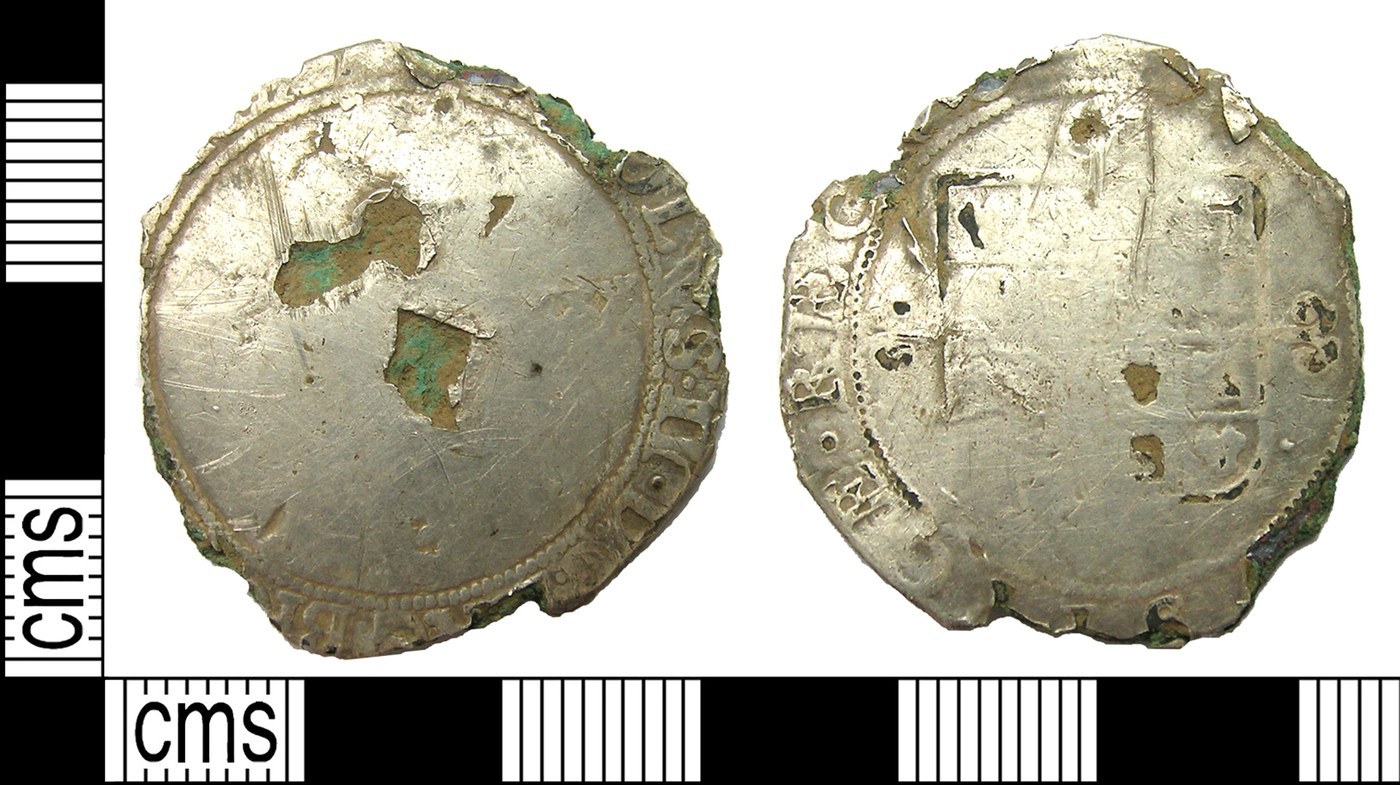
Start with the obverse portrait. The Charles II crown shows a laureate, draped bust of the king facing right, encircled by a Latin legend that begins CAROLVS II DEI GRATIA. On damaged or corroded coins the fine detail of the face and hair may be gone, but the right-facing laureate head remains the primary identifying feature and should be the first thing you confirm.
Check the reverse layout. The type carries four crowned shields of arms set in a cross (cruciform), with pairs of interlinked C's in the angles between the shields and a star of the Order of the Garter at the center. Even when heavily corroded or pierced, the four-shield cruciform arrangement is distinctive and helps separate this crown from other English silver types.
Measure size and check the metal. A genuine crown is a large coin, roughly 38-40 mm across and about 29-30 grams in sterling silver. Because it is milled, it should be essentially round with a lettered edge, not the lumpy, uneven flan of a hammered coin. A much lighter weight, wrong diameter, or a plain edge on a coin sold as a Charles II crown are warning signs.
Read the edge and look for provenance marks. The edge normally bears the motto DECVS ET TVTAMEN with the regnal year spelled out, which helps date the coin and acts as an anti-forgery feature. A small mark below the bust, such as a rose, plume, or elephant (or elephant and castle), can indicate the silver source and aid attribution, though on a corroded coin these details may be unreadable.
Beware of look-alikes and fakes. Cruciform-shield crowns of James II, William and Mary, and later monarchs can resemble this type at a glance, so confirm the CAROLVS II legend and single right-facing bust rather than relying on the reverse alone. As a valuable large silver coin, the crown is frequently faked; casting bubbles, seams, soft mushy detail, incorrect weight or a non-silver ring all point to a reproduction, and significant purchases are best authenticated independently.
Frequently asked questions
How do I tell a Charles II crown from a James II or William III crown?
All use cruciform shields on the reverse, so check the obverse: a Charles II crown has a single laureate bust facing right and a legend beginning CAROLVS II. The name in the legend, not the reverse, is the reliable distinguishing feature.
What size and weight should a genuine crown be?
About 38-40 mm in diameter and roughly 29-30 grams in sterling silver. A coin that is much lighter, undersized, or non-silver is likely a reproduction or a different denomination.
What is written on the edge of a Charles II crown?
The edge typically carries the motto DECVS ET TVTAMEN together with the regnal year in words. This lettered edge was an anti-clipping and anti-forgery measure and can help date the coin, though corrosion may render it unreadable.
Do provenance marks like the elephant affect identification?
Yes. A small rose, plume, or elephant (or elephant and castle) below the bust indicates the source of the silver and can help attribute the coin. These marks are collectable but may be worn away or obscured on damaged pieces.