
How to Identify the Chalkidian League Apollo Tetradrachm
A silver tetradrachm struck by the Chalkidian League, based at Olynthos, featuring a laureate head of Apollo on the obverse and a kithara (lyre) on the reverse.
Read the full Chalkidian League Apollo Tetradrachm encyclopedia entry →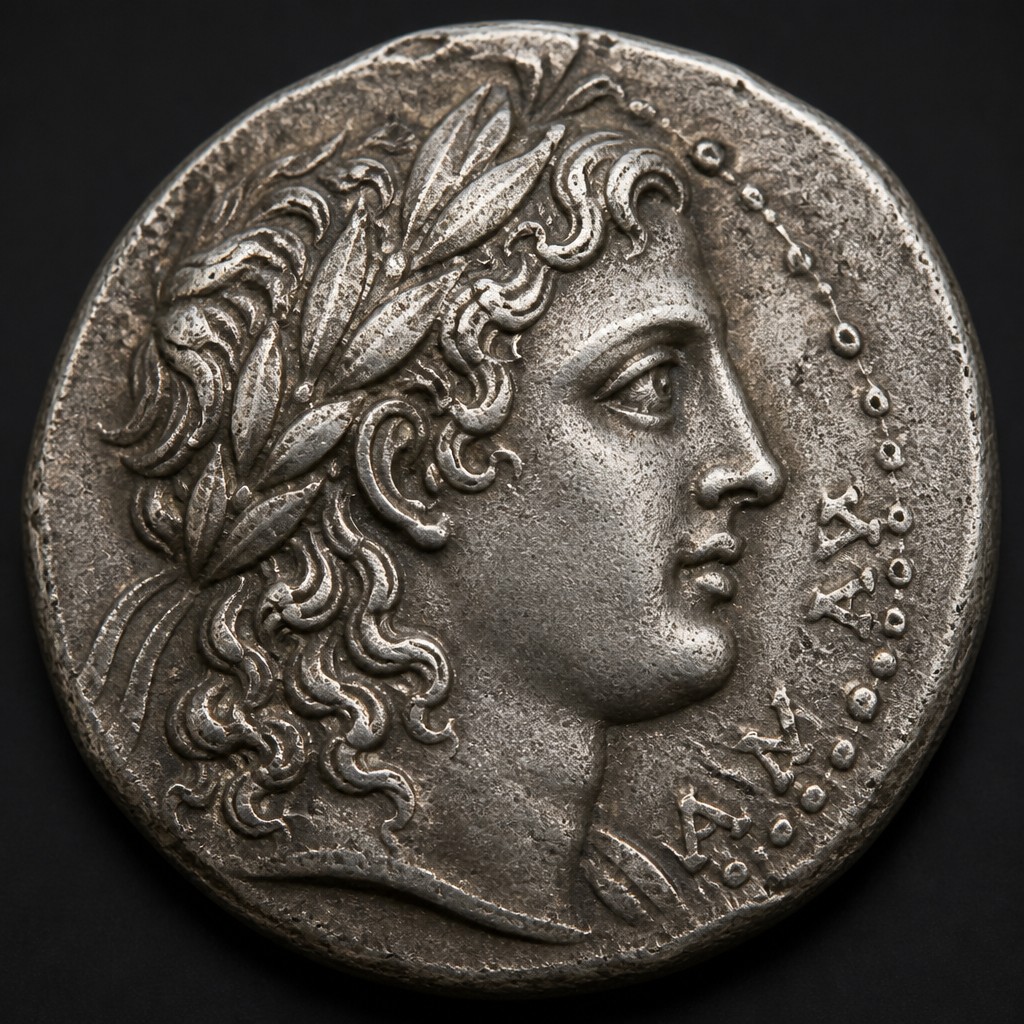
What This Coin Is
This is a silver tetradrachm struck in the name of the Chalkidian League, a federation of Greek cities in the Chalkidice peninsula of northern Greece centered on the city of Olynthos, primarily during the late fifth and fourth centuries BC. As a federal rather than single-city coinage, it represents the pooled resources and shared civic identity of the member cities of the league.
Obverse Design
The obverse shows the laureate head of Apollo facing right, styled with the youthful, idealized features typical of the god across much of Greek coinage, with hair bound by a laurel wreath. The overall modeling is competent and confident, consistent with mainland Greek engraving standards of the period rather than a particularly experimental or unusual style.
Reverse Design
The reverse depicts a kithara, a type of elaborate lyre associated with Apollo as god of music, shown in a simple, clear outline with its strings and frame visible. Around the kithara, the legend ΧΑΛΚΙΔΕΩΝ (of the Chalkidians) is inscribed, identifying the issue as a product of the league rather than any single member city.
Size, Weight, and Metal
Struck in silver, these tetradrachms generally follow a weight close to the regional standard used in northern Greece, typically around 14 to 15 grams, with a diameter of roughly 24 to 26 millimeters. The edge is plain and hand-struck, without milling.
Mint Marks and Where to Find Them
The legend ΧΑΛΚΙΔΕΩΝ around the kithara on the reverse is the primary identifying inscription, confirming the coin as a federal League issue centered on Olynthos rather than a coin of an individual Chalkidice city. Small control marks or letters occasionally appear in the field near the kithara on some issues.
Telling It Apart From Similar Coins
The Apollo-and-kithara combination is relatively distinctive, since most other Greek mints using Apollo obverses paired him with different reverse types, such as a tripod, an eagle, or a seated figure, rather than a lyre. The federal ethnic ΧΑΛΚΙΔΕΩΝ, referring to the league as a whole rather than a single city, is the clearest confirmation that a coin belongs to this series rather than to an individual Chalkidice polis that might have used related imagery.
Judging Condition at a Glance
On the obverse, Apollo's laurel wreath and hair are the highest-relief points and the first to show wear. On the reverse, the kithara's frame and strings are fine linear details that can blur or wear down with circulation; a coin where the individual strings remain distinct is in notably better condition than one where the kithara has become a generalized blob shape. Even, centered strikes with full legends are more desirable than off-center or weakly struck examples.
Authenticity Red Flags
Because the kithara reverse relies on fine linear detail to look convincing, cast copies often render it as an indistinct or overly simplified shape rather than a clearly defined instrument with visible strings. Other warning signs include a grainy or pitted surface, a seam line around the edge, garbled or misspelled Greek lettering in the ethnic, and a weight that falls noticeably outside the expected range for genuine League issues. Comparing the clarity and proportion of the kithara against well-documented examples is a useful check, since this fine detail is one of the harder elements to replicate convincingly through casting.
Frequently asked questions
What is the Chalkidian League and why did it issue its own coinage?
It was a federation of Greek cities in the Chalkidice peninsula of northern Greece centered on Olynthos, and it struck coinage under a shared federal identity rather than leaving each member city to issue coins independently.
Why does the reverse show a lyre instead of a more common Apollo symbol like a tripod?
The kithara references Apollo's role as god of music, and this pairing of Apollo's head with a lyre reverse is a distinctive combination that helps identify League issues at a glance.
How do I know this coin belongs to the League rather than a single city?
The reverse legend ΧΑΛΚΙΔΕΩΝ refers to the Chalkidians collectively, marking the issue as a federal League coin rather than the product of one individual polis in the region.
What weight should a genuine tetradrachm of this type have?
Genuine examples generally weigh around 14 to 15 grams, consistent with the regional weight standard used in northern Greece during the League's period of coinage.