
How to Identify the Ceylon 5 Rupees Buddhism Anniversary
A collector's guide to Ceylon's 1957 Buddha Jayanti silver crown: the 2500 device, mythological ornament, RUPEES reverse, size and metal, and fakes.
Read the full Ceylon 5 Rupees Buddhism Anniversary encyclopedia entry →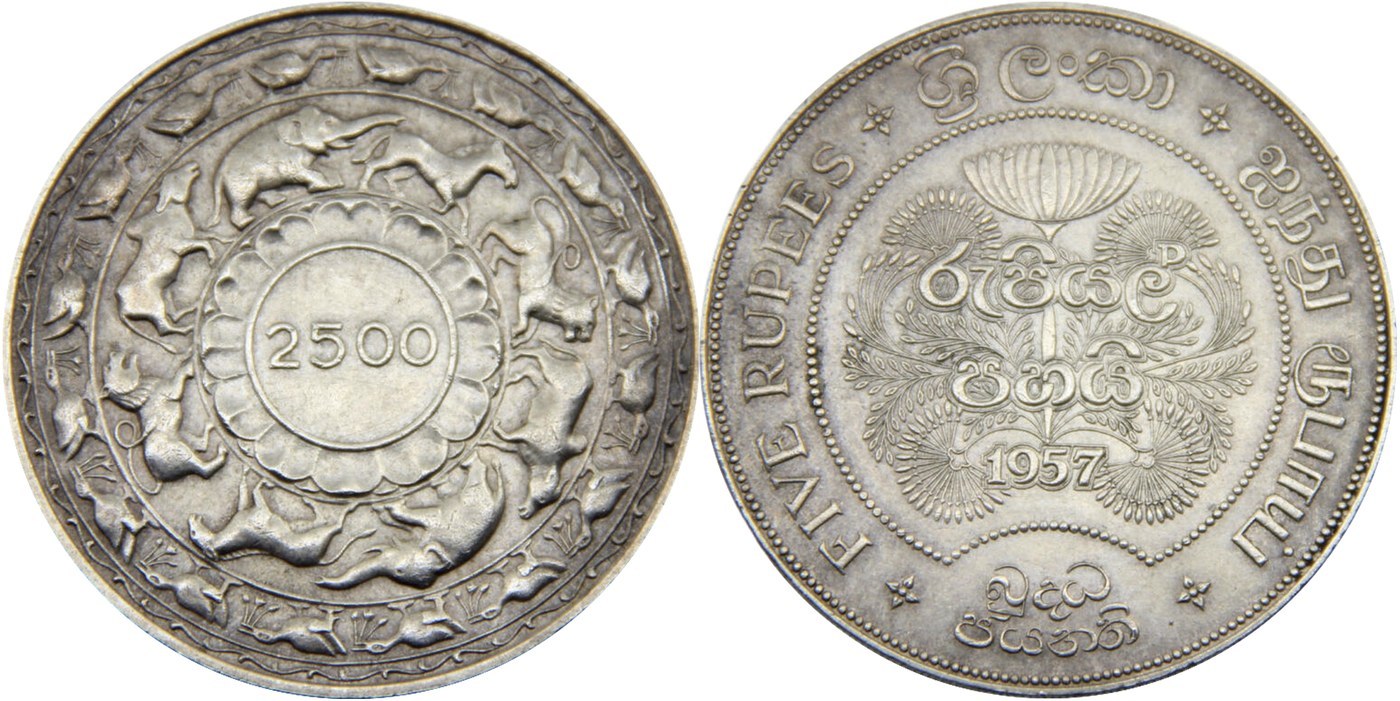
Start with the size and metal. This is a silver crown-sized coin, noticeably large and heavy in the hand compared with Ceylon's small everyday copper-nickel and bronze pieces. A genuine example is non-magnetic silver with the natural grey tone of a struck coin; a coin that is magnetic, brassy, or clearly light or thin for a crown-sized flan should be treated with caution.
The obverse is the decisive clue. Look for the numeral 2500 set inside an ornate circular composition, framed by stylised mythological creatures and heavy scrollwork. This 2500 device is the single most reliable identifier, tying the coin directly to the 2,500-year Buddhist anniversary of 1957. There is no royal portrait, so the anniversary number and ornamental animals carry the design.
Confirm the piece on the reverse. The denomination appears as RUPEES lettering within matching ornamental framing, together with the 1957 date. Reading the RUPEES wording and the date fixes both the denomination and the single year of issue, which is what separates this coin from other Ceylon rupee types that share the island's decorative style but carry different values and dates.
Watch for look-alikes. Because it is a popular themed silver crown, the coin can be confused with other 1957 Buddha Jayanti commemoratives issued by neighbouring countries, which use similar anniversary imagery but different legends, denominations and languages. Read the RUPEES denomination and the ornamental 2500 obverse to keep it distinct from those parallel issues.
For authentication, weigh and measure the coin and compare it against catalogue figures for the silver five rupees, since a cast or plated fake is hard to match to the correct crown weight and diameter. Genuine coins are cleanly struck with crisp ornament on the scrollwork and creatures; be wary of soft, grainy detail, casting seams, surface bubbles, or a mushy edge, all of which point to a copy. Silver should ring rather than thud and show no magnetic pull, and for higher-value or uncirculated examples third-party certification adds confidence.
Frequently asked questions
What is the fastest way to recognise this coin?
Look for a large silver crown-sized coin with the numeral 2500 in an ornate circular design amid mythological creatures on one face, and RUPEES with the 1957 date on the other. The 2500 device is the surest identifier.
How do I tell it apart from other 1957 Buddha Jayanti coins?
Several countries issued similar anniversary coins in 1957. Read the denomination and legends: this piece is a Ceylon issue spelling out RUPEES, so the RUPEES wording and the ornamental 2500 obverse distinguish it from foreign commemoratives with different currencies and scripts.
How can I confirm it is silver and not a fake?
Genuine coins are struck silver of crown size and weight, non-magnetic, with sharp ornamental detail. Be wary of magnetic, off-weight or off-colour pieces and of soft surfaces, casting seams or bubbles that indicate a cast copy. Weigh, measure and, for valuable examples, seek certification.