
How to Identify the Ceylon 10 Cents (Cupronickel)
A collector's guide to attributing the George VI Ceylon ten-cent piece: the uniformed portrait, legend, scalloped shape, metal and look-alikes.
Read the full Ceylon 10 Cents (Cupronickel) encyclopedia entry →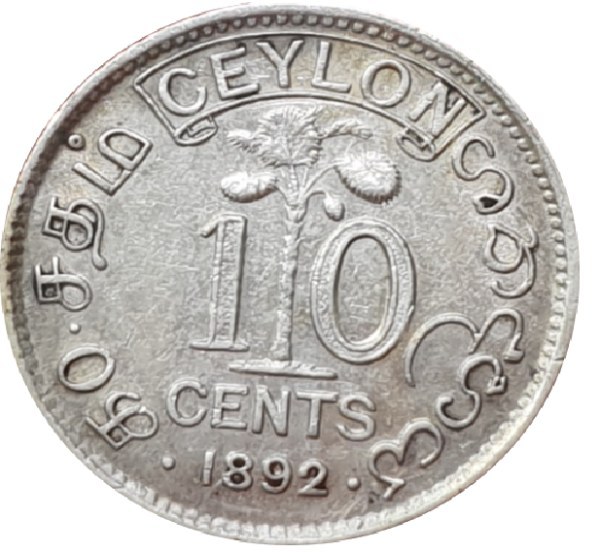
Start with the obverse legend and portrait, which together identify the coin quickly. Look for a left-facing profile bust of a bare-headed man in military uniform with decorations on the chest, ringed by the words "GEORGE VI KING." That legend confirms a British colonial issue of the George VI reign (1936–1952). Read the date beneath or beside the portrait to pin the year; the example here is dated 1944.
Turn the coin over to confirm the country and denomination. The reverse of this type carries the name CEYLON, the value TEN CENTS spelled out in words, the date, and ornamental detailing. Seeing CEYLON rather than INDIA, BRITISH INDIA or a different colony name is essential, because the same George VI portrait style appears on coins of many British territories.
Check the shape and metal as physical diagnostics. This ten-cent piece is notably scalloped, with a wavy outline rather than a plain round edge, which sets it apart at a glance from ordinary round minors. It is struck in copper-nickel, so a clean coin looks pale silvery-grey; it is a small, lightweight base-metal piece, not silver. Weighing and measuring the coin and comparing against a catalog entry for the Ceylon George VI ten-cent series will confirm the attribution.
Be alert to look-alikes. Other Ceylon denominations of the same era share the uniformed George VI portrait, so use the TEN CENTS wording and the coin's size and shape to separate the ten-cent from the neighboring five-cent and twenty-five-cent pieces. Do not confuse Ceylon coins with the similarly styled British India issues of George VI, which name INDIA and use different reverses and shapes. The date also matters, as the ten-cent series spans several George VI years.
Apply the usual authentication cautions. Genuine coins are struck with crisp lettering and clean scalloped edges; be wary of cast copies with soft detail, seams or bubbles, of pieces cleaned or plated to look like silver, and of coins with altered or re-cut dates. When in doubt, verify weight, diameter and the exact legend against a reliable reference for Ceylon coinage.
Frequently asked questions
How do I tell the Ceylon 10 cents from other George VI colonial coins?
Read the reverse. It must say CEYLON and TEN CENTS. The same uniformed George VI portrait was used across many British colonies, so the country name and spelled-out denomination are what confirm this is a Ceylon ten-cent piece.
What does the scalloped edge tell me?
The wavy, scalloped outline is a characteristic feature of this Ceylon ten-cent type and a useful quick identifier. A plain round coin of similar size with a George VI portrait is more likely a different denomination or colony.
Is there a mint mark to look for?
This issue does not carry a prominent visible mint mark for the collector to rely on. Attribution rests instead on the portrait, the CEYLON legend, the denomination, the date and the coin's shape and metal.
How can I spot a fake or altered coin?
Genuine pieces are struck with sharp lettering and clean edges. Watch for casting seams, bubbles or mushy detail, for surfaces cleaned or plated to imitate silver, and for signs of a re-cut date. Confirm weight and diameter against a standard catalog when unsure.