
How to Identify the Cartwheel Penny
A collector's guide to spotting the 1797 George III cartwheel penny by its incuse lettering, broad rim, size and weight, and how to avoid look-alikes.
Read the full Cartwheel Penny encyclopedia entry →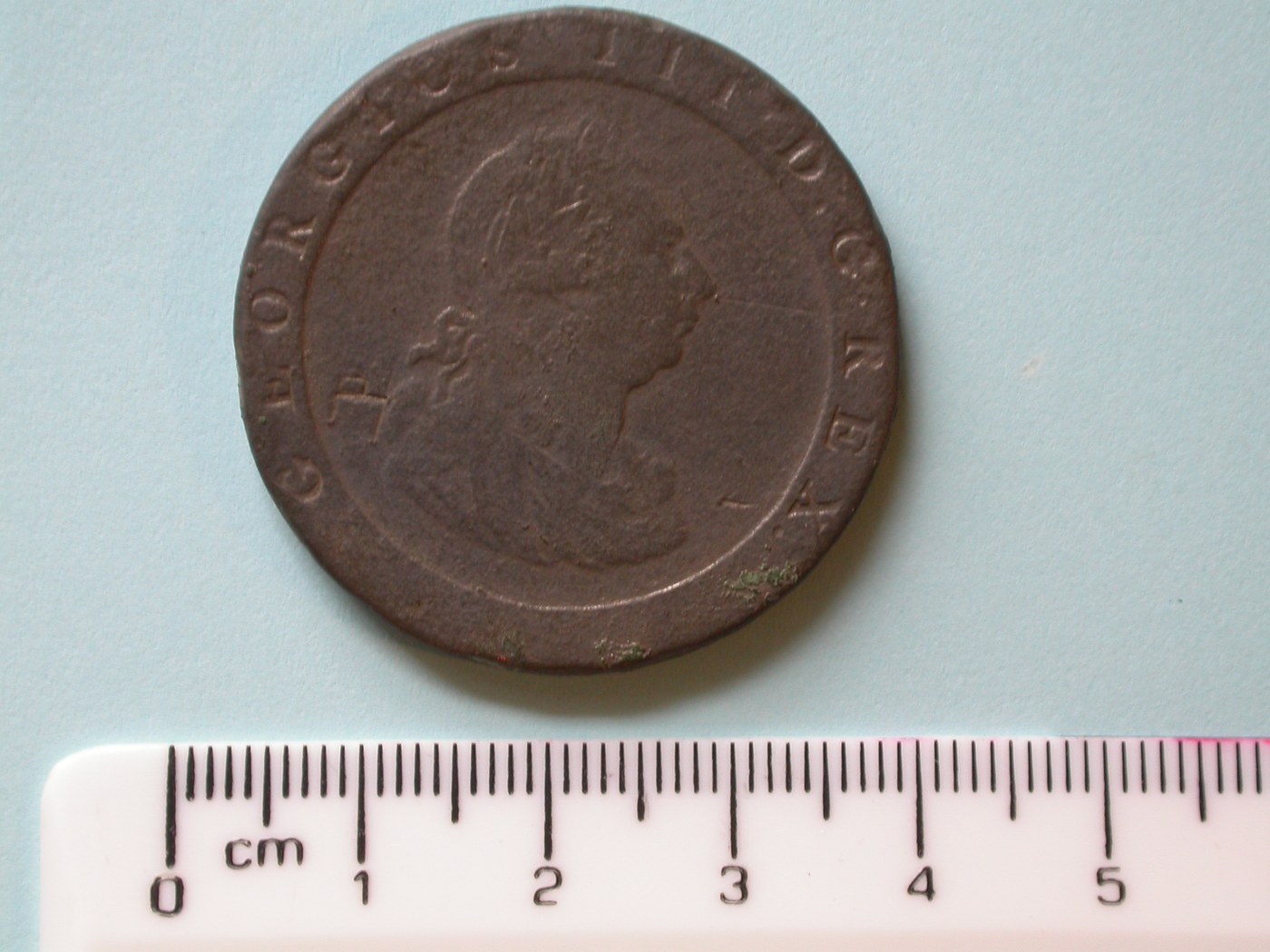
Start with the single most diagnostic feature: the lettering. On a genuine cartwheel the legends and date are incuse — pressed down into a wide, flat raised rim — rather than standing up in relief. Run a fingertip across the border and you should feel the letters as grooves. No other British penny is made this way, so this trait alone separates the type from almost everything else.
Read the inscriptions and devices. The obverse shows a right-facing draped bust of George III with GEORGIVS III D G REX around the rim. The reverse shows Britannia seated to the left, holding an olive branch and trident with a shield beside her, the word BRITANNIA above and the date 1797 below. On the penny the small word SOHO appears near the shield, identifying Boulton's mint; its absence or a different design is a warning sign.
Check size, weight and metal, because these confirm the denomination. The penny is a large copper coin about 36 mm across weighing roughly an ounce; the companion twopence is larger, near 41 mm and about two ounces. If a coin has the cartwheel look but is small or light, it is not a genuine regal cartwheel. The metal should be copper, showing a brown tone on circulated pieces.
Watch for look-alikes and altered pieces. The 1790s produced many private copper tokens and later commemorative or replica cartwheels; tokens carry different legends or advertising, and modern copies are often struck in the wrong size or weight or have crisp raised lettering. Cast fakes betray themselves with a soft, grainy surface, a visible seam on the edge, or bubbles in the field.
Grade cautiously. Because the raised rim takes the most wear, the incuse letters are usually the first detail to fade, while Britannia and the bust survive longer; judge condition from the central devices as well as the rim. Avoid coins that have been cleaned to a bright pink or that show heavy verdigris, as both reduce value and can hide problems.
Frequently asked questions
What is the quickest way to confirm a genuine cartwheel?
Feel the rim. Genuine cartwheels have incuse (sunken) lettering pressed into a broad raised border. Raised lettering, or a small light coin, points to a later copy or a different penny.
How do I tell the penny from the twopence?
By size and weight. The penny is about 36 mm and roughly an ounce; the twopence is noticeably larger at about 41 mm and around two ounces. Both share the same design and date.
Could my cartwheel-style coin be a private token instead?
Possibly. The 1790s saw many copper tokens. Check the legends: a genuine regal cartwheel reads GEORGIVS III and BRITANNIA with the date 1797 and, on the penny, SOHO by the shield. Advertising or place names indicate a token.
Does cleaning affect a cartwheel penny?
Yes. Cleaning copper leaves an unnatural bright or pink surface that collectors avoid. Original brown surfaces are preferred, so it is best not to clean the coin.