
How to Identify the Carthage Zeugitania Electrum Stater
A guide to recognizing this Carthaginian electrum stater struck in Sicily, known for its wreathed female head, standing horse, and pale gold-silver alloy that sets it apart from pure gold or silver coins.
Read the full Carthage Zeugitania Electrum Stater encyclopedia entry →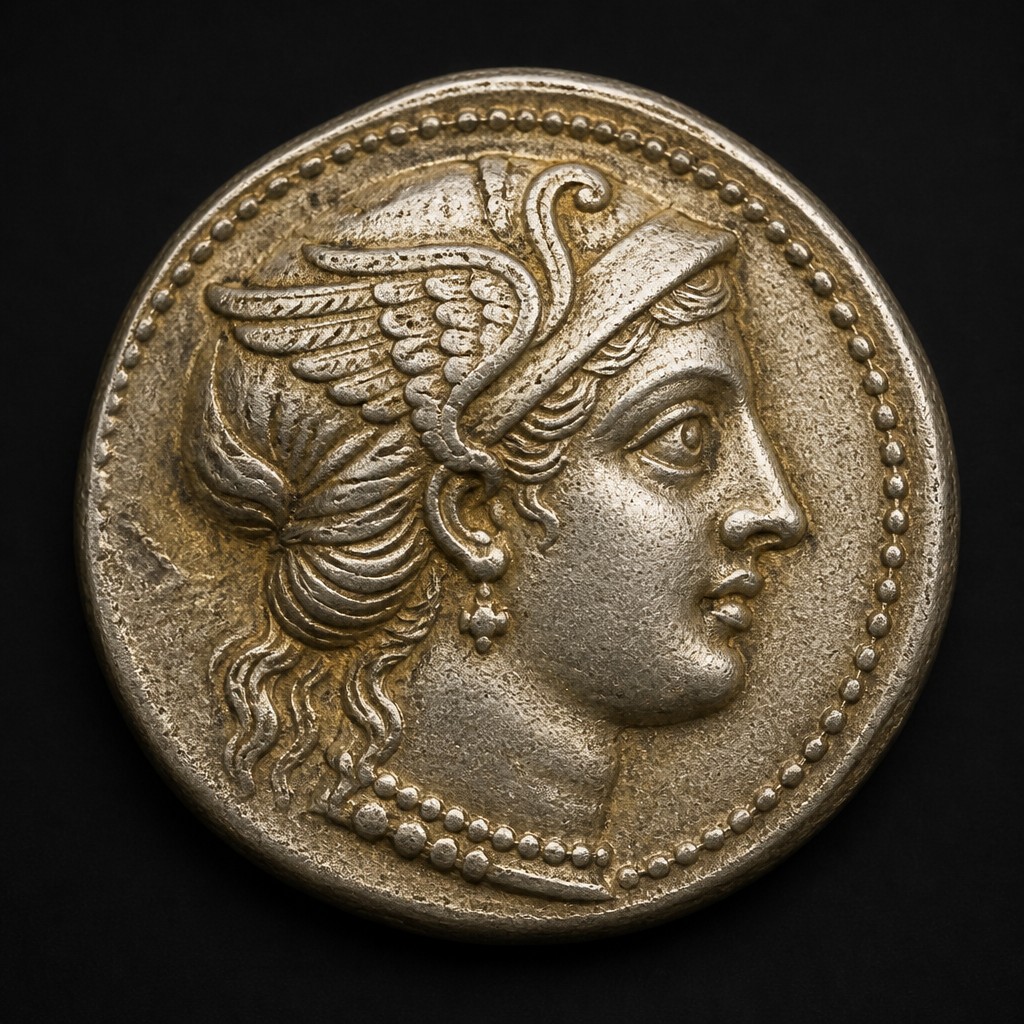
What This Coin Is
This is a Punic (Carthaginian) coin struck in Sicily during Carthage's wars with the Greek cities there, most commonly dated to the 4th century BC. It was struck in electrum, a naturally occurring or man-made gold-silver alloy, because Carthage needed a fast, reliable way to pay large mercenary armies.
Obverse Design
The obverse shows the head of a goddess, generally identified with Tanit or modeled on the Greek Kore-Persephone, wearing a wreath of grain ears or laurel with hair arranged in ringlets. Many examples carry no inscription at all; when letters appear, they are in the Punic (Phoenician) alphabet rather than Greek or Latin.
Reverse Design
The reverse typically shows a standing horse, sometimes with its head turned back, occasionally accompanied by a palm tree in the background and a ground line beneath its hooves. A horse's head alone also appears on some issues. Small Punic letters may sit in the field, but many pieces are unmarked.
Size, Weight, and Metal
These staters generally weigh in the range of about 7.2 to 9.5 grams and measure roughly 18-20mm across, depending on the exact issue and standard used. The color is the biggest physical clue: electrum has a pale, greenish-yellow tone that looks noticeably duller than pure gold and warmer than pure silver.
Mint Marks and Where to Look
There is no Latin-style mint name. Look instead for small Punic letters in the field near the horse or in a small exergue area; many issues have none. Style and die characteristics, rather than an explicit mint mark, are what specialists use to tie a coin to a particular Sicilian mint or general series.
Telling It Apart From Similar Coins
The most common mix-up is with contemporary Greek Sicilian silver coinage (from cities like Syracuse), which is bright white pure silver and usually shows chariots, nymph heads, or dolphins rather than a horse-and-palm design. Pure gold Carthaginian issues struck at Carthage itself are also sometimes confused with this stater; the duller, slightly greenish sheen of electrum versus the warmer luster of gold is the key visual difference.
Grading at a Glance
Check strike sharpness on the horse's legs and the goddess's hair and wreath detail. Ancient electrum flans were often irregular and slightly lumpy, so an off-round shape is normal and not damage. Edge chipping and flattening on the highest points of the design reduce overall grade.
Authenticity Red Flags
Modern plated fakes may show a seam or a spot where wear has revealed a different core metal beneath a thin gold or electrum coating. Genuine pieces show a consistent alloy color throughout, even on worn high points. A coin that is significantly underweight for its apparent size, or that looks unusually crisp and machine-perfect compared to the slightly irregular hand-engraved style typical of the period, warrants extra caution.
Frequently asked questions
What metal is this coin actually made of?
Electrum, a naturally occurring or deliberately mixed alloy of gold and silver, giving it a pale, greenish-yellow color distinct from pure gold or pure silver coins.
Why doesn't it have any writing on it?
Many Carthaginian military issues from Sicily were struck quickly to pay mercenaries and carried little or no legend; when inscriptions do appear, they use the Punic (Phoenician) alphabet rather than Latin or Greek letters.
Who is depicted on the obverse?
The female head is generally associated with Tanit, the chief Carthaginian goddess, though the design borrows heavily from Greek depictions of Kore-Persephone.
How can I tell this from a Greek Sicilian coin of the same era?
Greek Sicilian coins are usually struck in bright white pure silver, while this issue's electrum shows a duller, yellow-green tone, and its horse-and-palm reverse is distinctly Punic rather than Greek mythological imagery.