
How to Identify the Carolingian Silver Denier (Charlemagne)
The standard silver penny of Charlemagne's monetary reform, identified by a royal monogram or cross on the front and a cross or temple design with the mint name on the back.
Read the full Carolingian Silver Denier (Charlemagne) encyclopedia entry →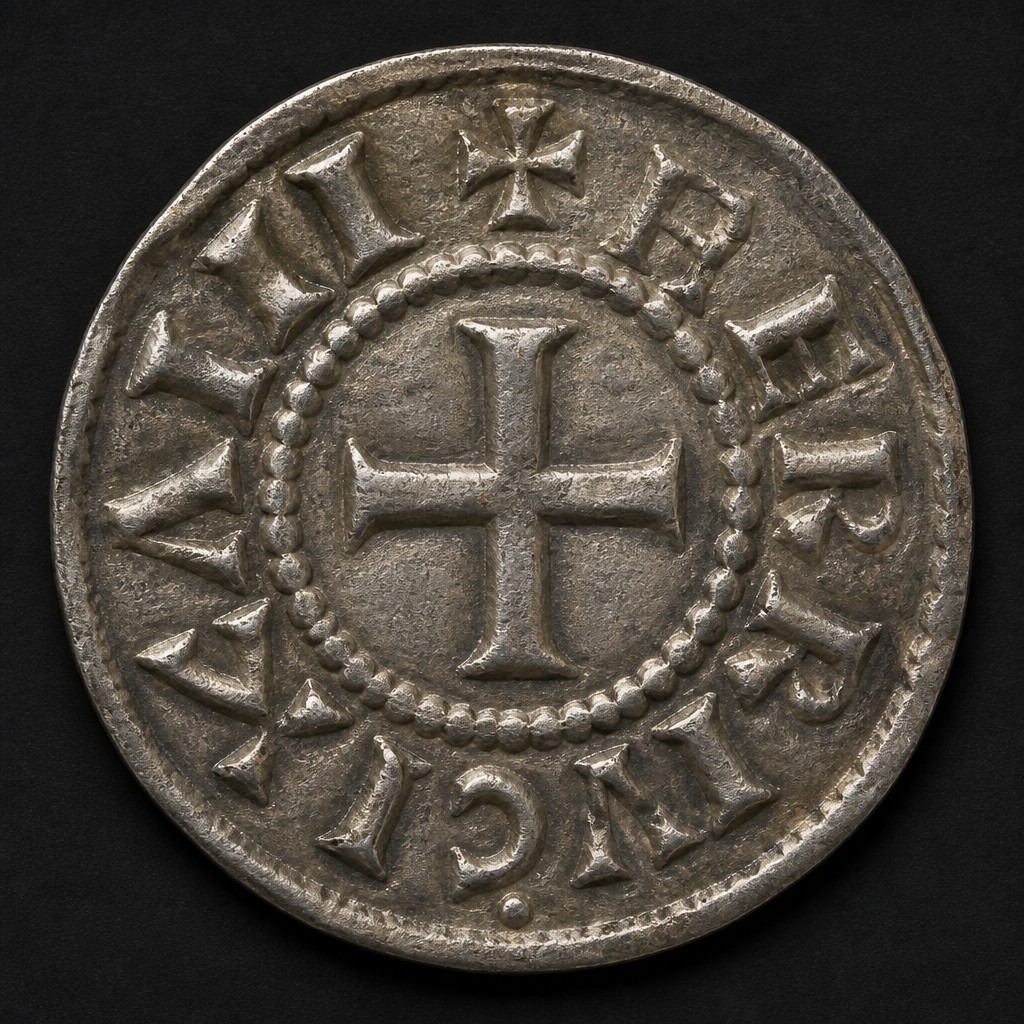
What It Is
The Carolingian silver denier was the backbone coin of Charlemagne's monetary reform of the 790s, which established a new silver standard used across the Frankish empire. It replaced earlier, less uniform coinages and became the model for medieval European silver pennies for centuries afterward, influencing the weight and appearance of English pennies, German pfennigs, and Italian denari alike.
Obverse Design
Most deniers issued in Charlemagne's name display either a royal monogram built from the letters of "Karolus" or a simple cross, surrounded by a legend reading a form of "CARLVS REX FR" (Charles, King of the Franks). A later type, introduced near the end of his reign, shows a stylized temple front instead, tied to the legend "Christiana Religio."
Reverse Design
The reverse generally carries a cross, sometimes plain and sometimes with pellets in the angles, encircled by the name of the mint city where the coin was struck, such as Dorestad, Melle, or Mainz among many others across the empire.
Size, Weight, and Metal
The denier is a thin, broad silver coin, typically around 20mm in diameter and about 1.7 grams in weight under the reformed standard, struck from good-quality silver with a plain, unmilled edge typical of hand-hammered coinage.
Mint Marks and Where to Find Them
Rather than a separate symbol, the mint is identified by its name spelled out in the reverse legend, reflecting the decentralized network of Carolingian mints spread across Francia, each producing coins to the same royal standard.
Telling It Apart from Similar Coins
Later Carolingian rulers such as Louis the Pious and Charles the Bald issued their own deniers with different monograms and legends, so careful reading of the ruler's name is essential. Charlemagne's monogram type and temple type are also visually distinct from each other and should not be confused as different rulers. Because so many mints across the empire struck this coinage to a shared standard, style can vary noticeably between examples from different regions even though the overall design formula stays consistent.
Judging Condition at a Glance
Look at how much of the monogram or temple design remains crisp and whether the surrounding legend is fully legible, since off-center striking on a hand-cut flan is common and does not by itself indicate heavy wear. Compare the sharpness of the cross's arms or the temple's columns to gauge true circulation wear rather than mistaking a naturally imperfect strike for a worn coin.
Authenticity Red Flags
Be wary of coins with a monogram that does not match documented Carolingian forms, a flan that appears cast rather than struck with a telltale seam around the edge, or a weight noticeably outside the expected range for a reformed denier.
Frequently asked questions
What does the monogram on the coin spell out?
It is a stylized arrangement of the letters in 'Karolus,' the Latin form of Charlemagne's name, rather than a picture or portrait.
Why do some Charlemagne deniers show a temple instead of a monogram?
A later coinage type introduced near the end of his reign used a temple-front design paired with the legend 'Christiana Religio,' distinct from the earlier monogram type.
How do I know which mint struck the coin?
The mint city's name is spelled out in the reverse legend around the cross, so reading that legend identifies the specific mint.
How do I distinguish Charlemagne's coins from his successors?
Compare the ruler's name in the legend and the monogram style, since Louis the Pious, Charles the Bald, and other successors used their own distinct names and monogram forms.