
How to Identify the Caracalla Antoninianus
A silver antoninianus, the first 'double-denarius' introduced by Caracalla in AD 215, identified above all by its radiate crown, distinguishing it from an ordinary laureate denarius.
Read the full Caracalla Antoninianus encyclopedia entry →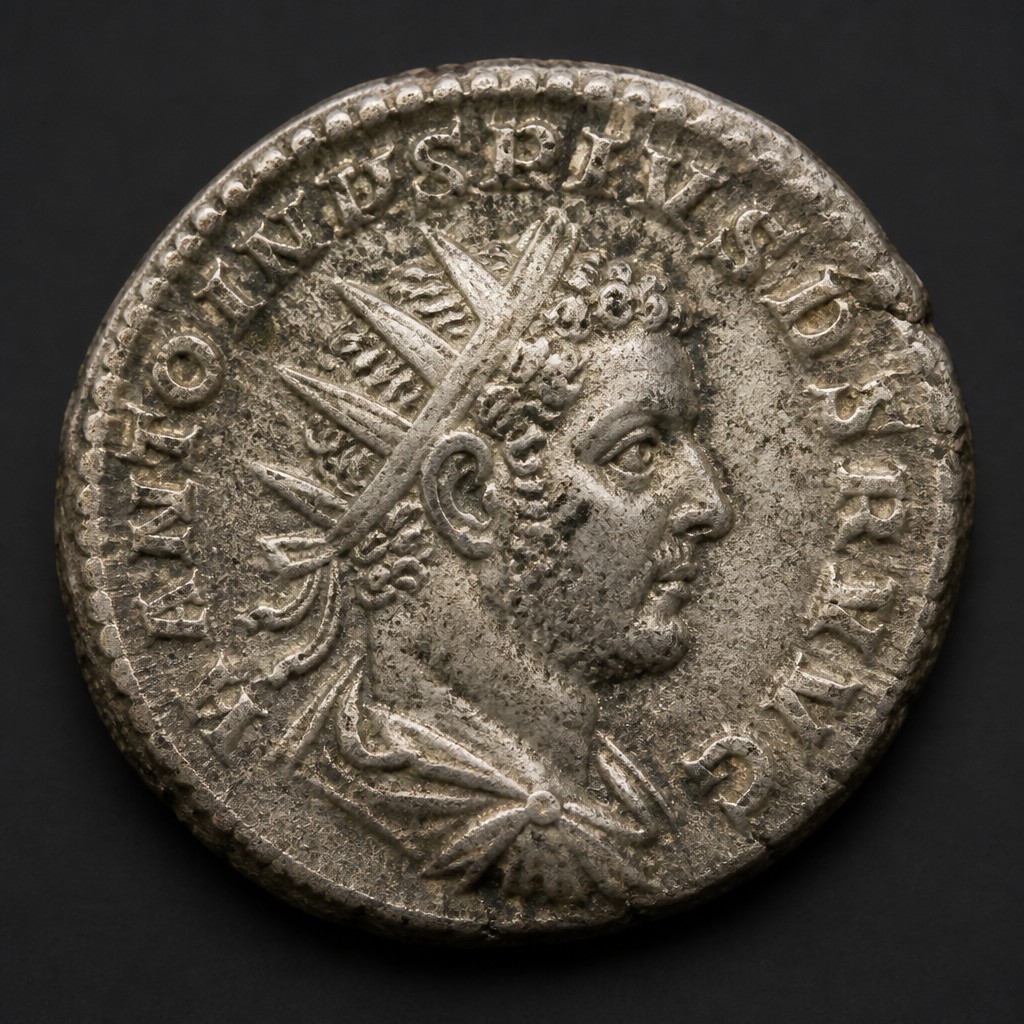
What the Coin Is
In AD 215, Caracalla introduced a new denomination valued at two denarii, known today by the modern name "antoninianus" after him. It was created to help finance rising military costs during a period of ongoing currency debasement, and its introduction marks an important turning point in the later history of Roman silver coinage.
Obverse Design & Inscriptions
The defining feature of this denomination is the radiate crown: Caracalla's bust is shown wearing a crown with radiating spikes, signaling the coin's double value, in contrast to the plain laureate wreath worn on his standard denarius. The bust is typically draped and cuirassed, and the legend reads ANTONINVS PIVS AVG GERM.
Reverse Design & Inscriptions
Reverse types largely mirror those found on contemporary denarii of the same period: Mars, Jupiter, Serapis, Providentia, and Victory all appear, sometimes showing the emperor on horseback or performing a sacrifice.
Size, Weight, Metal & Edge
The antoninianus has a somewhat larger flan than a standard denarius, typically around 22-24mm, but its weight is only modestly higher, around 4.5-5.2 grams, despite representing double the face value. This mismatch between weight and nominal value was an early symptom of the debasement that would accelerate through the rest of the third century. Silver fineness is roughly similar to, or slightly below, that of contemporary denarii, around 50 percent. The edge is plain.
Mint Marks & Where to Find Them
Coins were struck at Rome; the denomination was issued in limited numbers under Caracalla before production paused and was only revived decades later, eventually becoming the dominant silver coin of the mid-third century.
Telling It Apart from Similar Coins
The radiate crown is the single most reliable way to distinguish this denomination from an ordinary denarius, since the weight difference alone is too small to rely on with a worn or clipped coin. When comparing to later antoniniani struck by Elagabalus or subsequent emperors, check the obverse legend and portrait style, since Caracalla's is the earliest and typically shows his mature, soldierly features rather than the softer youthful look of his successors.
Judging Condition & Grade at a Glance
The radiate spikes on the crown must be clearly separated and distinct; on a worn coin they can flatten into something resembling a plain laureate wreath, making careful examination essential before concluding which denomination a heavily worn coin represents.
Authenticity Red Flags
Because the denomination is relatively scarce compared to later, more common antoniniani, some forgers have been known to add tooled-in radiate spikes to an ordinary denarius to fraudulently create the rarer type. Examine the crown closely under magnification for file marks, inconsistent metal color, or spikes that look added rather than originally engraved as part of the die, all of which suggest tampering rather than an authentic radiate issue.
Frequently asked questions
What is the easiest way to identify this denomination?
Look for a radiate crown, a headdress with pointed spikes radiating outward, on the emperor's bust; a plain laureate wreath instead indicates a standard denarius, not an antoninianus.
Why was this coin introduced?
Caracalla created it in AD 215 to help fund rising military expenses, nominally valuing it at two denarii even though its actual silver content was not doubled to match.
How much bigger or heavier is it than a denarius?
It has a somewhat larger diameter, typically around 22-24mm versus about 18mm for a denarius, but its weight is only modestly higher, not truly double, reflecting the coin's overvaluation.
Did other emperors also strike antoniniani?
Yes, after a pause following Caracalla's original issue, the denomination was revived decades later and eventually became the standard silver coin of the mid-third century under emperors such as Gallienus.
What should make me suspicious of a fake radiate coin?
Check the crown closely for file marks, inconsistent metal color, or spikes that look tooled onto an existing denarius rather than originally engraved, which would indicate an altered coin rather than a genuine antoninianus.