How to Identify the Canadian Toonie
How to identify Canada's $2 toonie by its bimetallic ring-and-core construction, polar bear reverse, monarch obverse, and edge security features.
Read the full Canadian Toonie encyclopedia entry →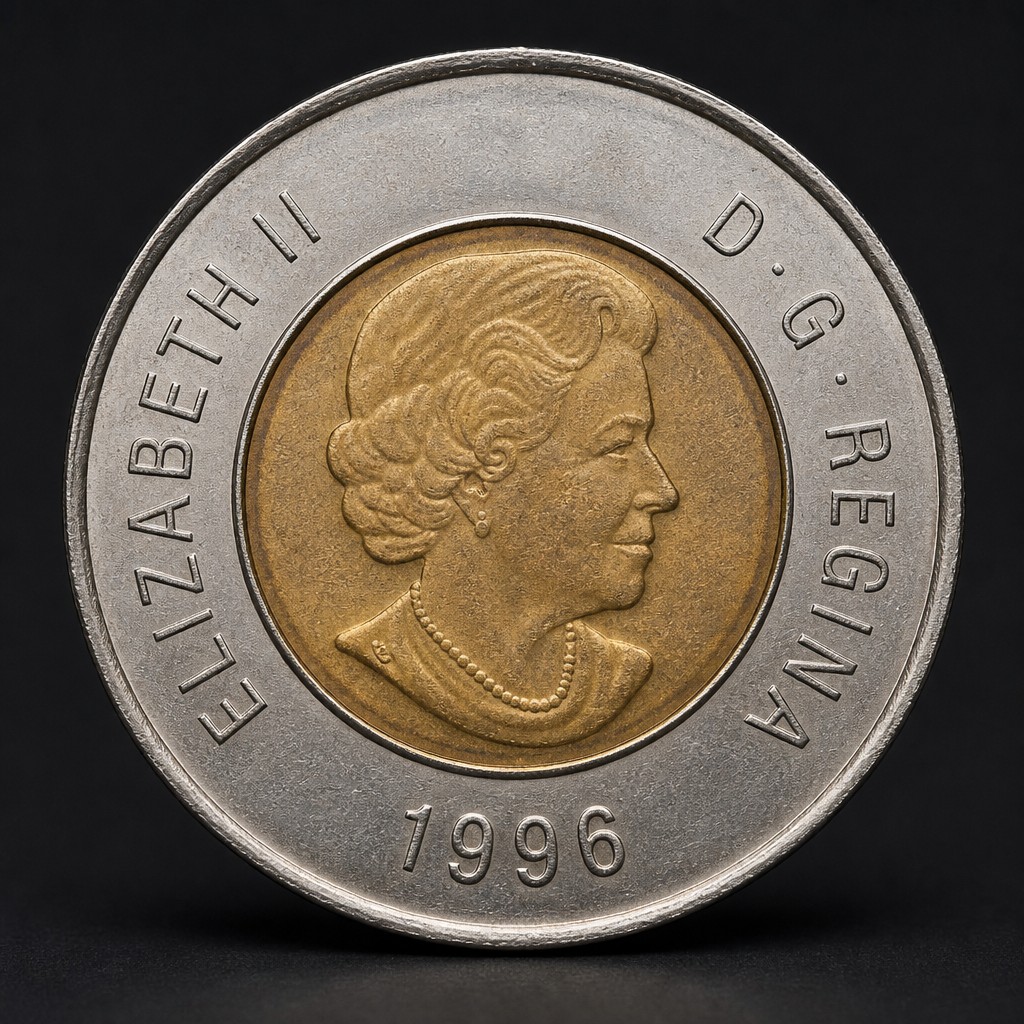
What It Is
The toonie is Canada's $2 circulation coin, introduced in February 1996 to replace the paper $2 bank note. It was the first bimetallic coin used in general Canadian circulation.
Obverse Design & Inscriptions
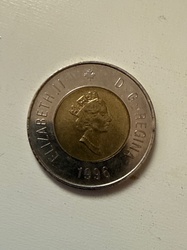
The obverse carries a portrait of Queen Elizabeth II, updated with later official effigies, with King Charles III appearing on issues from 2024 onward.
Reverse Design & Inscriptions
The standard reverse, designed by wildlife artist Brent Townsend, shows a polar bear standing on an ice floe, along with "CANADA" and the date. Special commemorative reverses have periodically replaced the bear, including a 2004 poppy design that was the world's first colored circulating coin.
Size, Weight, Metal, and Edge
The toonie is bimetallic: an outer ring of one metal surrounds an inner core of a different metal, giving it a distinctive two-tone silver-and-gold appearance. It measures about 28mm across and weighs roughly 7.3 grams. The edge alternates between smooth and lettered or milled segments as a security feature.
Mint Marks & Where to Find Them
Struck by the Royal Canadian Mint with no separate branch mint mark; commemorative years are identified by their unique reverse design and date rather than a symbol.
Telling It Apart From Similar Coins
The two-tone bimetallic look instantly separates the toonie from the solid gold-toned, 11-sided loonie and from the round, single-metal quarter or dime. A genuine toonie has a tight, well-fused join between the outer ring and inner core, with no visible gap or ability to rotate the center.
Judging Condition & Grade
Check the polar bear's fur detail and the texture of the ice floe for early wear. Look closely at the bimetallic seam for any separation, discoloration, or rust-like staining, which can indicate damage or an altered coin.
Authenticity Red Flags
A loose-fitting or rotating center, mismatched coloring between the ring and core compared to genuine examples, an incorrect segmented edge pattern, and, for colored commemorative toonies, a color layer that looks printed on top or scratches off easily are all signs of a problem.
Frequently asked questions
What makes the toonie different from other Canadian coins?
It is bimetallic, combining an outer ring of one metal with an inner core of a different metal, giving it a two-tone silver-and-gold look unlike any other circulating Canadian coin.
What is shown on the standard toonie reverse?
A polar bear standing on an ice floe, designed by wildlife artist Brent Townsend.
Was the toonie really the first colored circulating coin in the world?
Yes, a 2004 poppy-themed toonie is widely credited as the first coloured coin issued for general circulation anywhere.
How can I tell if a toonie's bimetallic construction is genuine?
Genuine coins have a tight, seamless join between the ring and core with no gap, looseness, or rotation, and matching color tones to known authentic examples.
Canadian Toonie identified by the community
Recent Canadian Toonie coins identified with Coin Identifier.