How to Identify the Canadian Ten Cents
A collector's guide to confirming a silver Bluenose dime: legends, the schooner reverse, size, silver test, and common look-alikes.
Read the full Canadian Ten Cents encyclopedia entry →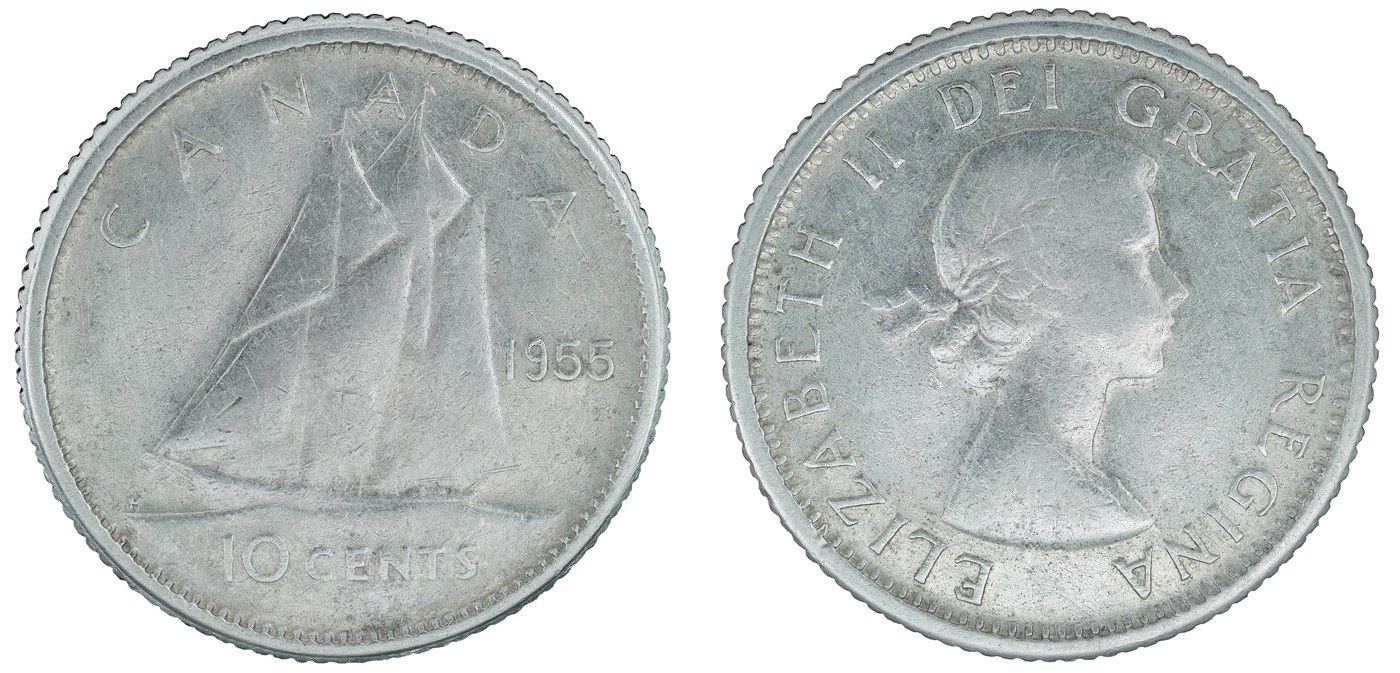
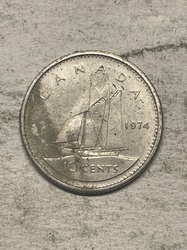
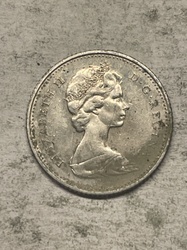
Start with the two faces. The monarch side (obverse) must read ELIZABETH II D:G:REGINA CANADA around a right-facing, laureate portrait. On a 1955 coin this is the Mary Gillick effigy, consistent with the 1953-1964 period; a later, more detailed portrait would indicate 1965 or after. The ship side (reverse) shows the Bluenose schooner in full sail with CANADA 10 CENTS and the year.
Check the physical specifications. A genuine silver-era dime is about 18 mm across, weighs roughly 2.3 g, and has a reeded edge. It is 0.800 fine silver through 1966, so it should feel dense for its small size and produce a clear, high ring when balanced on a fingertip and tapped. A dull thud can signal a plated base-metal fake or heavy wear.
Confirm the date and design work together. The Bluenose reverse spans 1937 onward, but the Elizabeth II obverse only begins in 1953, so a Bluenose dime with this queen and a 1955 date is internally consistent. Look for no mint mark: circulating dimes came only from the Royal Canadian Mint in Ottawa.
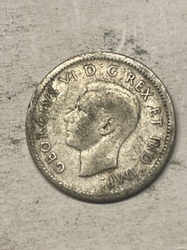
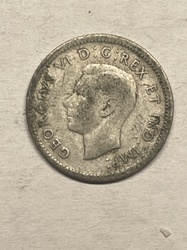
Beware of look-alikes and pitfalls. Do not confuse this with the King George VI Bluenose dimes (which read GEORGIVS VI), the later 50% silver 1967-1968 dimes, or the nickel dimes from 1968 onward, which are magnetic in later years and lack silver. Cleaned or polished coins lose value and can mask alterations, so inspect the fields for hairlines. For any coin claimed to be a scarce variety or high grade, seek third-party authentication rather than relying on the design alone.
Frequently asked questions
How can I tell a silver dime from a later nickel dime?
Silver 1955 dimes are non-magnetic, ring brightly, and show a warm grey-white tone. Many modern Canadian dimes are steel-based and stick to a magnet; if it grabs a magnet it is not the 1955 silver issue.
Which side is the obverse on this coin?
The Queen Elizabeth II portrait side is the obverse; the Bluenose schooner side is the reverse, even though it carries the 10 CENTS denomination.
Are there valuable varieties of the 1955 dime?
The 1955 date itself is common. Value comes mainly from grade and eye appeal. If you suspect an error or a scarce variety, have it examined by a reputable grading service before assuming a premium.
Should I clean my dime before identifying or selling it?
No. Cleaning leaves hairlines and reduces both collector value and confidence in authentication. Identify it as-is and let a professional handle conservation if needed.
Canadian Ten Cents identified by the community
Recent Canadian Ten Cents coins identified with Coin Identifier.