
How to Identify the Canadian Palladium Maple Leaf
A guide to the Royal Canadian Mint's scarce Palladium Maple Leaf coin, covering its design, limited issue years, weight standard, and authenticity checks.
Read the full Canadian Palladium Maple Leaf encyclopedia entry →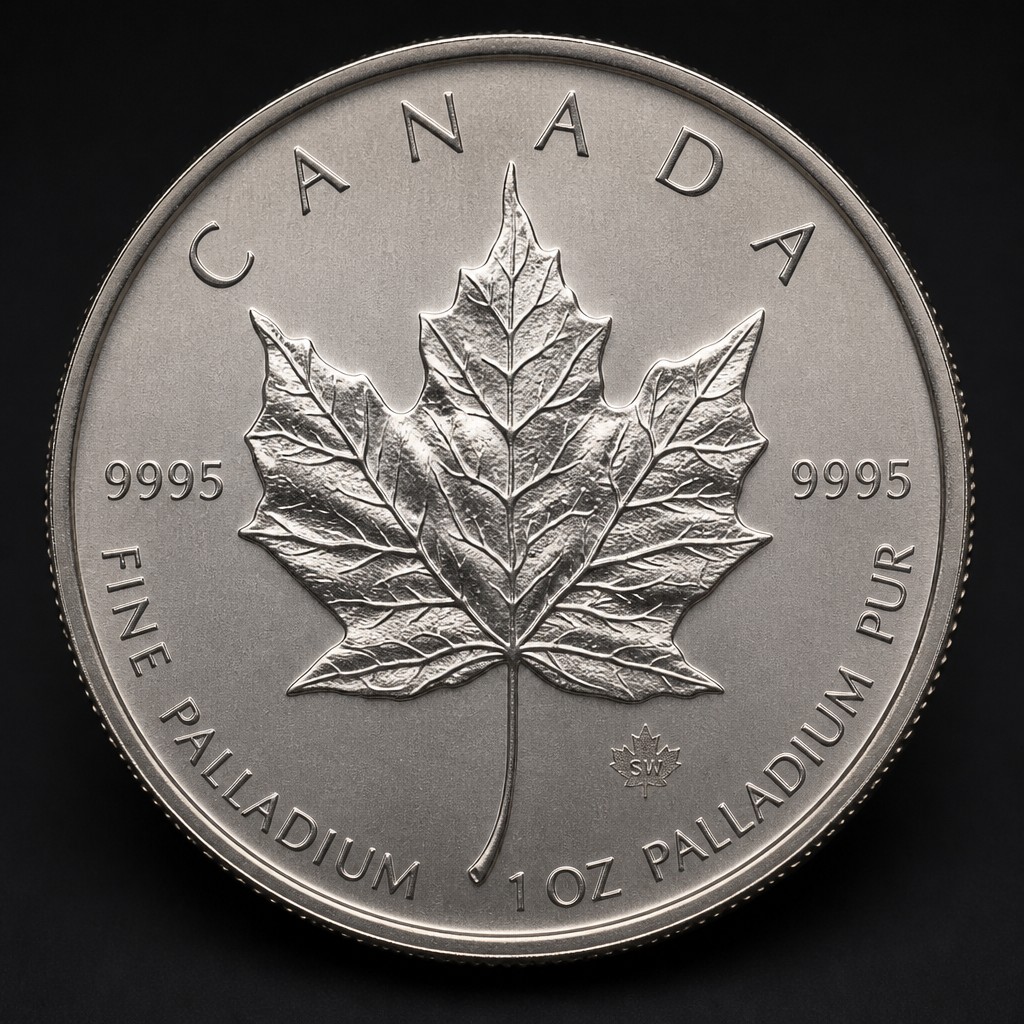
What This Coin Is
The Canadian Palladium Maple Leaf is a limited bullion coin produced by the Royal Canadian Mint, notable for being struck in far fewer years than its gold, silver, and platinum Maple Leaf siblings. It was first issued in 2005, with additional limited releases in 2009, making it one of the scarcer entries in the broader Maple Leaf bullion family.
Obverse Design
The obverse features Queen Elizabeth II's portrait, consistent with the era in which these coins were produced, along with "CANADA," the year of issue, and the face value in Canadian dollars.
Reverse Design
The reverse shows the same style of single detailed maple leaf used across the broader Maple Leaf coin family, with fine vein texturing and a plain background. The metal content is identified through the fineness and weight inscription rather than a distinct design element, since the maple leaf artwork itself is shared conceptually with the gold, silver, and platinum versions.
Size, Weight, and Metal
Standard issues are one troy ounce of .9995 fine palladium, with a diameter and edge treatment similar to other one-ounce Maple Leaf coins. Because full production runs were limited to only a couple of years, this coin was not offered in the wide range of fractional sizes seen in the gold and platinum lines.
Mint Marks and Inscriptions
Look for "PALLADIUM" or the fineness statement "9995" alongside the maple leaf, which distinguishes it from the visually similar gold, silver, and platinum versions. Some examples may include the RCM's micro-engraved security mark used on various bullion products from the mid-2000s onward.
Telling It Apart From Similar Coins
Because the maple leaf reverse design is shared across metals, the fineness inscription is the most reliable way to confirm this is the palladium version rather than platinum or another metal. Palladium's silvery-white color can resemble platinum or silver at a glance, so checking the printed fineness text is more reliable than judging color alone.
Judging Condition at a Glance
Well-preserved coins show crisp, unbroken vein detail across the maple leaf and a bright, even luster typical of palladium's finish. Because these coins were issued in limited numbers and are less frequently encountered in circulation among collectors, comparing surface condition against verified reference photos is especially useful.
Authenticity Red Flags
Given the coin's relative scarcity and value, verify weight and diameter carefully against the one-ounce .9995 fine palladium standard, since counterfeiters may substitute cheaper metals with a similar silvery appearance. Blurred maple leaf vein detail, an incorrect or missing fineness inscription, or a coin that does not match expected weight for its size are signs that warrant further verification.
Frequently asked questions
When was the Canadian Palladium Maple Leaf issued?
It was first struck in 2005, with additional limited production in 2009, making it much scarcer than the gold, silver, and platinum Maple Leaf coins.
What purity is the palladium?
Standard issues are .9995 fine palladium, one troy ounce in weight.
How do I tell it apart from the platinum version?
Check the fineness inscription on the reverse, since the maple leaf design itself is shared across metals and color alone can be misleading.
Was this coin issued in fractional sizes?
No, the limited production runs generally focused on the one-ounce size rather than the broader range of fractional weights seen in other Maple Leaf metals.
Whose portrait is on the obverse?
Queen Elizabeth II, consistent with the years in which this coin was produced.