
How to Identify the Canadian Loonie
How to identify Canada's $1 loonie by its 11-sided shape, gold color, common loon reverse, and the story behind its last-minute design change.
Read the full Canadian Loonie encyclopedia entry →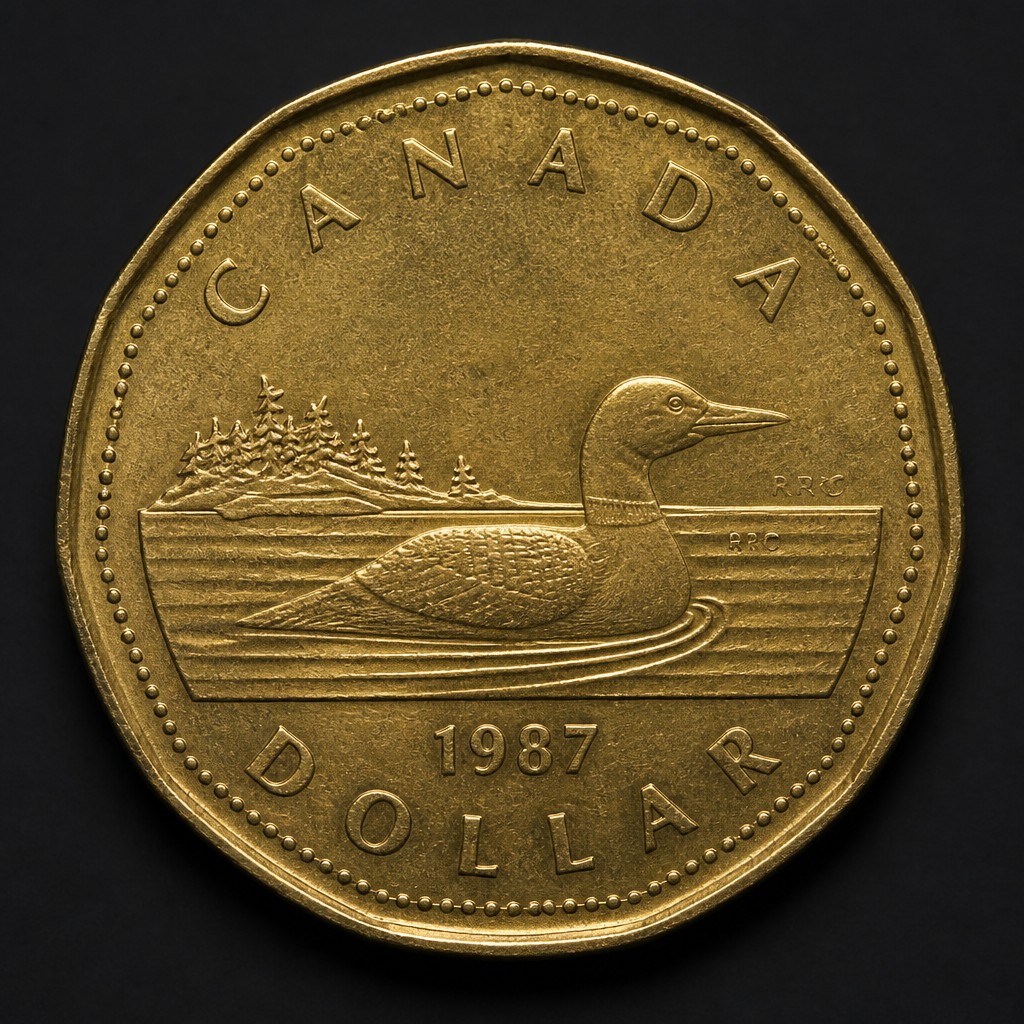
What It Is
The loonie is Canada's $1 circulation coin, introduced on June 30, 1987, to replace the paper $1 bank note and to end regular production of the silver-era Voyageur dollar for everyday circulation.
Obverse Design & Inscriptions
The obverse carries a portrait of Queen Elizabeth II, using the Dora de Pédery-Hunt effigy at introduction and later official portraits, with King Charles III appearing on issues from 2024 onward.
Reverse Design & Inscriptions
The reverse shows a common loon swimming on water, designed by wildlife artist Robert-Ralph Carmichael. This design famously replaced an originally planned canoe and voyageur scene after the master dies for that design were lost in transit shortly before the coin's release, forcing a last-minute switch.
Size, Weight, Metal, and Edge
The loonie has a distinctive 11-sided shape and a gold color, originally achieved with bronze-plated nickel and switched to multi-ply plated steel from 2012 onward for cost reasons. It measures about 26.5mm across and weighs roughly 6.27 grams in its original composition.
Mint Marks & Where to Find Them
Struck by the Royal Canadian Mint with no separate branch mint mark. Some years feature a small privy mark or a special commemorative reverse replacing the loon, such as the "lucky loonie" issues tied to Olympic events.
Telling It Apart From Similar Coins
The 11-sided shape and gold tone make the loonie easy to distinguish from the round, silver-colored dime and quarter, and from the larger, two-tone toonie. To check the era of composition, try a magnet: coins from 2012 onward have a steel core and will attract a magnet, while earlier bronze-plated nickel coins will not.
Judging Condition & Grade
Wear shows first on the loon's head and body and along the raised facets of the 11-sided rim. Genuine coins should show even plating with no exposed base metal at the edges.
Authenticity Red Flags
An incorrect number of sides, a color that looks too pale or too coppery compared to genuine examples, missing or malformed edge facets, and an unexpected magnetic response for the coin's stated era are all signs of a counterfeit.
Frequently asked questions
Why is the loonie 11-sided instead of round?
The multi-sided shape helps people distinguish it by touch and sight from other circulating coins, particularly the round silver-colored dime and quarter.
Why does the loonie show a loon instead of a canoe scene?
The original design was meant to show a voyageur canoe scene, but the master dies were lost in transit shortly before release, so the Mint substituted the loon design already prepared as a backup.
How can I tell if my loonie has a steel core?
Test it with a magnet: coins struck from 2012 onward have a steel core and will attract a magnet, while earlier bronze-plated nickel coins will not.
What metal gives the loonie its gold color?
Originally a bronze plating over a nickel core, and later a similar gold-toned plating over a steel core from 2012 onward.