
How to Identify the Calpurnia Denarius
A collector's guide to the Calpurnia denarius: reading the Apollo head, the galloping horseman, the control marks, and telling it from similar Republican types.
Read the full Calpurnia Denarius encyclopedia entry →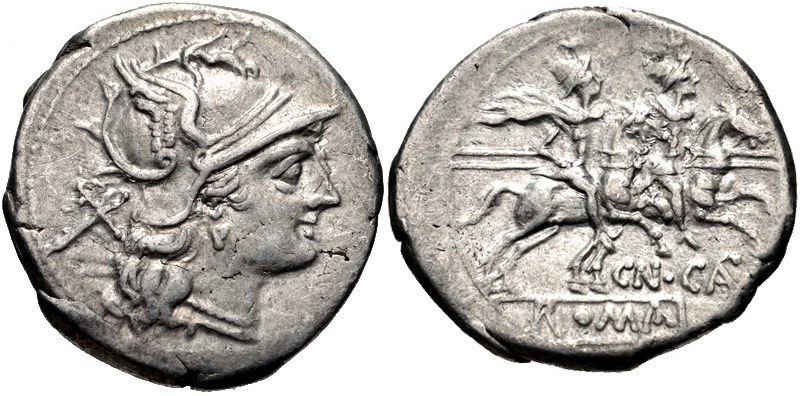
Begin with the pairing of designs, because the combination is the key. A Calpurnia denarius of the common Piso Frugi type shows a right-facing laureate male head, Apollo, on the obverse and a galloping horseman on the reverse. Confirm that the reverse rider carries a palm branch or torch and that the field or exergue bears a Republican legend, typically an abbreviated Piso Frugi name with ROMA. That head-and-horseman formula is the primary identifier.
Check the physical format next. This is a small, hand-struck silver denarius, broadly in the range of about 3.5 to 4 grams and roughly the diameter of a small modern coin, with a slightly irregular, sometimes off-center flan. A perfectly round, heavy, or base-metal piece is a warning sign rather than a genuine Republican denarius.
Expect abundant control marks. The Piso Frugi issue used a huge number of dies, so you will often see tiny symbols, single letters, or numerals in the fields on either side. These are normal and are used to attribute a specific variety against a catalogue such as Crawford 340; they are not evidence of a fake or a different coin. Do not be alarmed by wide variation in these minor marks.
Watch for look-alikes. Several Republican moneyers used a galloping horseman or a laureate Apollo head, so a rider alone or a head alone is not enough; you need both together plus the correct legend to place it with the Calpurnia gens. Later Calpurnia issues and other family types differ in their reverses. Read the moneyer's name carefully to separate this issue from superficially similar denarii.
Finally, weigh authenticity. Genuine examples are struck, not cast, so beware of grainy surfaces, mold seams, or unnaturally uniform detail that can indicate a modern copy. Because the common type is inexpensive, high-value forgeries are less of an issue than with famous rarities, but cast tourist copies do exist. When in doubt, compare the coin against published specimens and, for anything of significant value, seek an opinion from a reputable ancient-coin dealer or auction house.
Frequently asked questions
What is the quickest way to recognize this coin?
Look for a laureate Apollo head facing right on one side and a galloping horseman with a Republican legend on the other. That head-and-horseman pairing, together with the moneyer's name and ROMA, is the fastest way to place it as a Calpurnia denarius.
Do the small symbols mean my coin is a special variety?
The control marks identify which dies struck the coin and are used to attribute a specific variety in catalogues, but most are common. Some combinations are scarcer than others, so it is worth matching them against a specialist reference if you want the exact variety.
What should a genuine example weigh and measure?
It should be silver, broadly in the range of about 3.5 to 4 grams and roughly the diameter of a small modern coin, with a hand-struck, slightly irregular flan. A base-metal piece, or one well outside that weight, is likely a fake or a different item.
How is this different from other Republican denarii with a horseman?
Other moneyers also used riders or an Apollo head, so neither element alone is decisive. The Calpurnia type combines the laureate Apollo obverse with the galloping horseman reverse and the specific moneyer's legend; reading the name is what separates it from similar issues.