
How to Identify the Caligula Sestertius
A large bronze coin of Emperor Caligula, often notable for a reverse depicting his three sisters personified as virtues, making it a scarce and sought-after type.
Read the full Caligula Sestertius encyclopedia entry →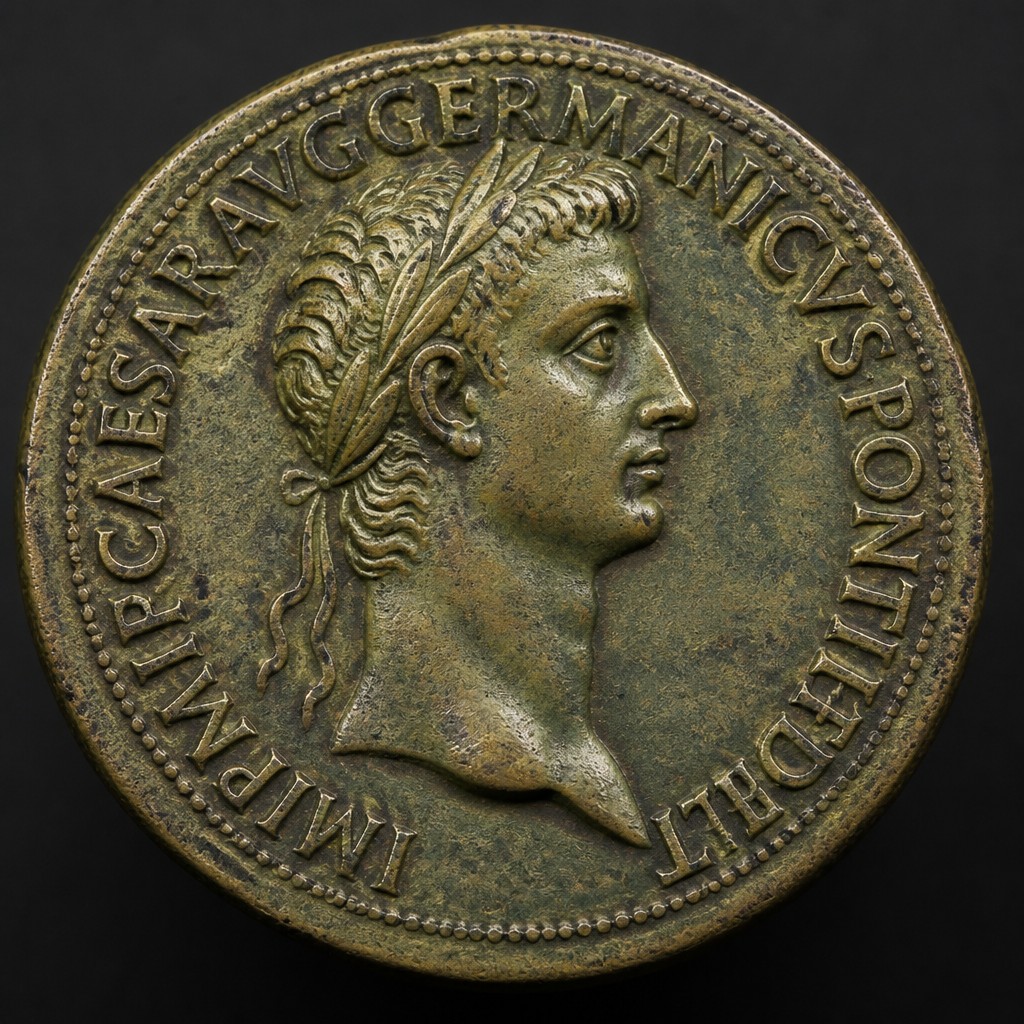
What This Coin Is
This large orichalcum (brass-like bronze alloy) sestertius was struck under Caligula, the third Roman emperor, who reigned briefly from 37 to 41 AD. His coinage is relatively scarce compared to many other early emperors due to his short reign and the later damnatio memoriae efforts that led to some pieces being melted down or defaced after his assassination.
Obverse Design & Inscriptions
The obverse shows a bare or laureate head of Caligula facing left or right depending on the specific issue. The legend reads C CAESAR AVG GERMANICVS PON M TR POT, listing his name and titles including Pontifex Maximus and holder of tribunician power.
Reverse Design & Inscriptions
One of the most famous and collectible reverse types for Caligula shows his three sisters, Agrippina the Younger, Drusilla, and Julia Livilla, standing side by side, each personifying a virtue such as Securitas, Concordia, and Fortuna, holding attributes like a cornucopia and patera. The legend reads AGRIPPINA DRVSILLA IVLIA around the scene, with SC (Senatus Consulto, "by decree of the Senate") often placed in the field, since bronze coinage formally required Senate authorization.
Size, Weight, Metal, and Edge
This is a large bronze/orichalcum coin, typically around 34-37mm in diameter and weighing roughly 27-29 grams, consistent with the substantial sestertius denomination of the early Julio-Claudian period. The edge is plain.
Mint Marks and Where to Find Them
Roman sestertii of this era were struck centrally at Rome under senatorial authority, so there is no separate geographic mint mark; the SC (Senatus Consulto) notation in the field serves as the marker confirming official Senate-sanctioned bronze issue rather than indicating a specific mint location.
Telling It Apart From Similar Coins
The three-sisters reverse is unique to Caligula's coinage and not shared with any other emperor, making it straightforward to identify once recognized, though the type is genuinely scarce and therefore also one of the more heavily reproduced ancient bronzes on the market. Other Caligula sestertius reverses include a scene of the emperor addressing soldiers (adlocutio) or seated Vesta types, which should be compared against his obverse legend and portrait style to confirm attribution.
Judging Condition at a Glance
Because sestertii are large, well-preserved examples can show remarkable portrait and reverse detail, including individual facial features on the three sisters and folds in their drapery. Given the coin's age and the practice of deliberately damaging Caligula's image after his death, examples with intact, undamaged portraits are especially notable; smoothed or tooled surfaces (sometimes added later to disguise corrosion or improve eye appeal) should be examined carefully.
Authenticity Red Flags
Due to strong collector demand and relative scarcity, this type is a known target for both cast reproductions and "improved" genuine coins that have been smoothed, tooled, or had details re-engraved to enhance their appearance. Warning signs include an unnaturally glossy or waxy surface, tool marks visible under magnification in the fields around the portrait or figures, a raised casting seam, and inconsistent metal color or texture between different parts of the coin suggesting repair or alteration. Because of the value and forgery risk associated with this specific type, professional authentication is strongly advised before any purchase.
Frequently asked questions
Who are the three figures on the reverse?
They represent Caligula's three sisters, Agrippina the Younger, Drusilla, and Julia Livilla, each shown personifying a virtue such as Security, Concord, or Fortune.
Why is Caligula's coinage relatively scarce?
His reign was short, and after his assassination a damnatio memoriae effort led to some of his coinage being melted down or having his image defaced, reducing the number of well-preserved survivors.
What does SC mean on the coin?
It stands for Senatus Consulto, "by decree of the Senate," reflecting that bronze coinage in this period was formally issued under senatorial authority rather than the emperor's direct control.
Why should I be extra cautious buying this type?
Its scarcity and strong collector demand make it a frequent target for cast reproductions and tooled or altered genuine coins, so professional authentication is strongly recommended.