
How to Identify the Byzantine Solidus
An overview of the Byzantine gold solidus, explaining its imperial portrait obverse, religious or Victory reverse types, weight standard, and the CONOB mint marks used to identify where it was struck.
Read the full Byzantine Solidus encyclopedia entry →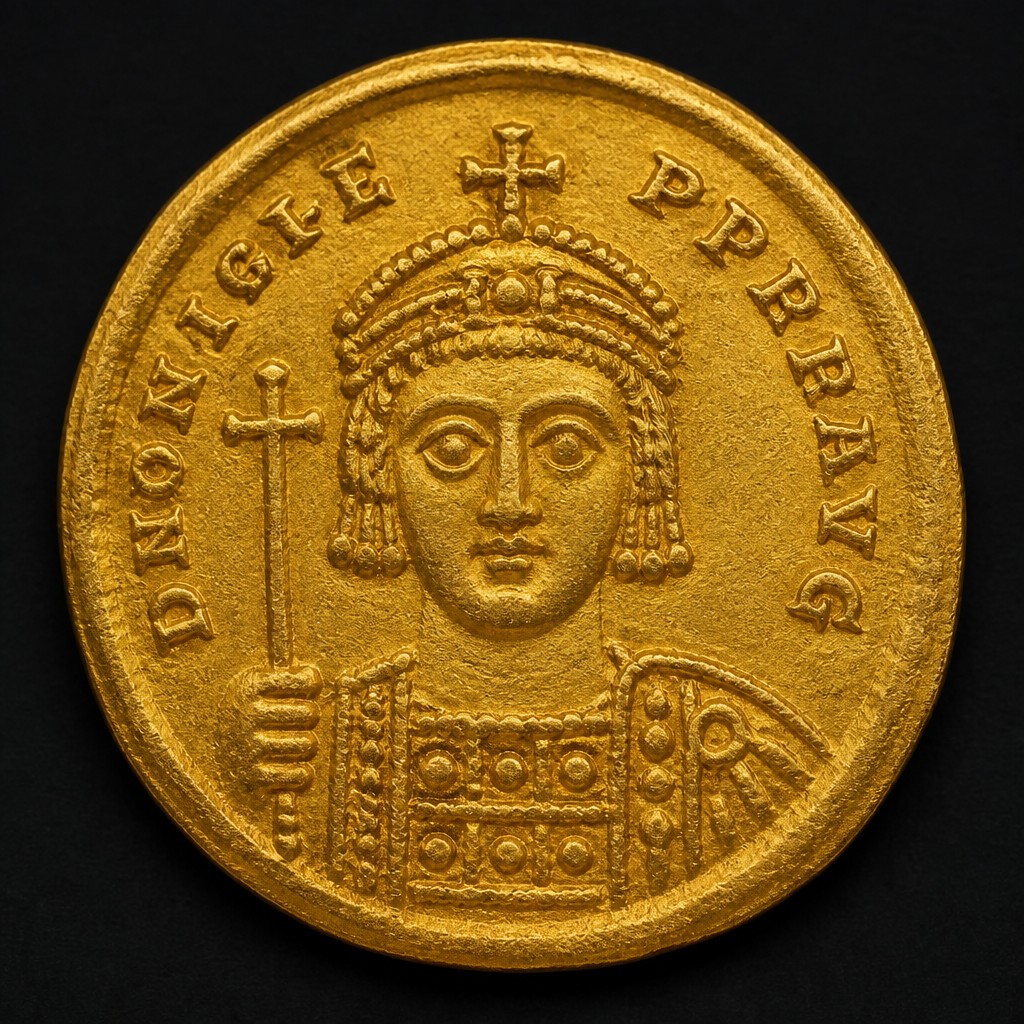
What This Coin Is
The solidus was the primary gold coin of the Byzantine (Eastern Roman) Empire, struck continuously from the early 4th century into the 11th century. It served as a stable, high-purity gold standard across the medieval Mediterranean world and was widely imitated by neighboring cultures.
Obverse Design
Early solidi typically show the emperor in profile wearing military or imperial dress, sometimes holding a spear or globe. From the 7th century onward, many issues show a facing bust, and busts of multiple co-emperors are common on later types. The legend usually begins DN (Dominus Noster) followed by the emperor's name and titles, ending in AVG or similar.
Reverse Design
Reverse designs evolved over the centuries. Earlier solidi often show a standing figure of Victory holding a long cross, or an angel. From the mid-7th century, a cross potent set on three or four steps became common. From the later 10th century onward, a facing bust of Christ Pantocrator appears on many issues, with the emperor's portrait moved to the reverse or shared with a co-ruler.
Size, Weight, Metal, and Edge
The solidus was struck at a consistent standard of about 4.5 grams and roughly 20–21mm in diameter, in high-purity gold (often close to 24 karat in the earlier centuries, with gradual debasement in later periods). The edge is plain, produced by simple hammer striking on a thin, slightly irregular flan.
Mint Marks and Where to Find Them
Mint identification appears in the exergue (the small area beneath the main reverse design), most famously as CONOB, meaning gold coin of pure standard from Constantinople. Other mints such as Ravenna, Thessalonica, Antioch, and Carthage used their own abbreviations, often paired with officina (workshop) letters or numerals indicating which workshop within the mint produced the coin.
Telling It Apart From Similar Coins
Solidi can be confused with contemporary Islamic gold dinars, which deliberately avoid figural imagery in favor of Arabic script, or with later Western European gold coins that copied Byzantine weight standards. Barbarian and Germanic successor-kingdom imitations of solidi also exist, often with garbled or blundered legends that don't quite match genuine imperial titles.
Judging Condition
Look at the sharpness of the emperor's facial features and the legend lettering. Well-centered strikes with full legends and minimal edge weakness command more interest than off-center or heavily worn examples. Because the flans were thin and irregular, some legend loss at the edge is normal even on high-grade examples.
Authenticity Red Flags
Watch for gold-washed base metal fakes, which often show wear revealing a different color underneath, and for examples that have been tooled or re-engraved to alter a common emperor's name into that of a rarer ruler. Unusually crisp, perfectly centered strikes on suspiciously modern-looking flans, or legends with letterforms inconsistent with the claimed period, are also warning signs.
Frequently asked questions
What does CONOB mean on a Byzantine solidus?
CONOB indicates the coin was struck in Constantinople to the standard of pure gold (OB refers to the purity mark used for gold coinage of the era).
How much gold is in a solidus?
It was struck at roughly 4.5 grams, and early solidi were close to pure 24-karat gold, though purity declined somewhat in later centuries.
Why do solidi show different reverse designs over time?
Reverse imagery evolved from classical figures like Victory toward Christian symbols such as the cross and eventually the image of Christ, reflecting changing imperial and religious themes.
How do I know which emperor issued my solidus?
Read the obverse legend, which names the emperor and his titles; comparing the portrait style and legend wording to known imperial reigns narrows down the date.