
How to Identify the Byzantine Miliaresion
The miliaresion is a broad, flat Byzantine silver coin best known for its cross-on-steps obverse design and a legend arranged in concentric lines across the reverse field.
Read the full Byzantine Miliaresion encyclopedia entry →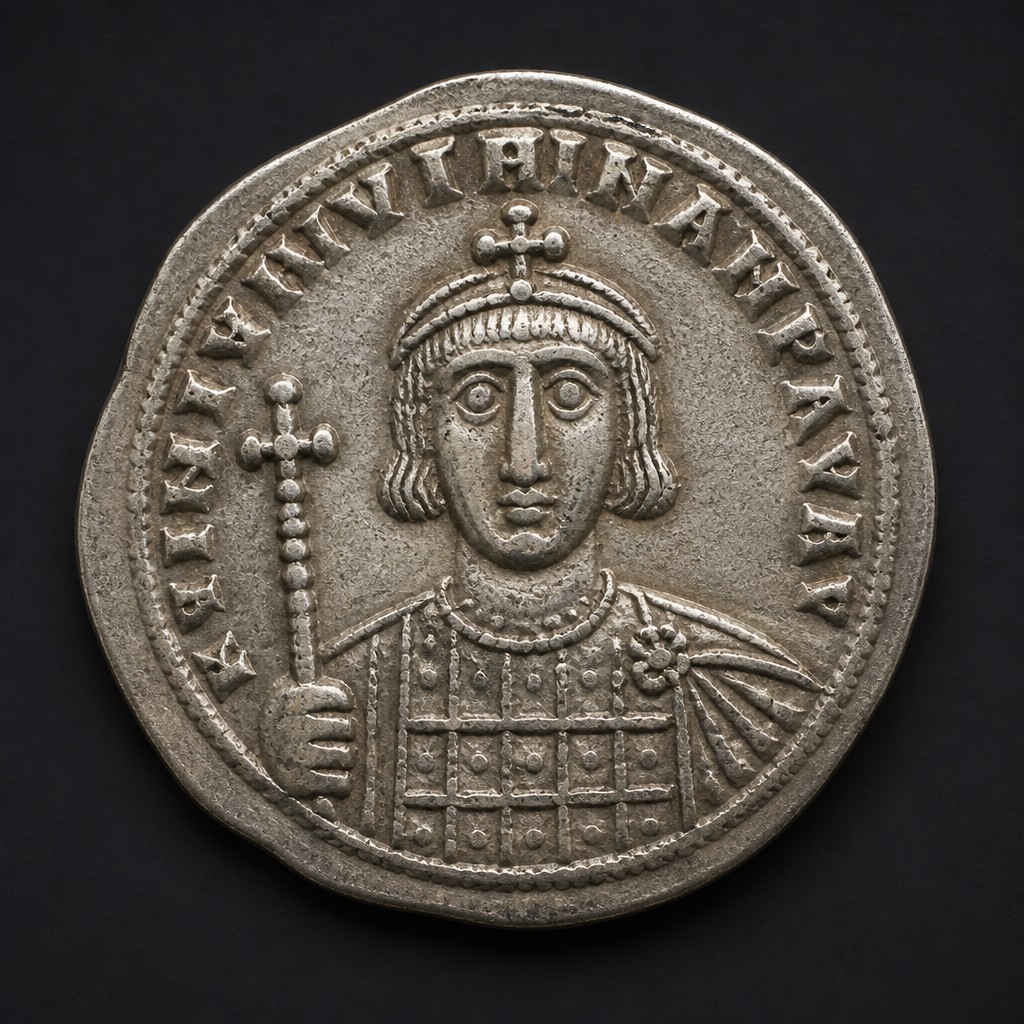
What It Is
The miliaresion was introduced as a standard silver denomination under Leo III around 720 AD, filling a gap in Byzantine coinage that had relied mostly on gold and bronze for the preceding centuries. It became the empire's principal silver coin for several hundred years, particularly prominent from the 8th through 11th centuries.
Obverse Design
The classic miliaresion obverse shows a cross potent set on three or four steps, often within a border of dots or a plain circular border, echoing a design theme also used on some Byzantine gold reverse types. Some later variants add small facing busts of co-emperors flanking the cross rather than leaving the cross alone in the field.
Reverse Design
The reverse typically carries a lengthy inscription arranged across several horizontal lines within the field, usually a religious invocation combined with the names and titles of the reigning emperor(s), rather than a pictorial scene. This text-heavy reverse layout is one of the miliaresion's most distinctive identifying features among Byzantine coin types.
Size, Weight, and Metal
Struck in silver, the miliaresion is a notably broad, thin, and flat coin, typically around 23-25mm in diameter but light in weight for its spread, generally in the range of 2-3 grams depending on period. Its flatness contrasts with the cup-shaped, concave format adopted by contemporary gold coinage in the later 10th century onward.
Mint Marks
Miliaresia generally do not carry the same CONOB-style gold fineness marks used on solidi; instead, identification of period and issuing emperor(s) relies mainly on reading the reverse inscription's imperial names and titles, since most examples were produced primarily at the Constantinople mint with only limited explicit mint-city labeling.
Telling It Apart From Similar Coins
The combination of a cross-on-steps obverse with a multi-line text reverse is fairly distinctive among Byzantine coinage and helps separate the miliaresion from contemporary gold and bronze denominations, which favor imperial portraits or Christ imagery as the primary obverse device. Its broad, flat, thin-silver format also differs clearly from the smaller, thicker silver fractional coins issued in some other periods of Byzantine history.
Judging Condition at a Glance
Because the design relies heavily on legible text rather than a detailed portrait, judge condition mainly by how completely the multi-line reverse inscription can still be read and by the crispness of the cross-and-steps obverse design, both of which wear down or corrode with extended circulation.
Authenticity Red Flags
Be cautious of coins with a reverse inscription that does not correspond to any documented emperor or co-emperor pairing, a diameter-to-weight ratio inconsistent with the coin's expected broad, thin, light-silver profile, or a surface that looks artificially toned to mimic old silver tarnish. Legend lettering that appears too modern or regular in style compared to genuine period engraving is also a signal to look more closely.
Frequently asked questions
When was the miliaresion introduced?
Around 720 AD, under Emperor Leo III, establishing a standard silver denomination that had been largely missing from regular Byzantine coinage in the preceding centuries.
What is shown on the obverse?
Typically a cross potent set on three or four steps, sometimes flanked by small busts of co-emperors in later variants, rather than a single imperial portrait.
Why does the reverse have so much text and no image?
The miliaresion's reverse was designed to carry a religious invocation along with the names and titles of the reigning emperor(s) across several lines of text, making the inscription itself the primary design element rather than a pictorial scene.
How heavy is a typical miliaresion?
Generally around 2-3 grams, despite a relatively broad diameter of about 23-25mm, giving it a light, thin feel compared to its visual size.
Does the miliaresion have the same CONOB mark as gold coins?
No, this gold-fineness mark is specific to Byzantine gold coinage; miliaresia are instead identified mainly by reading the imperial names and titles in the reverse inscription.