
How to Identify the Byzantine Gold Tremissis
The tremissis is the smallest of the three main Byzantine gold denominations, roughly one-third the weight and noticeably smaller in diameter than the standard solidus.
Read the full Byzantine Gold Tremissis encyclopedia entry →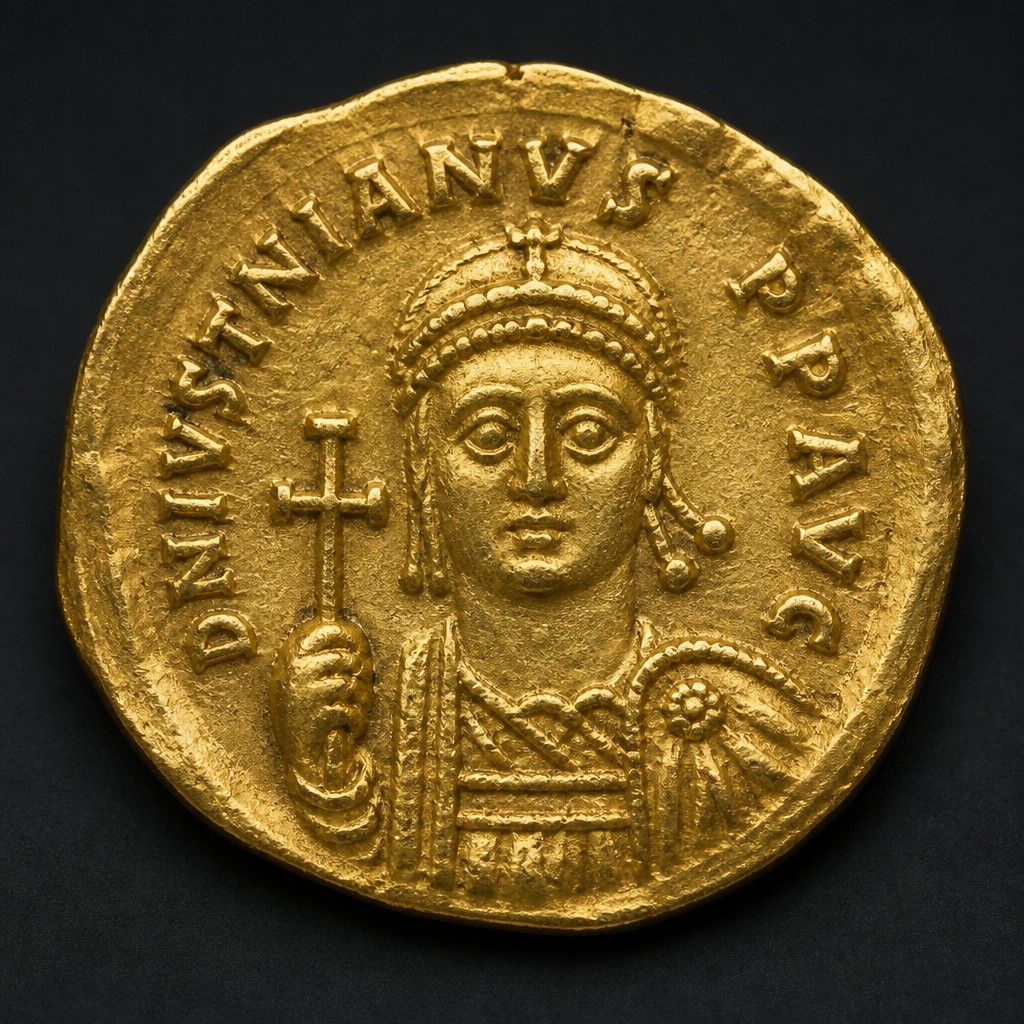
What It Is
The tremissis was struck as one-third of a solidus, continuing a Late Roman gold fraction denomination into the Byzantine period and remaining in production, especially in Western successor territories such as Ostrogothic Italy, Visigothic Spain, and Merovingian Gaul, even after the standard solidus and semissis fell out of favor in some regions.
Obverse Design
Like the solidus, the tremissis typically shows a bust of the reigning emperor, often facing forward or in three-quarter view, wearing a diadem or crown and imperial robes, sometimes holding a small globus cruciger. Due to the coin's small size, the surrounding legend is necessarily compressed and can be harder to read fully than on a full solidus.
Reverse Design
Reverse types commonly include a cross potent on steps, a Victory figure, or, on some Western imitative issues, simplified religious or imperial symbols copied somewhat crudely from Constantinopolitan prototypes. Western "pseudo-imperial" tremisses sometimes substitute a local ruler's monogram or blundered legend in place of an accurately rendered emperor's name.
Size, Weight, and Metal
The tremissis weighs approximately 1.5 grams, with a diameter of roughly 13-15mm—noticeably smaller than both the solidus (~4.5g) and the semissis (~2.2g), making side-by-side size comparison the quickest way to identify the denomination. It is struck in gold of generally high fineness, matching the standard used for the solidus at the same mint and period.
Mint Marks
As with other Byzantine gold denominations, look for CONOB or a city-specific variant in the reverse field or exergue, though the very small flan size sometimes forces engravers to abbreviate or omit part of the mark. Western imitative tremisses may carry garbled or nonsensical versions of the CONOB formula, reflecting less careful die engraving outside the imperial mint system.
Telling It Apart From Similar Coins
The tremissis is most reliably distinguished from the semissis and solidus by direct size and weight comparison rather than by design alone, since all three denominations often share similar obverse and reverse themes within the same reign. Distinguishing an authentic Constantinopolitan tremissis from a Western barbarian imitation generally comes down to the precision of the lettering and portrait style, with imitative issues typically showing cruder, less carefully executed dies.
Judging Condition at a Glance
Because the flan is small, design elements are naturally more compressed, so judge wear by the sharpness of the portrait's facial features and the legibility of the abbreviated legend rather than expecting the same level of fine detail seen on a full solidus. Gold's resistance to corrosion means most surviving tremisses retain good detail unless they saw significant historical wear or damage.
Authenticity Red Flags
Because tremisses are smaller and sometimes less carefully scrutinized than solidi, check for a weight noticeably different from the roughly 1.5 gram standard, a legend that does not correspond to any documented emperor or issuing authority, and casting seams or overly soft design edges that suggest a cast reproduction rather than a genuine struck coin.
Frequently asked questions
How much does a tremissis weigh compared to a solidus?
A tremissis weighs about 1.5 grams, roughly one-third of the standard solidus weight of about 4.5 grams, and its diameter is correspondingly smaller.
Why were tremisses still made in Western Europe after Rome fell?
Western successor kingdoms such as the Ostrogoths, Visigoths, and Merovingian Franks continued striking gold tremisses, often imitating Byzantine imperial designs, as part of their own regional gold coinages.
How can I tell a tremissis apart from a semissis?
Compare weight and diameter: a tremissis is about 1.5g and 13-15mm, while a semissis is heavier and larger at about 2.2g, making direct comparison the most reliable identification method.
Do Western imitative tremisses look different from genuine Byzantine ones?
Often yes. Imitative issues from Western kingdoms can show cruder die engraving, blundered or nonsensical legends, and less precise portrait style compared to coins struck at official Constantinopolitan or other imperial mints.
What mint mark should appear on a genuine tremissis?
Typically CONOB or a city-specific variant, though the coin's small size sometimes forces the mark to be abbreviated or partially omitted.