
How to Identify the Byzantine Gold Solidus
The solidus was the pure-gold workhorse coin of the Byzantine Empire for over 700 years, recognized by its emperor portrait obverse and CONOB mint mark in the reverse exergue.
Read the full Byzantine Gold Solidus encyclopedia entry →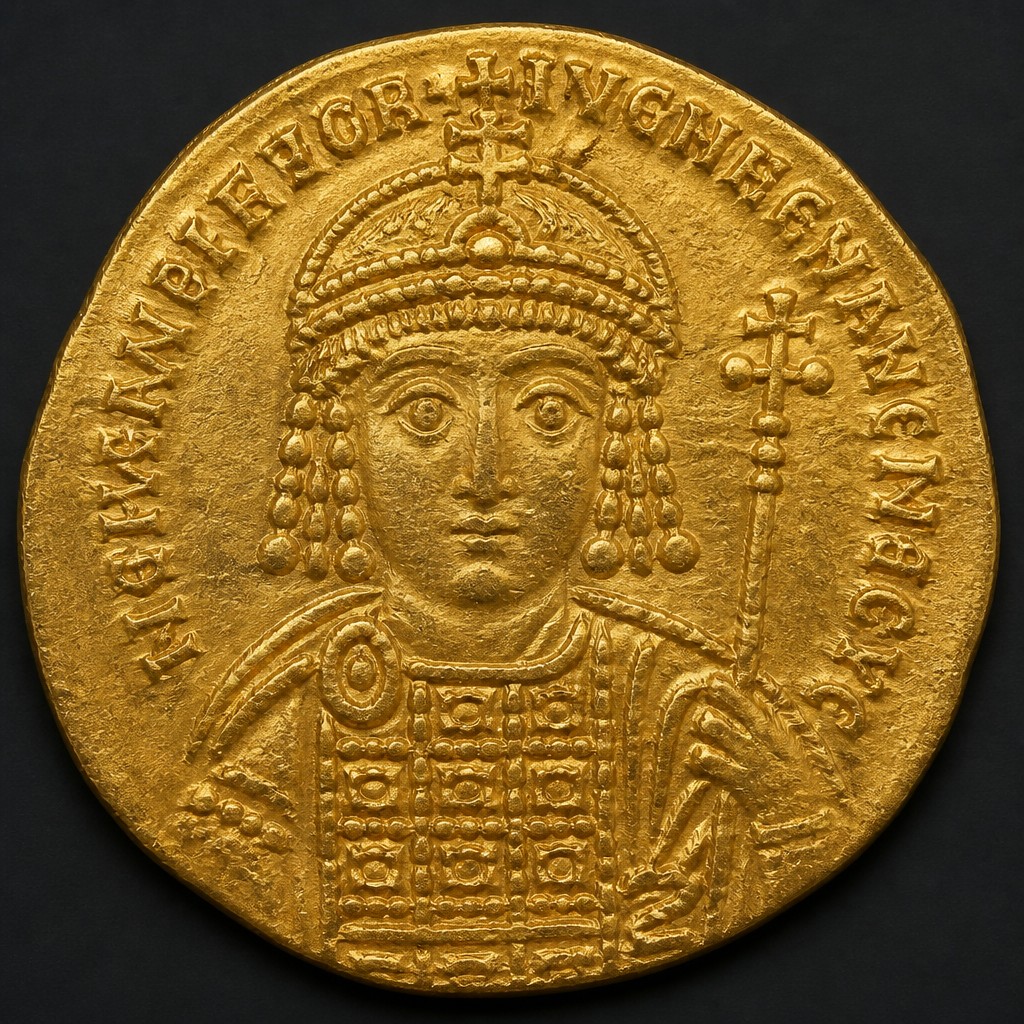
What It Is
The solidus was the standard gold coin of the Eastern Roman (Byzantine) Empire, introduced under Constantine I around 309 AD and struck with remarkable consistency until the debasements of the later 11th century. It served as the dominant international trade coin of the early medieval Mediterranean world.
Obverse Design
Most solidi show a bust or half-length figure of the ruling emperor, usually facing forward (a Byzantine departure from the profile portraits of classical Rome), wearing imperial regalia such as a crown, loros, or military cuirass, and often holding a globus cruciger (orb topped with a cross) or a spear. The surrounding legend abbreviates the emperor's name and titles, commonly beginning "DN" (Dominus Noster) and ending in "PP AVG" or "AVGG" for co-emperors.
Reverse Design
Reverse types evolved over the centuries: early solidi favor a standing Victory or angel holding a long cross, later types show a cross potent set on three or four steps, and from Justinian II (late 7th century) onward many issues place a bust of Christ Pantocrator on the obverse and move the emperor to the reverse instead. Multi-figure issues showing two or three co-emperors standing together are also common in some periods.
Size, Weight, and Metal
The solidus was struck in very high-purity gold (close to 24 karat) at a remarkably stable weight of about 4.5 grams and a diameter of roughly 19-21mm. Edges are plain, produced by hand striking rather than machine milling, so slight irregularity in the flan shape is normal and expected.
Mint Marks
Look in the exergue (the small space beneath the reverse design, often below a line) for the abbreviation CONOB, meaning gold of pure fineness struck at Constantinople. Coins from other mints substitute the city initials, such as THESOB for Thessalonica or RAVENNOB for Ravenna, still ending in "OB" to denote gold quality.
Telling It Apart From Similar Coins
The solidus is distinguished from the later, thinner histamenon nomisma by its flat (not cup-shaped) flan and from Western medieval gold imitations by the precision of its lettering and portrait style. Compared to the smaller tremissis and semissis, the solidus has a noticeably larger diameter and heavier weight; side-by-side comparison of size is the fastest way to separate the three denominations.
Judging Condition at a Glance
Because gold does not corrode, well-preserved solidi often still show sharp portrait and lettering detail after 1,500 years; wear is judged mainly by flatness of the highest points of the emperor's face and drapery folds, and by how legible the legend remains. Bankers' marks, test cuts, or old mounting holes (from historic use as jewelry) are common and reduce both detail and typical collector interest.
Authenticity Red Flags
Because ancient gold coins are valuable, modern casts and struck fakes exist. Watch for: a seam line around the edge (a hallmark of cast reproductions), unnaturally uniform or "soft" letter edges, incorrect or garbled legends, a weight noticeably off the ~4.5g standard, or a yellow color that looks too bright or too pale for high-fineness gold. Comparison with published die studies of legend spacing and portrait style is the standard way specialists sort genuine issues from later imitations.
Frequently asked questions
What does CONOB mean on a Byzantine solidus?
CONOB combines the mint abbreviation (CON for Constantinople, or another city's initials) with OB, a Latin abbreviation indicating the coin is pure gold (obryziacum). It appears in the exergue on the reverse.
Why does the emperor face forward instead of in profile?
Byzantine coinage broke from the classical Roman profile portrait convention starting in the mid-4th century, favoring a frontal, more iconic imperial image that also made it easier to display elaborate regalia.
How can I tell a solidus from a tremissis or semissis?
Compare size and weight: the solidus is about 19-21mm and 4.5g, the semissis about half that weight, and the tremissis about a third, with a noticeably smaller diameter.
Are holes or mount marks common on these coins?
Yes. Because solidi were often worn as pendants or jewelry historically, many surviving examples show a small hole or solder marks from an old mount, which typically lowers numismatic desirability.
Does gold color help date a solidus?
Only loosely. Early solidi are extremely pure and bright yellow, while coins from periods of gradual debasement in the 11th century show a slightly paler tone from added silver or copper alloy.