
How to Identify the Byzantine Gold Semissis
The semissis is the half-value Byzantine gold coin, sitting in size and weight between the full solidus and the smaller tremissis, often identified by a cross-on-globe reverse.
Read the full Byzantine Gold Semissis encyclopedia entry →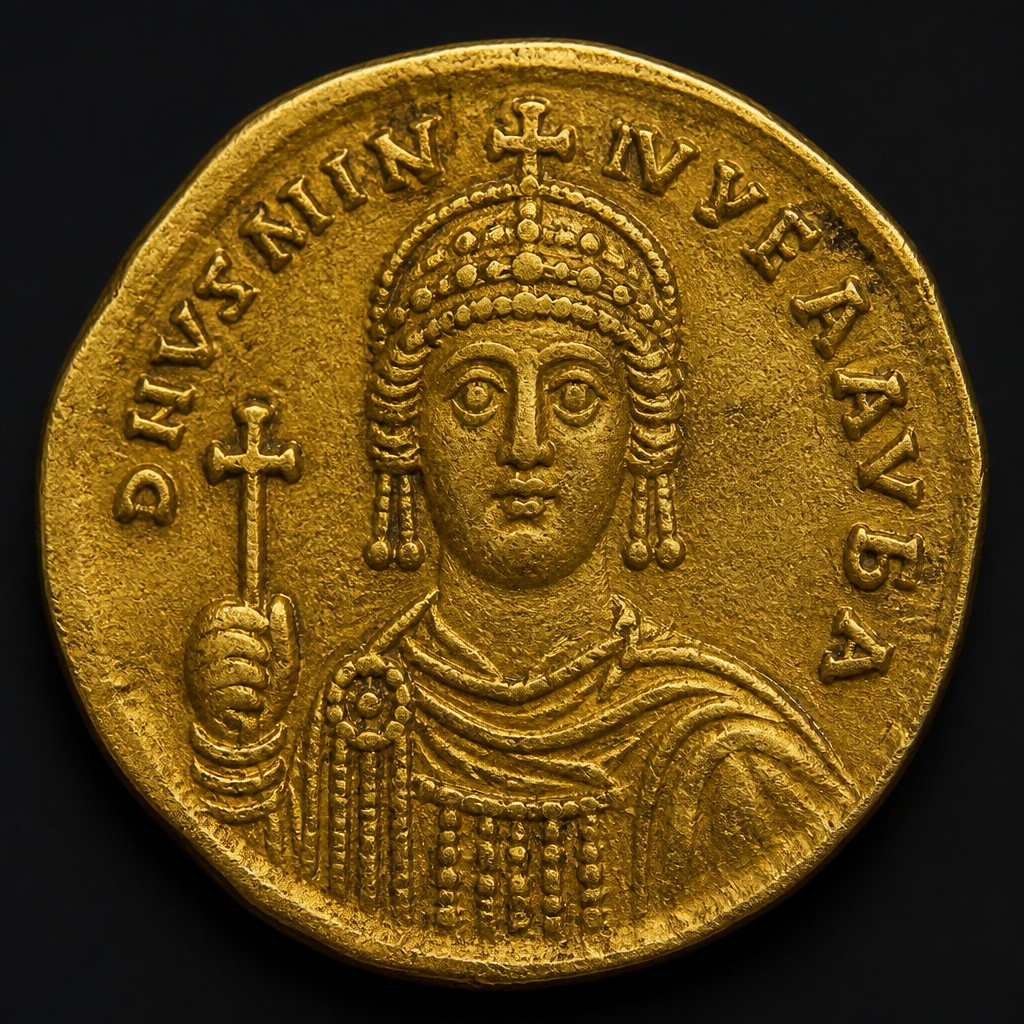
What It Is
The semissis represented half the value of a standard solidus and was struck alongside the solidus and tremissis as part of the same Late Roman/Byzantine gold fractional denomination system. It was issued less consistently over time than its two companion denominations, with some emperors and mints producing it only sporadically.
Obverse Design
The obverse generally follows solidus conventions on a smaller scale: a bust of the emperor, usually facing or in three-quarter view, wearing a diadem or crown and imperial dress, surrounded by an abbreviated Latin legend naming the ruler. Because the flan is mid-sized between the solidus and tremissis, detail is somewhat more compressed than on a full solidus but generally clearer than on the smallest tremissis.
Reverse Design
A common and recognizable semissis reverse type shows a cross set upon a globe, sometimes within a wreath, though other reverse types including a Victory figure or a cross potent on steps also appear depending on the specific reign and mint. The surrounding legend typically continues the emperor's titles begun on the obverse.
Size, Weight, and Metal
Struck in gold matching the fineness of contemporary solidi, the semissis weighs approximately 2.2 grams—about half the weight of a full solidus—with a diameter around 17-18mm, placing it clearly between the solidus (~19-21mm, 4.5g) and the tremissis (~13-15mm, 1.5g) in direct size comparison.
Mint Marks
Look for CONOB or a mint-specific variant in the reverse field or exergue, following the same convention used across all Byzantine gold denominations. Because the semissis was struck less frequently and in smaller volumes than the solidus at many mints, surviving examples with fully clear mint marks can be somewhat less common than for the more heavily produced solidus.
Telling It Apart From Similar Coins
Direct weight and diameter comparison against the solidus and tremissis is the most reliable way to confirm a coin is a semissis, since obverse and reverse design themes frequently overlap across all three denominations within a given reign. The cross-on-globe reverse type, while not unique to the semissis, is a helpful visual cue when paired with a mid-sized flan consistent with the ~2.2 gram standard.
Judging Condition at a Glance
As with other Byzantine gold coinage, gold's resistance to corrosion means well-preserved semisses often retain sharp portrait and lettering detail; judge wear by flatness at the highest points of the emperor's facial features and by how completely the legend and mint mark remain legible.
Authenticity Red Flags
Watch for a weight or diameter that does not fall consistently between the solidus and tremissis standards for the claimed reign, a legend or mint mark combination not documented for the period, or overly soft, indistinct design details suggestive of a cast rather than struck coin. As with other ancient gold, a color or luster that looks inconsistent with high-fineness gold also warrants closer inspection.
Frequently asked questions
How much does a semissis weigh?
Approximately 2.2 grams, about half the weight of a standard solidus (around 4.5 grams), consistent with its name meaning 'half.'
What reverse design most commonly appears on a semissis?
A cross set on a globe, sometimes within a wreath, is a common and recognizable semissis reverse type, though Victory figures and cross-on-steps designs also occur depending on the reign.
How is a semissis different from a tremissis at a glance?
The semissis is larger and heavier, at about 17-18mm and 2.2g, compared to the tremissis at roughly 13-15mm and 1.5g, so direct size and weight comparison is the clearest way to tell them apart.
Was the semissis struck as consistently as the solidus?
No, many mints and reigns produced the semissis in smaller quantities or only sporadically compared to the more heavily struck standard solidus, which can make well-preserved examples somewhat less commonly encountered.
What mint mark should appear on a genuine semissis?
CONOB or a city-specific variant, following the same gold-fineness marking convention used across all Byzantine gold denominations of the period.