
How to Identify the Byzantine Gold Histamenon Nomisma
The histamenon nomisma is a later Byzantine gold coin known for its thin, dish-shaped (scyphate) flan, distinguishing it visually from the flat earlier solidus.
Read the full Byzantine Gold Histamenon Nomisma encyclopedia entry →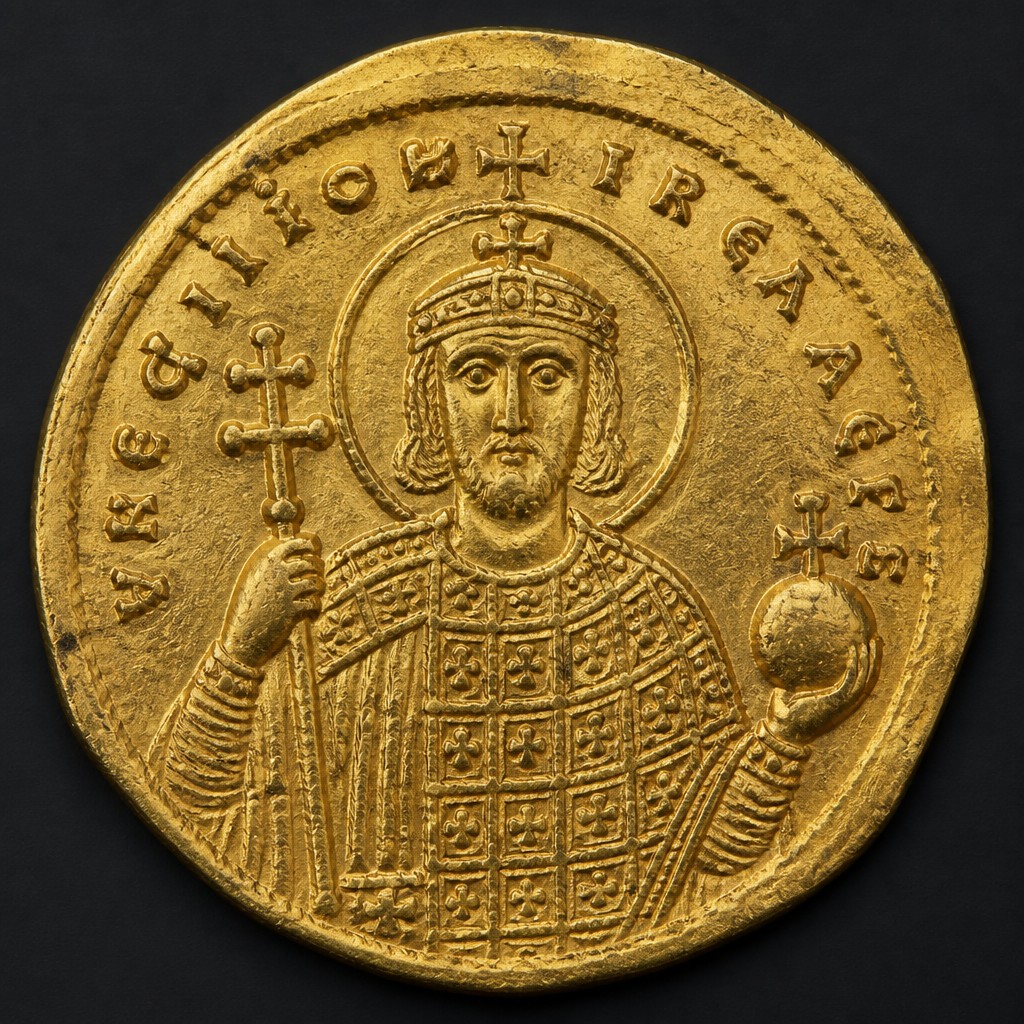
What It Is
The histamenon nomisma emerged in the mid-10th century, under Nikephoros II Phokas (963-969), as a redesigned successor to the classic solidus. It continued as the empire's premier gold coin alongside a lighter-weight "tetarteron nomisma" until the major currency reforms of Alexios I Komnenos in 1092.
Obverse Design
A defining feature of many histamena is a bust of Christ Pantocrator on the obverse, shown frontally holding a Gospel book, with a surrounding Greek legend such as "IhS XIS REX REGNANTIUM" (Jesus Christ, King of Kings). Earlier and later variants sometimes place the emperor here instead, depending on the reign.
Reverse Design
The reverse typically carries the standing or bust portrait of the emperor (sometimes with a co-emperor), often holding a labarum (military standard) or cross-topped scepter and an orb, flanked by an abbreviated Greek or Latin legend naming the ruler.
Size, Weight, and Metal
Struck in gold of high but sometimes gradually reduced fineness, the histamenon weighs close to the traditional solidus standard of about 4.4 grams, but its most recognizable physical trait is its shape: a broad, thin, distinctly concave or cup-like (scyphate) flan rather than the flat disc of earlier coinage. Diameter is comparable to or slightly larger than a solidus.
Mint Marks
As with the earlier solidus, the abbreviation CONOB continues to appear, usually worked into the design near the base of the reverse figure rather than in a clean exergue line, since the concave format changed how die engravers laid out the field.
Telling It Apart From Similar Coins
The single most reliable way to separate a histamenon from a standard solidus is to look at the coin edge-on: a solidus lies flat, while a histamenon curves like a shallow bowl. Compared to its companion low-value tetarteron nomisma (a smaller, thicker, flat gold coin issued at the same time), the histamenon is broader and consistently concave.
Judging Condition at a Glance
Look for even striking across the curved field, since the scyphate shape made it harder for die engravers to strike full detail into the center of the design; weakly struck centers are common even on lightly worn coins and should not automatically be read as heavy wear. Check the rim for cracks or splits, a common flan-stress issue on thin concave coins.
Authenticity Red Flags
Because the concave shape is difficult to fake convincingly by casting, a perfectly flat "histamenon" or one with a crude, uneven curve is suspect. Also watch for legends that mix letter styles from different reigns, incorrect combinations of obverse Christ types with reverse emperor types that never historically appeared together, and colors or weights inconsistent with the gold standards of the specific decade the coin claims to be from.
Frequently asked questions
What does 'scyphate' mean?
Scyphate describes a coin struck on a thin, bowl-shaped (concave/convex) flan rather than a flat one. Byzantine gold and later silver/bronze coinage from the mid-10th century onward commonly used this shape.
Why does Christ appear on the obverse of many of these coins?
From the reign of Nikephoros II Phokas onward, Byzantine gold coinage frequently placed a portrait of Christ Pantocrator in the primary obverse position to emphasize divine sanction of imperial rule, moving the emperor's portrait to the reverse.
How is a histamenon different from a tetarteron nomisma?
Both were gold denominations issued together after the 960s reform, but the tetarteron is smaller, thicker, and flat, while the histamenon is broader, thinner, and distinctly cup-shaped.
Is weak central detail a sign of wear or damage?
Not necessarily. The concave striking technique often left the center of the design less sharply struck than the rim even on coins that saw little circulation, so judge wear mainly from the high points and legend clarity.
When did this denomination stop being issued?
Production ended with Alexios I Komnenos's currency reform of 1092, which replaced the debased late-11th-century gold coinage with the new hyperpyron nomisma.