How to Identify the Byzantine Follis
A collector's guide to recognizing the Byzantine bronze follis by its large M value mark, cross, imperial portrait, mint signatures, and worn bronze flan.
Read the full Byzantine Follis encyclopedia entry →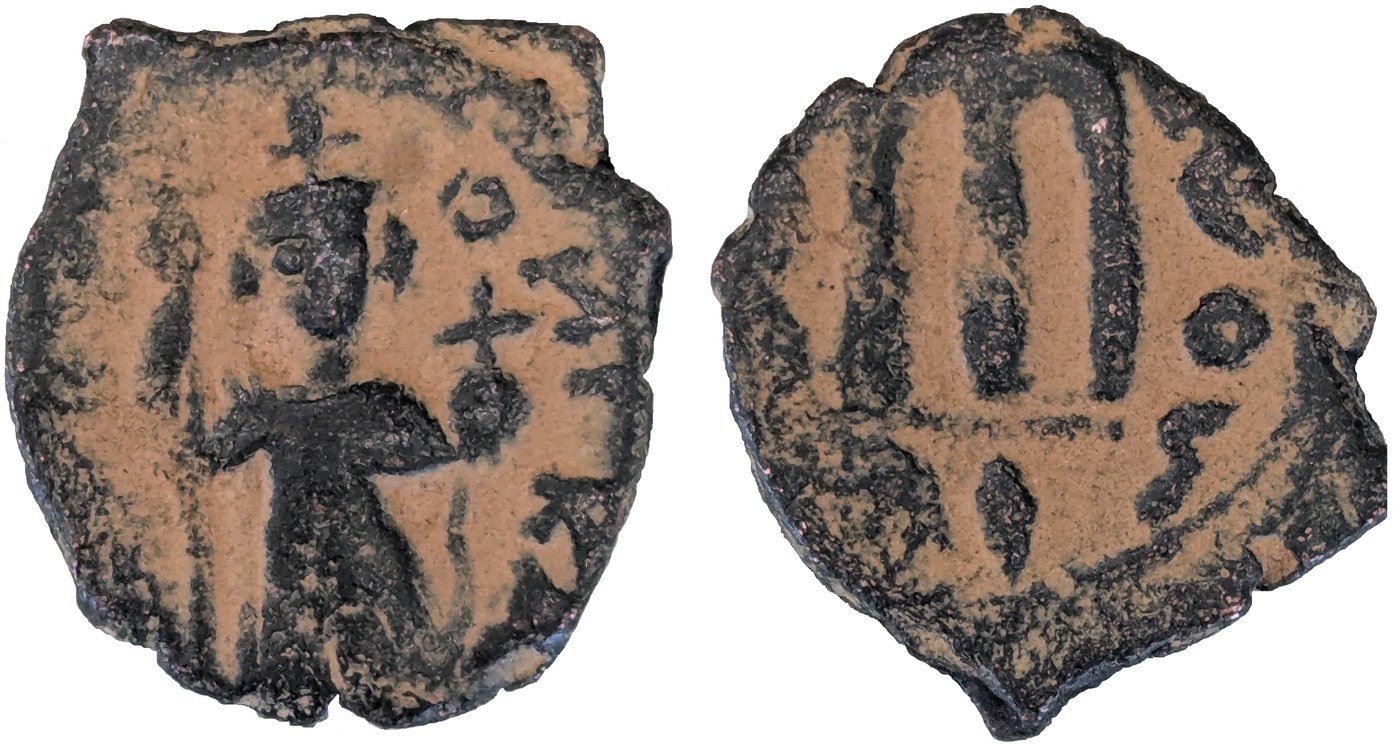
Read the Reverse M First
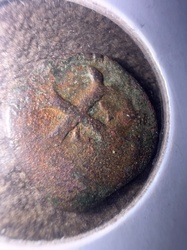
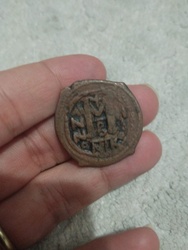
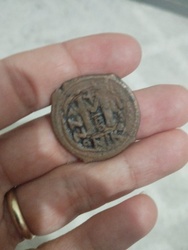
The single most reliable clue is the large letter M on the reverse. It is the Greek numeral for forty and marks the coin as a follis of forty nummi. A cross usually sits directly above the M, and small letters or symbols may appear in the fields on either side. If the reverse is built around a big central M under a cross, you are almost certainly holding a follis rather than a smaller bronze fraction like the half follis (marked K) or the decanummium (marked I).
Confirm the Imperial Portrait
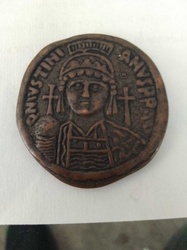
Turn to the obverse and check for an imperial bust or standing figure. On this type it is Constans II, whose reign started in 641 AD, shown crowned and holding regalia, with a blundered Greek and Latin legend around the edge. Seventh-century portraits are stylized and often weakly struck, so do not expect fine detail. Some folles of the reign show the emperor alone while later issues add co-emperors, so the exact figure arrangement can vary within the same broad type.
Check Metal, Size, and Surfaces
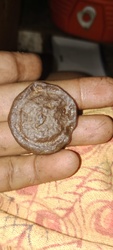
The follis is bronze, so expect a brown or green patina and a coin that feels dense and thick for its diameter. Flans are frequently irregular, off-center, or overstruck on earlier coins, and weights vary noticeably because the denomination shrank over the seventh century. A ragged, uneven edge and partial legends are normal and not signs of a problem. A perfectly round, shiny, lightweight coin claiming to be a follis deserves a closer look.
Find the Mint and Officina Marks
Below the M, look for a mint signature such as an abbreviation for Constantinople or another imperial mint, sometimes accompanied by an officina letter identifying the specific workshop. Regnal-year or date-like markings can also appear in the fields on some issues. These marks help pin down exactly where the coin was struck and are prized when legible, but on worn examples they are often faint or gone, which is common.
Rule Out Look-Alikes and Fakes
Distinguish the follis from its smaller relatives by the value letter: M is forty nummi, K is twenty, I is ten. Also separate it from base Roman bronzes, which lack the big Greek numeral system, and from Byzantine gold or silver, which are entirely different metals and designs. Cast counterfeits exist; watch for seams, a soft mushy surface, bubbles in the metal, or a suspiciously light weight, and for higher-value or unusual pieces compare against trusted references or seek third-party authentication.
Frequently asked questions
How do I tell a follis from a half follis?
Read the value letter on the reverse. A follis carries a large M for forty nummi, while a half follis shows a K for twenty and a decanummium shows an I for ten.
Where do I find the mint mark?
Look below the large M. A mint abbreviation and an officina letter often sit there, identifying the striking mint and workshop. On worn coins these marks may be faint or missing.
Is a rough, off-center strike a sign of a fake?
No. Seventh-century folles were mass-produced and often overstruck, so crude, off-center strikes and irregular flans are normal and expected rather than evidence of a counterfeit.
How can I spot a cast counterfeit?
Check for a mold seam around the edge, a soft or bubbly surface, and an incorrect weight. Genuine struck folles have sharper, pressed detail; suspicious pieces warrant reference comparison or authentication.
Byzantine Follis identified by the community
Recent Byzantine Follis coins identified with Coin Identifier.