
How to Identify the Byzantine Electrum Aspron Trachy (Scyphate)
A cup-shaped Byzantine coin struck in electrum (gold-silver alloy) from the late 11th through 12th centuries, showing Christ or the Virgin on one side and the emperor on the other.
Read the full Byzantine Electrum Aspron Trachy (Scyphate) encyclopedia entry →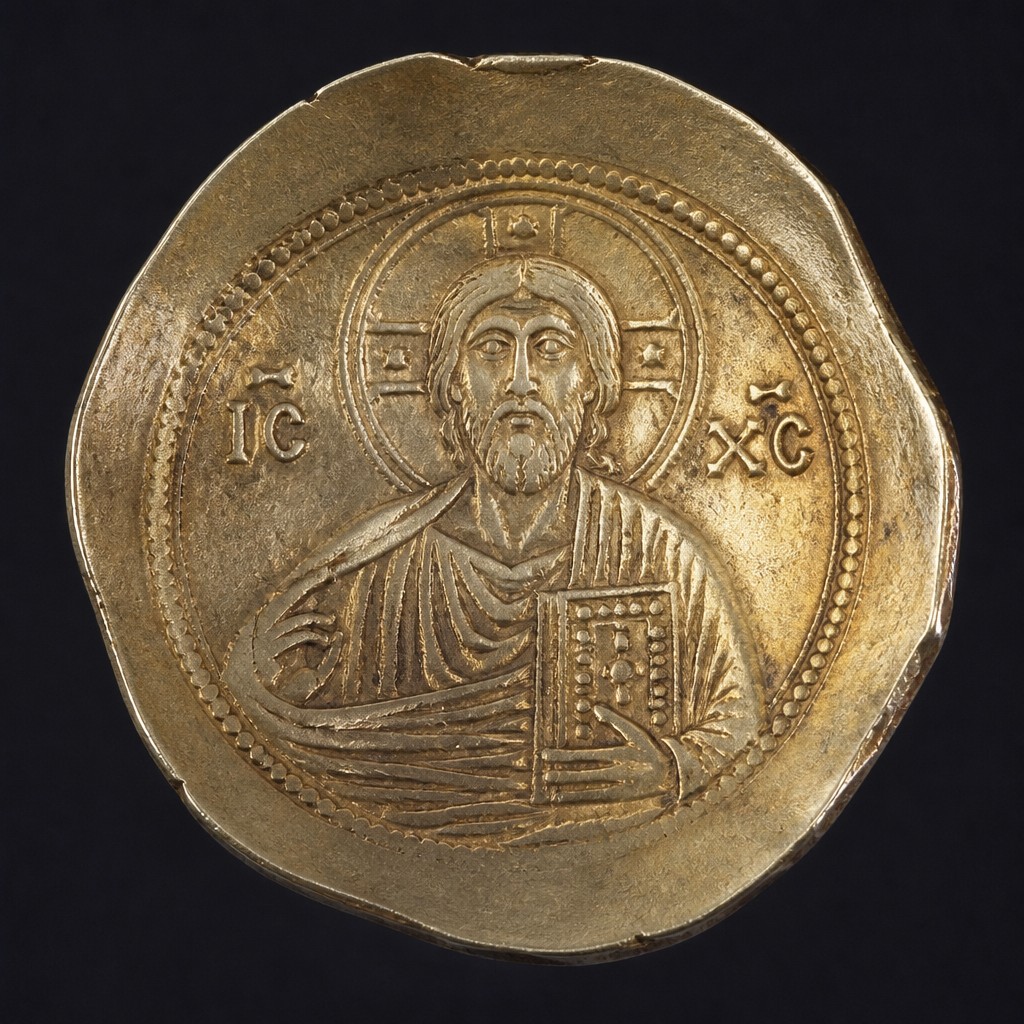
What It Is
The electrum aspron trachy was introduced around 1092 under Emperor Alexios I Komnenos as part of a major coinage reform, and it remained a staple denomination of the Byzantine Empire through the Komnenian and Angelid dynasties into the early 13th century. "Trachy" means "rough" or "thick" in Greek, referring to its unusual dish-shaped (scyphate) form, and "electrum" describes its alloy of gold and silver, which was richer in precious metal than the base-silver trachea struck alongside it.
Obverse Design
The obverse typically shows a religious figure: Christ Pantokrator (seated or standing, holding a book of Gospels) or the Virgin Mary (Theotokos), often enthroned or shown as a half-length bust. Greek abbreviations such as "IC XC" (Jesus Christ) or "MP ΘΥ" (Mother of God) usually flank the figure.
Reverse Design
The reverse depicts the reigning emperor, either alone or with a co-emperor or patron saint, generally standing and holding a labarum (long ceremonial staff) in one hand and a globus cruciger or akakia in the other. Abbreviated Greek names and imperial titles surround the figure.
Size, Weight, Metal, and Shape
These coins are distinctly cup- or saucer-shaped rather than flat, with a concave obverse and convex reverse. Diameter runs roughly 26-31mm, weight is typically about 4.0-4.5 grams, and the metal is electrum, though the actual gold content dropped steadily from Alexios I's reform through the 12th century as later emperors debased the alloy. The edges are irregular and unadorned, consistent with a thin, hand-struck flan.
Mint Marks and Attribution
Most surviving examples came from the mint at Constantinople, with a smaller volume from Thessalonica. Byzantine trachea do not carry explicit mint-letter marks the way Roman coins do; attributing a piece to a specific emperor or mint relies on reading the figures and inscriptions and comparing stylistic details.
Telling It Apart from Similar Coins
The electrum trachy sits between two other common Komnenian-era denominations: the flatter, higher-purity gold hyperpyron nomisma (less cupped, richer color) and the base-silver or billon trachy (similarly cup-shaped but darker, with little or no gold content). Weight and color are the best quick clues, since designs across all three can look similar at a glance.
Judging Condition at a Glance
Because these coins were struck with dies larger than the blank, off-center strikes with blank or partial areas are common and not necessarily a sign of wear. True wear shows first on the high points, such as Christ's or the emperor's face and the tops of any lettering. A well-centered strike with full, legible inscriptions on both sides represents a notably nicer example.
Authenticity Red Flags
Cast reproductions often show a grainy or bubbly surface, a visible casting seam around the edge, and incorrect weight for the type. A genuine trachy should have the characteristic cupped, dished shape; a flat example claiming to be a trachy is suspect. Comparing the coin's weight and rough gold color against reference figures for the specific reign can help flag pieces that are off standard.
Frequently asked questions
Why is this coin cup-shaped instead of flat?
Byzantine mints of this era deliberately struck coins on a curved (scyphate) shape starting with the 1092 reform, likely to make the coins stack and strike more consistently and to distinguish denominations by touch and sight.
How can I tell if my coin is electrum and not silver or gold?
Electrum trachea generally show a pale yellow-gray color between the deep yellow of a gold hyperpyron and the gray-white of a billon trachy, though precise metal content is best confirmed by weight and specific-gravity testing rather than color alone.
Why are so many of these coins off-center or missing part of the design?
The dies used were often larger than the coin blank, and the cupped striking method made full, even impressions difficult, so partial or off-center strikes are extremely common and expected for this type.
Does a worn face on Christ or the emperor mean the coin is low grade?
Yes, wear typically appears first on the raised high points like faces and letter tops, so smoothing in those areas indicates more circulation, while sharp facial and lettering detail suggests a higher-grade survivor.
How do I know which emperor issued my trachy?
Identification relies on reading the abbreviated Greek names and titles around the emperor's image on the reverse and comparing the reverse figure style, since there is no separate date or mint-mark system on these coins.