
How to Identify the Burma One Kyat (Mindon Min)
A collector's guide to the Burmese peacock kyat: the spread-tail peacock, wreath reverse, rupee-sized silver flan, Burmese-era date, and how to spot fakes.
Read the full Burma One Kyat (Mindon Min) encyclopedia entry →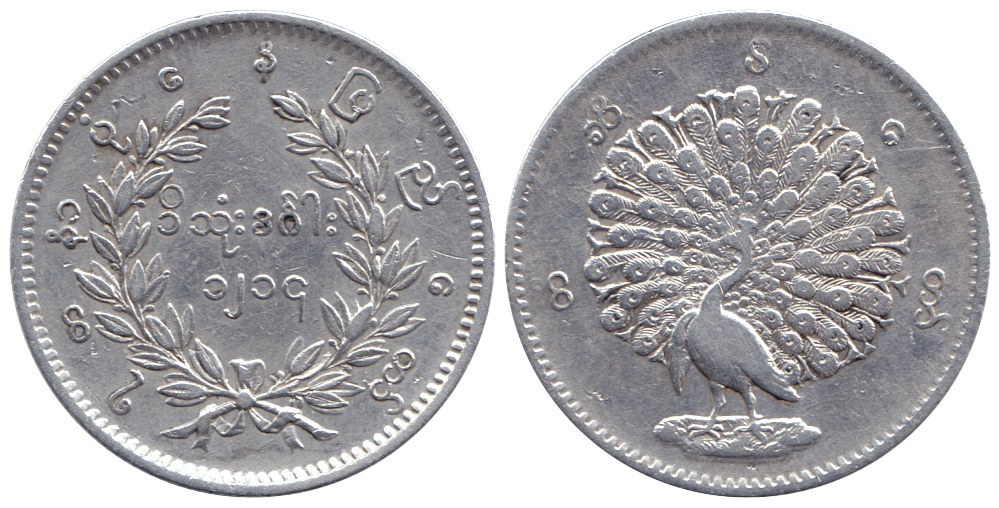
Start with the metal and size. The Burma One Kyat is a silver coin about the diameter of an Indian rupee or a US quarter, struck to the broadly rupee-weight regional silver standard. A genuine piece is non-magnetic silver with the natural grey tone of an old struck coin, often lightly toned in the fields; a coin that is magnetic, brassy, or noticeably light or heavy for its size should be treated with caution.
The obverse is the decisive clue. Look for the royal peacock shown facing with its tail fully fanned out in display, surrounded by Burmese-script legend and ornament. This full-display peacock — the emblem of the Konbaung dynasty — is the signature of Mindon Min's coinage and the single most reliable identifier. There is no royal portrait and no Latin lettering, which immediately separates the coin from the English-legend rupees of British India that circulated in the same region.
Turn to the reverse to confirm the denomination and date. The value appears inside a laurel-style wreath, with the date rendered in Burmese numerals of the Chula Sakarat era; a 1214 era date corresponds to about 1852-1853. Reading the Burmese numerals is the surest way to fix the denomination, because the smaller fractional peacock coins (such as the fractions of a kyat) share the same peacock emblem and wreath layout — the full one-kyat is distinguished by its larger diameter and its stated value.
Watch for look-alikes and restrikes. Because the peacock kyat is popular, it has been widely copied, and modern replicas, tourist pieces and cast forgeries exist. Genuine coins are cleanly struck with sharp, even relief on the peacock's feathers and the wreath; be wary of soft, grainy or blurry detail, visible casting seams, bubbles in the surface, or a mushy edge, all of which point to a cast copy rather than a struck original.
For authentication, weigh and measure the coin and compare it against catalogue figures for the silver kyat, since the correct diameter and weight are hard for casual fakes to match. Silver should also ring rather than give a dull thud, and there should be no magnetic attraction. When the peacock or the Burmese date is unclear, photograph both faces and check the design and numerals against standard references for Konbaung coinage before settling on an attribution; for higher-value examples, third-party certification adds confidence.
Frequently asked questions
What is the fastest way to recognise a Burma One Kyat?
Look for a rupee-sized silver coin with a peacock shown tail-spread in full display on the obverse and a denomination inside a wreath on the reverse, with the date in Burmese numerals. The full-display peacock is the surest identifier.
How do I tell it apart from a British India rupee?
The Burmese kyat uses the Konbaung peacock emblem and Burmese script with no English lettering, while British Indian rupees carry English legends and often a monarch's name or portrait. Both are similar-sized silver coins, so read the design and script.
How do I know it is a full kyat and not a fraction?
Smaller peacock coins share the same emblem and wreath design, so check the diameter and read the Burmese value on the reverse. The full one-kyat is the largest silver denomination of the series; the fractions are smaller and lighter.
How can I spot a fake or replica?
Genuine coins are struck silver of the correct diameter and weight, non-magnetic, with sharp feather and wreath detail. Be wary of magnetic, off-weight or off-colour pieces and of soft surfaces, casting seams or bubbles that indicate a cast copy. Weigh, measure and, for valuable examples, seek certification.