
How to Identify the Bronze Indian Head Cent
A guide to spotting the bronze-era (1864-1909) Indian Head cent, covering its design, weight, and how it differs from the earlier copper-nickel version.
Read the full Bronze Indian Head Cent encyclopedia entry →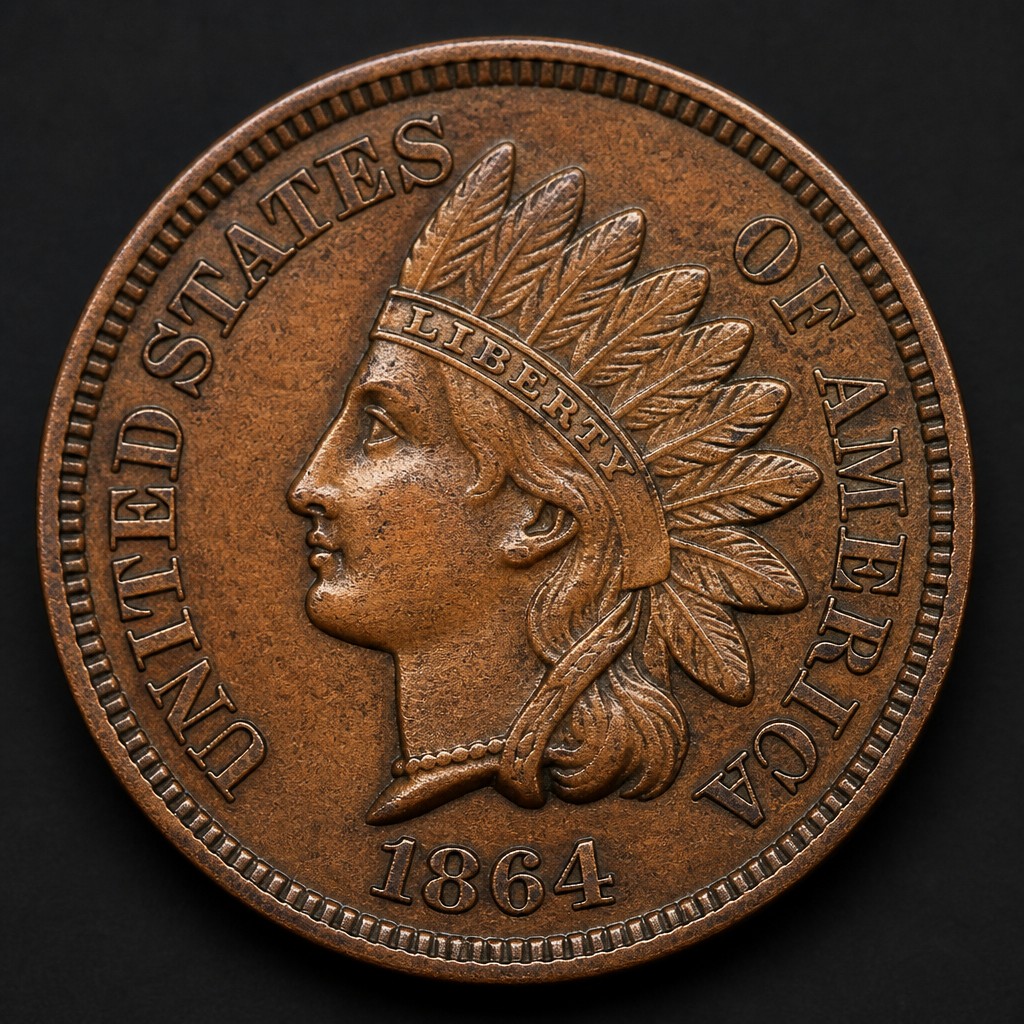
What It Is
The Indian Head cent was struck from 1859 to 1909, but partway through 1864 the U.S. Mint switched its metal from a pale copper-nickel alloy to a warmer bronze mix. The "bronze" Indian Head cent refers to every coin dated 1864 through 1909 made in this later alloy, which makes up the vast majority of the series that collectors encounter today.
Obverse Design
The obverse shows Liberty facing left wearing a Native American-style feathered headdress, with a band across her forehead reading "LIBERTY." Thirteen stars circle the rim from 1860 onward, and the date sits below the bust. The portrait was engraved by James B. Longacre.
Reverse Design
From 1860 to 1909, the reverse features an oak wreath tied with a ribbon bow at the bottom and a small shield at the top center. "ONE CENT" is stamped inside the wreath, and "UNITED STATES OF AMERICA" is not present on this side — it's confined to the obverse rim.
Size, Weight, Metal, and Edge
Bronze Indian Head cents (1864-1909) are 95% copper with 5% tin and zinc, weighing about 3.11 grams and measuring 19mm across, with a plain edge. This is noticeably lighter than the earlier 1859-1864 copper-nickel cents, which weighed about 4.67 grams and had a paler, almost whitish color. A bronze cent typically shows a warm reddish-brown to chocolate patina when circulated, versus the grayish tone of copper-nickel issues.
Mint Marks
Nearly the entire bronze Indian Head run was struck at Philadelphia and carries no mint mark at all. The only exceptions are 1908 and 1909, when the San Francisco Mint also produced cents; those coins show a small "S" on the reverse just below the wreath's bow, above the "ONE CENT" lettering.
Telling It Apart from Similar Coins
The most common mix-up is with the earlier copper-nickel Indian Head cents (1859-1864), which are thicker, heavier, and lighter in color. Within the bronze series, the 1859 reverse used a laurel wreath with no shield, and 1860-1864 issues sometimes exist in both copper-nickel and bronze depending on when in 1864 they were struck; weight is the deciding factor. Collectors should also not confuse this coin with the Lincoln cent, which replaced it in 1909 and carries a portrait rather than a headdress figure.
Judging Condition at a Glance
On a well-preserved coin, check the ribbon and headdress feathers for sharp separation, and the diamond-shaped area on the headdress near the ear for full detail — this is often the first place to wear smooth. On the reverse, look at the shield lines and ribbon bow for crispness. Circulated examples often show a smoothed, low-relief look to Liberty's cheek and hair.
Authenticity Red Flags
Because early dates and certain mintmarked issues carry a premium, look for mismatched surface texture around the date (a sign of possible date alteration), file marks near the mint mark on 1908-S and 1909-S coins, or a mint mark that looks added rather than struck. Weight that falls noticeably outside the expected 3.11 grams for a supposedly bronze piece is also worth further scrutiny.
Frequently asked questions
How can I tell a bronze Indian Head cent from the earlier copper-nickel type?
Weigh it and check the color. Bronze cents (1864-1909) weigh about 3.11 grams and look reddish-brown, while copper-nickel cents (1859-1864) weigh about 4.67 grams and look pale gray-white.
Where is the mint mark on an Indian Head cent?
Only 1908 and 1909 cents can have one. Look for a small 'S' on the reverse just below the wreath's ribbon bow. All other dates were struck in Philadelphia with no mint mark.
What metal is a bronze Indian Head cent made of?
It's 95% copper with 5% tin and zinc, the same general alloy later used for early Lincoln cents.
Why does the reverse look different on some Indian Head cents?
The wreath style changed. 1859 used a laurel wreath with no shield; 1860 onward used an oak wreath with a small shield at the top.