
How to Identify the Bronze Coin of Septimius Severus (Tyre)
A collector's guide to confirming a Tyre provincial bronze of Septimius Severus by its portrait, reverse type, metal, patina, and mint clues.
Read the full Bronze Coin of Septimius Severus (Tyre) encyclopedia entry →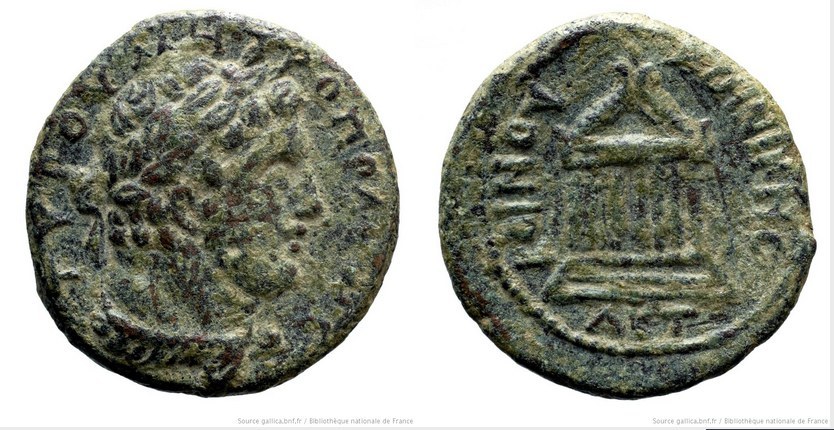
Start with the obverse bust. This type shows a right-facing, typically laureate portrait of Septimius Severus with his distinctive full beard in the Severan style. Look for a surrounding legend naming the emperor; on provincial bronzes the lettering is often partly worn or struck off the flan, so use the portrait style as a backup identifier when the legend is incomplete.
Next, read the reverse, which is what ties the coin to Tyre. Expect a local subject such as a temple (columns and a pediment, sometimes enclosing a figure or cult object) or a standing deity or civic personification connected to the city. A reverse showing an empire-wide Roman type instead of local imagery suggests a different mint, so the provincial subject matter is a key diagnostic.
Assess the metal, size, and fabric. This is a hand-struck bronze coin with an irregular flan and a brown, green, or earthen patina. Provincial city bronzes are usually a modest module, not a large medallion, and uneven strikes, off-center images, and partial legends are completely normal for the series. A perfectly round, sharply uniform "ancient" with suspiciously smooth surfaces deserves a closer look.
For mint attribution, rely on the reverse type and any surviving city legend or symbols rather than the portrait, since the same emperor was depicted at many mints. Comparing your coin to cataloged Tyre issues of Septimius Severus is the surest way to confirm both the city and the specific reverse variety.
Apply authentication caution. Cast fakes and tooled coins exist: watch for a seam around the edge, bubbles or pitting from casting, and unnaturally sharp detail that looks re-cut into worn metal. A genuine, undisturbed patina and honest wear are reassuring signs, and for a higher-value example, an opinion from a specialist dealer or attribution to a standard reference is worthwhile.
Frequently asked questions
What is the quickest way to recognize this type?
Look for the bearded, right-facing bust of Septimius Severus on the obverse paired with a local Tyre reverse — a temple or a standing deity or civic figure — on a hand-struck bronze flan with ancient patina.
How can I tell it apart from an imperial coin from Rome?
Imperial coins usually carry empire-wide types like Roma, Victory, or personified virtues. A local temple or city deity on the reverse indicates a provincial mint such as Tyre rather than the mint at Rome.
How do I spot a fake?
Check for casting seams along the edge, surface bubbles or pitting, and detail that looks re-carved into the metal. Genuine pieces show honest, uneven wear and a stable natural patina rather than an artificially applied coating.
Should I clean the patina off?
No. The patina is a natural corrosion layer that protects the coin and is valued by collectors. Cleaning or stripping it can permanently damage the surface and reduce the coin's value.