
How to Identify the British Trade Dollar
A collector's walkthrough: spot Britannia with her trident, the Chinese dragon reverse, the date and mint mark, and watch for fakes and chopmarks.
Read the full British Trade Dollar encyclopedia entry →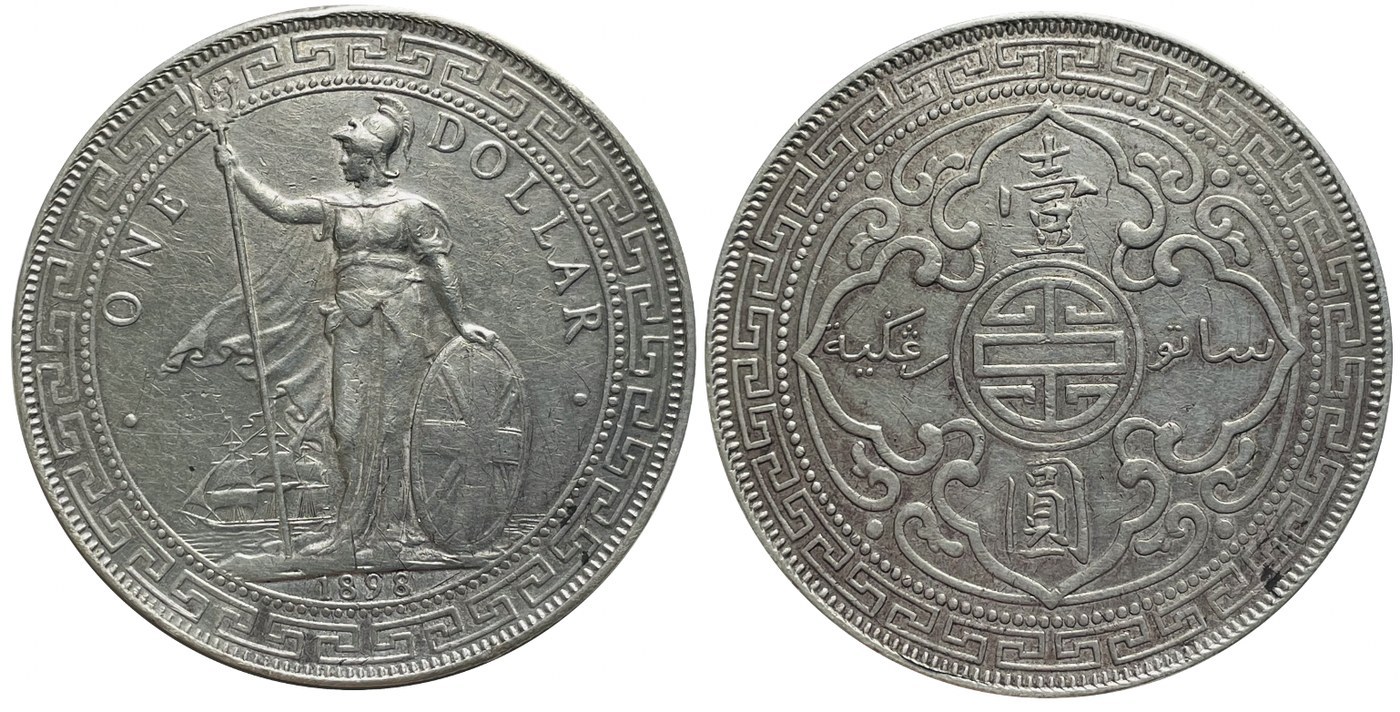
Begin with the obverse. The British Trade Dollar shows Britannia in classical robes holding a trident upright, with a large shield beside her and a sailing ship on the sea in the background. This figure is the anchor of the type — no other Asian trade dollar uses it. Look in the lower field for the date; on the coin shown it reads 1911. The design was frozen for the whole series, so the date and mint mark are what distinguish one issue from another.
Turn to the reverse. You should see a coiled Chinese dragon inside a scalloped ornamental frame, with a central panel of Chinese characters reading 'one dollar' and a surrounding Malay inscription in Jawi (Arabic) script. The Britannia-plus-dragon combination is unique to this coin and instantly separates it from the Mexican peso, the U.S. and Japanese trade dollars, or Chinese provincial dragon dollars, which use different portraits and dragon styles.
Confirm size and metal. A genuine piece is crown-sized — about 39 mm in diameter, roughly 26.9 g, struck in high-grade silver with a reeded edge. Weigh and measure it if you can: a coin that is light, thin, undersized, or has a plain edge is a warning sign. Real silver also has a characteristic ring and cool, dense feel.
Locate the mint mark. Look closely, ideally under magnification, in the ground line beneath Britannia or among the small ornaments: B indicates Bombay and C indicates Calcutta, while some strikes carry no mark. Pair the mark with the date to place the coin within the series and to judge scarcity.
Finally, be alert to authenticity issues. This was a trusted bullion coin, so both period and modern counterfeits exist, and many genuine coins carry merchant chopmarks — small stamped symbols punched into the fields. Chopmarks are authentic history but affect value. Cast fakes often show soft detail, seams, or wrong weight. For any coin you intend to buy or sell as a better date, have it authenticated and graded by a reputable service such as PCGS or NGC.
Frequently asked questions
How do I tell a British Trade Dollar from a Chinese dragon dollar?
Check the non-dragon side. The British coin shows Britannia with a trident and shield; Chinese provincial dollars show a portrait, denomination text, or a second dragon instead. The Jawi (Malay) inscription on the British coin is another giveaway.
My coin has little punch marks in the fields — is it fake?
Not necessarily. Those are likely chopmarks applied by Asian merchants to certify the silver, and they appear on many genuine Trade Dollars. They are authentic to the coin's use but generally reduce collector value versus an unmarked example.
How can I check the coin is genuine silver and the right size?
Measure it at about 39 mm across and weigh it near 26.9 g, and feel for a reeded edge. Genuine high-grade silver rings when tapped. A light, undersized, or plain-edged coin, or one with soft, seamed detail, points to a counterfeit.
Should I clean my British Trade Dollar before identifying it?
No. Cleaning scratches the surface and lowers value. Identify it as-is, and if it appears to be a scarce date or high grade, send it to a professional grading service for authentication.