
How to Identify the British Third Farthing
A collector's guide to recognizing the 1844 Victoria copper third farthing and telling it from the farthing, half-farthing, and later bronze issues.
Read the full British Third Farthing encyclopedia entry →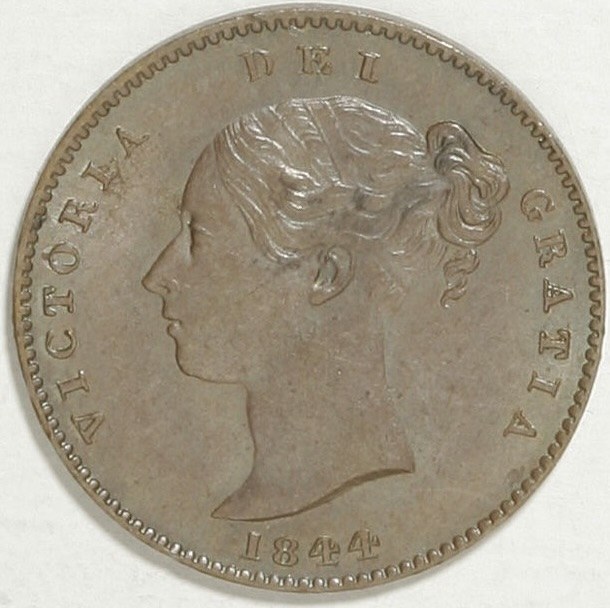
Begin with size, because it is the single most telling feature. The third farthing is one of the smallest British coins ever struck—noticeably smaller than a farthing and far smaller than a penny. If a copper coin looks too tiny to be a farthing yet clearly carries a Victorian portrait, the third farthing should be your first thought.
Read the obverse next. Genuine pieces show a young Queen Victoria facing left, encircled by a Latin legend opening VICTORIA D:G:. This youthful left-facing bust matches Victoria's early copper coinage; a differently posed or right-facing portrait points to another reign or a later issue.
Turn to the reverse to confirm the denomination and date. Look for a crown above the coin's stated value with the year 1844 below, set within a wreath. The explicit value is what separates the third farthing from the visually similar half-farthing and farthing—do not rely on the portrait alone, since several small copper denominations share the same design language.
Check the metal and legend for the exact type. The 1844 coin is copper, not the bronze used from 1860 onward, so a bronze small coin with a similar look is a later date, not this one. Collectors also recognize an 1844 variety reading RE instead of REG in the legend; inspecting the spelling under magnification can pin down the specific variety.
Finally, weigh authenticity and condition. Because the coin is small and thin, damage, corrosion, or harsh cleaning are common and materially affect value. Compare a candidate against trusted reference images of the 1844 third farthing, and measure diameter and weight against published specifications; for costly high-grade examples, third-party grading offers added assurance.
Frequently asked questions
How do I tell a third farthing from a half-farthing?
Both are small Victorian copper coins with similar layouts, so read the reverse value. The third farthing states its one-third-farthing denomination, and it is smaller than the half-farthing.
Which way does Victoria face on the 1844 third farthing?
She faces left as a young queen, with the legend beginning VICTORIA D:G:. A right-facing or older portrait indicates a different coin or a later type, not this 1844 issue.
Is there a valuable variety of the 1844 third farthing?
Collectors note an 1844 legend variety reading RE rather than REG. Checking the exact spelling can help attribute the variety, though condition and original color usually matter most to value.
Could a tiny copper coin like this be a fake or a token?
It can. Watch for wrong weight or diameter, cast bubbles, mushy detail, or advertising tokens of similar size. Compare against reference images and use professional authentication for valuable pieces.