
How to Identify the British Sixpence
Collector checks for the Victoria Jubilee sixpence: crowned-veiled portrait, SIXPENCE wreath reverse, small silver size, and look-alikes.
Read the full British Sixpence encyclopedia entry →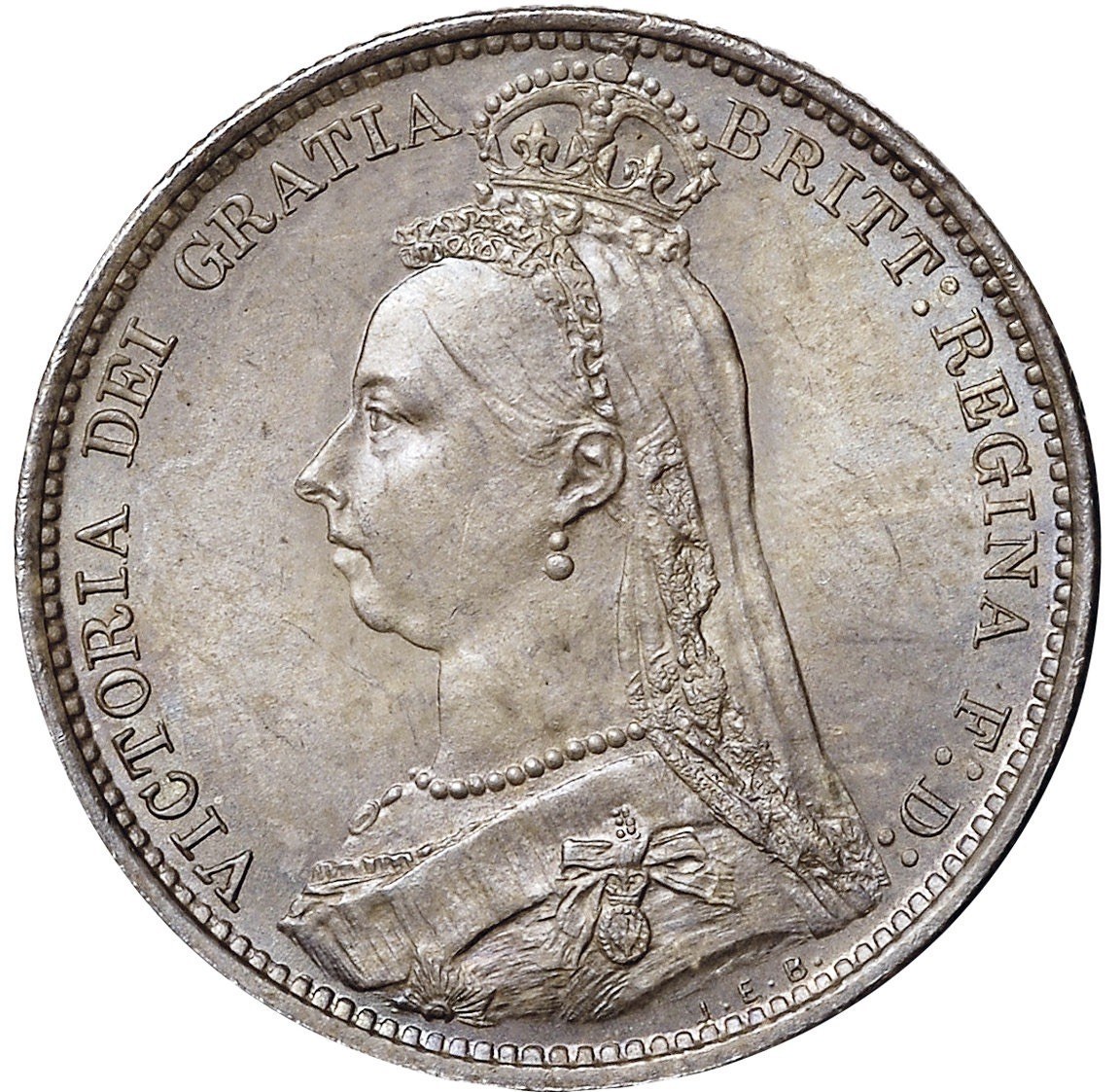
Begin with the portrait, because it dates the coin. The example here shows Queen Victoria facing left wearing a small crown and veil, the 'Jubilee head' bust used from 1887 to 1893, with the legend VICTORIA D:G: BRITT: REG: F:D: running around the rim. If the queen instead wears a plain hair-bun ('young head,' pre-1887) or a draped veil with no crown ('old head,' 1893 onward), you have a different Victorian sixpence type even though the denomination is the same.
Turn the coin over to read the reverse and the date. The Jubilee sixpence reverse spells out SIXPENCE inside a crowned wreath. The year — 1888 on this piece — sits on this side. Be aware that 1887 comes in two reverses: an earlier shield-in-garter design that was withdrawn (because gilded examples were passed as half-sovereigns) and the later wreath 'SIXPENCE' design. From 1888 the wreath reverse is the only one you should see.
Use size and metal as a cross-check. A genuine sixpence of this period is small: about 19 mm in diameter, roughly 2.83 g, struck in sterling (.925) silver with a reeded edge. That small diameter separates it from the larger shilling and half-crown; a caliper and a scale quickly confirm you are looking at a sixpence and not a similarly designed but larger silver coin.
Watch for look-alikes and alterations. Jubilee shillings and half-crowns share the same crowned-veiled portrait and legend style, so read the denomination on the reverse rather than judging by the bust alone. Because silver sixpences were sometimes mounted in jewellery or used in crafts, inspect the edge and rim for solder marks, filing, or a former hole. Cleaned or polished coins lose original surface and value even when genuine.
For most dates, careful measurement and a clear read of the legend and reverse are enough to identify the coin confidently. For high-grade pieces or any coin where a premium variety is claimed, a third-party grading service or a reputable dealer can confirm both authenticity and grade.
Frequently asked questions
How do I tell a sixpence from a shilling?
Size and denomination. The sixpence is small at about 19 mm, while the shilling is noticeably larger at roughly 23–24 mm. The reverse of this coin also spells out SIXPENCE within the wreath.
What does D:G: BRITT: REG: F:D: mean?
It is the abbreviated Latin royal title: 'By the Grace of God, Queen of the Britains, Defender of the Faith.' The presence of this legend with a crowned, veiled bust marks the 1887–1893 Jubilee sixpence.
Is the 1888 date rare?
No. The 1888 wreath-reverse sixpence is a standard, widely available date. Value comes mainly from condition rather than scarcity; the short-lived 1887 shield reverse is the more notable variety.
How can I check the silver is genuine?
Confirm the physical standard: about 2.83 g, roughly 19 mm across, non-magnetic, with a reeded edge. Significant deviation in weight or size, or a magnetic response, is a warning sign of a fake or a wrong coin.