
How to Identify the British Pre-Decimal Halfpenny
A collector's checklist for the bronze British halfpenny: read the legend, size and weight, spot Britannia, and separate it from look-alikes.
Read the full British Pre-Decimal Halfpenny encyclopedia entry →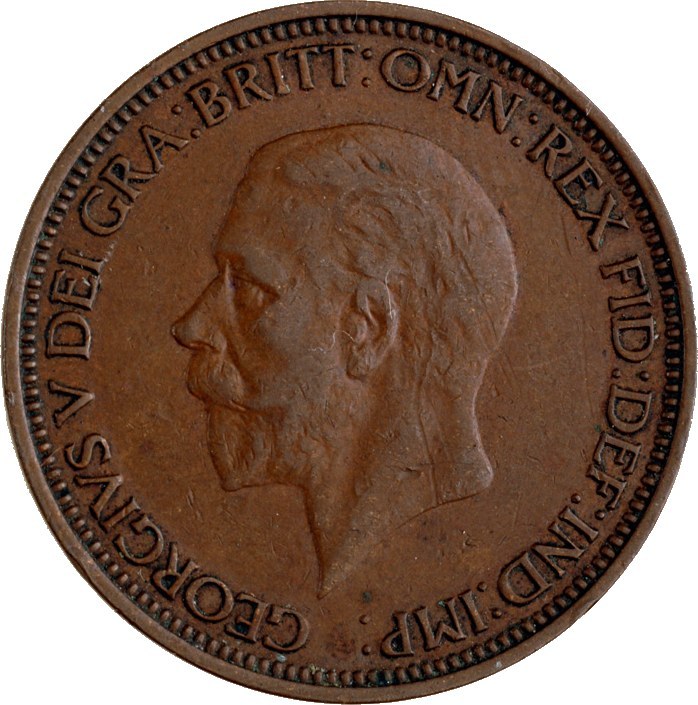
Start with the monarch's legend on the obverse. A left-facing profile with GEORGIVS V DEI GRA BRITT places the coin in George V's reign (1911-1936). Different opening names (VICTORIA, EDWARDVS, GEORGIVS VI, ELIZABETH) point to other reigns, so read the full inscription before assuming a type.
Confirm the reverse. The pre-decimal halfpenny shows Britannia seated and facing right, helmeted, with a trident and a shield, above the words HALF PENNY and the date. If the reverse instead shows a sailing ship (the George VI and Elizabeth II halfpenny of 1937 onward uses the Golden Hind), you are looking at a later halfpenny type, not this earlier Britannia design.
Check size and metal to separate the halfpenny from its neighbours. It is bronze, about 25.5 mm in diameter and around 5.7 grams. That makes it clearly smaller than the penny and larger and heavier than the little farthing, which carries a wren, not Britannia. A magnet should not stick, as bronze is non-magnetic.
Look for a mint mark. Standard London strikings, including 1936, have no mint letter. Some George V halfpennies of about 1912-1919 show a small H (Heaton) or KN (King's Norton) between the date and the rim; these contractor issues are scarcer and worth noting, but their absence is normal and does not mean a coin is fake.
When authenticating, weigh and measure the coin and compare wear on the high points of the king's hair and Britannia's figure against known genuine examples. Be cautious of coins with mismatched date and portrait, tooled or re-engraved dates, or cast surfaces with soft, bubbly detail, which can indicate alteration or a counterfeit.
Frequently asked questions
How do I tell a halfpenny from a penny or farthing?
Size and design. The halfpenny is about 25.5 mm and shows Britannia. The penny is larger; the farthing is small and shows a wren instead of Britannia.
Does my halfpenny have a mint mark?
Most, including 1936, do not. A small H or KN by the date appears only on certain George V contractor issues from roughly 1912-1919.
How do I read the date?
The year is on the reverse, below Britannia and the words HALF PENNY. The coin pictured reads 1936.
Is it magnetic?
No. A genuine bronze halfpenny is non-magnetic, so a coin that a magnet grabs should be treated with suspicion.