
How to Identify the British North Borneo One Cent
A collector's guide to recognizing the British North Borneo copper cent by its ship-and-supporters arms, ONE CENT wreath reverse, date, size and mint mark.
Read the full British North Borneo One Cent encyclopedia entry →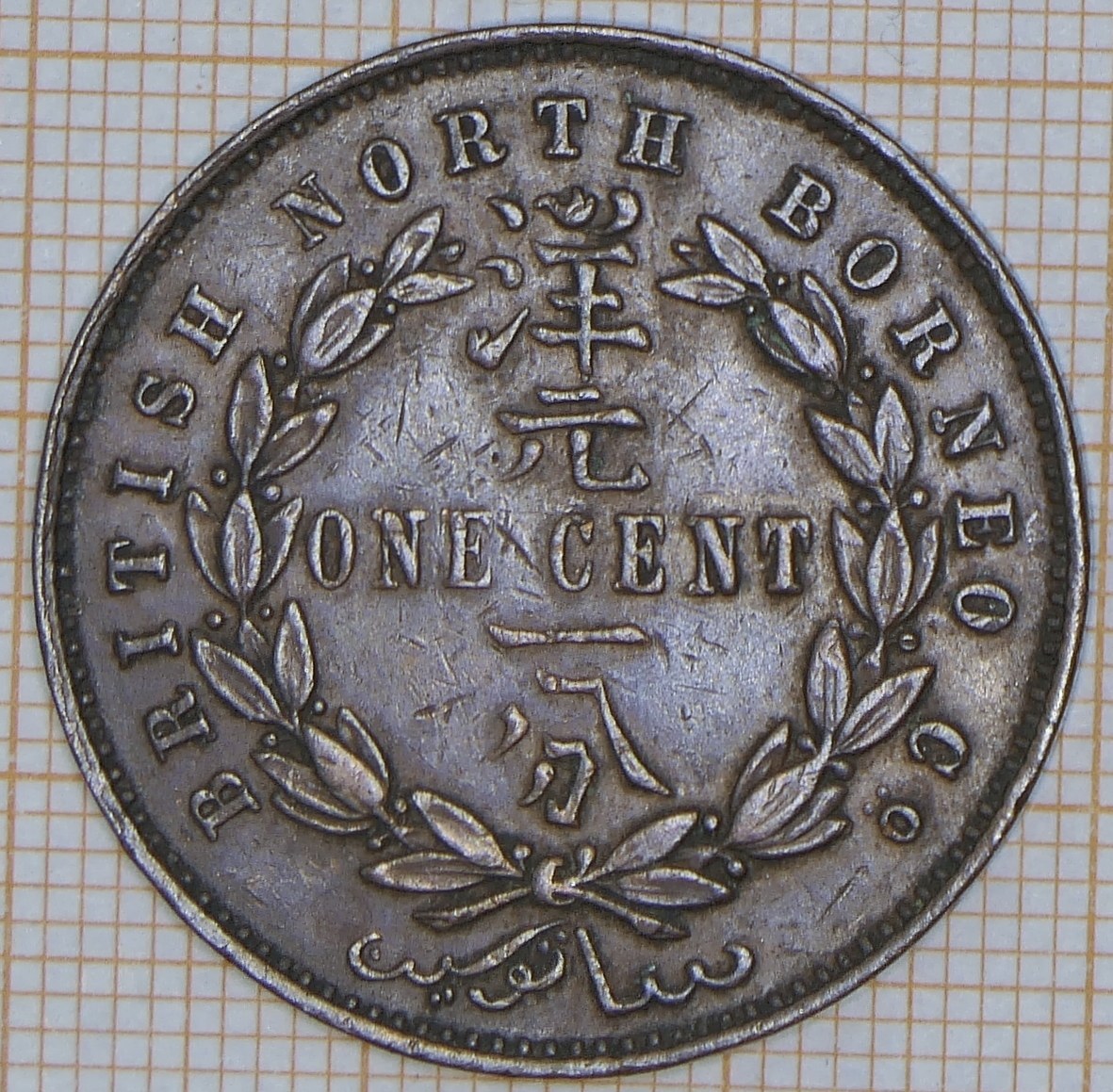
Start with the obverse coat of arms, which is the strongest diagnostic. Look for a central shield bearing a sailing ship, flanked by two standing native (Dyak) supporter figures, with the British North Borneo Company legend and motto around the rim. The date sits at the bottom—1884 on this example. This full armorial design with a ship and two human supporters distinguishes the coin from the crowned-head and plain-emblem cents of neighboring colonies.
Turn to the reverse to confirm the denomination. It reads ONE CENT within a laurel or leafy wreath, with two more standing figures flanking the wreath. Read the date and study this reverse layout to place the coin within the Company series, which spans several dates in the mid-1880s and later issues in other metals.
Check size and metal as a cross-check. The cent is a broad, fairly thick copper coin—brown when circulated, redder when well preserved. It should not be attracted to a magnet. Genuine wear appears as smooth, even loss of high points on the ship, the figures and the wreath, not as tooling or cast graininess.
Inspect for a mint mark. Early cents struck by Ralph Heaton & Sons carry a small H, typically near the base of the reverse; its presence or absence is part of correctly attributing the coin and can affect value. Use good light and magnification to confirm it rather than guessing.
Be cautious with authentication. Older colonial copper is sometimes cleaned, harshly polished, corroded or artificially toned, and cast or altered fakes exist for desirable colonial types. Weigh and measure the coin against published specifications for the date, compare the arms and lettering to trusted reference images, and treat any coin with mushy detail, wrong weight or seam lines as suspect. When in doubt on a higher-value piece, seek a specialist or third-party opinion.
Frequently asked questions
How do I tell this from a Straits Settlements or Malayan cent?
Read the legend and the obverse device. The British North Borneo cent shows the Company coat of arms with a ship and two standing supporters, not a monarch's portrait; Straits and other Malayan cents use different designs and inscriptions.
Where is the mint mark and does it matter?
Coins struck by the Heaton Mint carry a small H, usually near the base of the reverse. It helps attribute the coin and can affect value, so check for it under magnification before deciding on a date and variety.
Should the coin be magnetic?
No. It is a copper coin and should not respond to a magnet. A magnetic 'cent' of this design would be a warning sign of a replica or altered piece.
How can I spot a fake or altered example?
Watch for wrong weight or diameter, mushy or grainy detail, casting seams, and surfaces that look tooled or artificially toned. Compare against reference images of the same date and, for valuable pieces, get a specialist or third-party opinion.