
How to Identify the British India Rupee (Silver)
A silver rupee coin issued under British colonial rule in India, most commonly bearing the portrait of Queen Victoria, Edward VII, or George V.
Read the full British India Rupee (Silver) encyclopedia entry →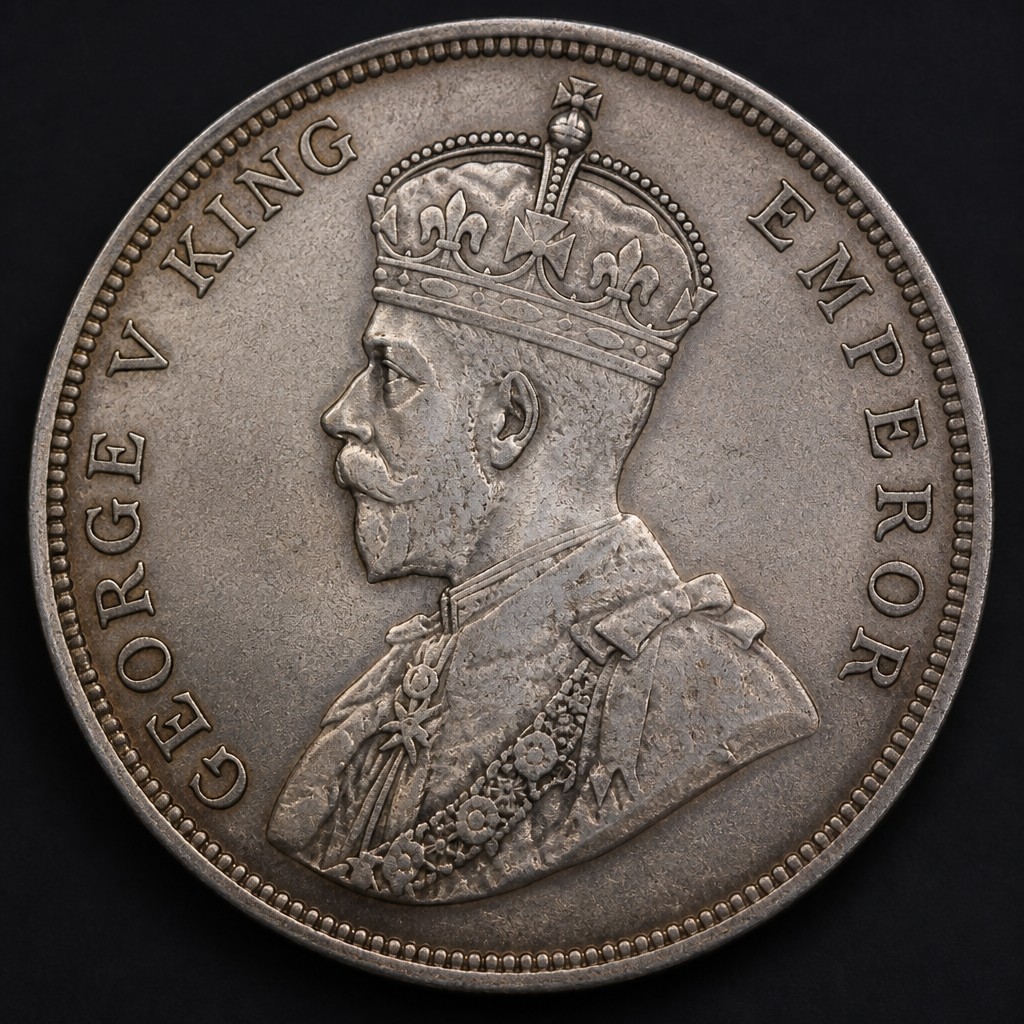
What This Coin Is
The British India Rupee (Silver) refers to the standard silver rupee coinage issued for British India from the mid-19th century through the 1930s, bearing the portrait of the reigning British monarch as sovereign of India. These coins circulated throughout the Indian subcontinent and were also widely used in trade across the wider region, including parts of the Middle East and East Africa where the rupee served as an accepted trade currency.
Obverse Design & Inscriptions
The obverse carries a profile portrait of the ruling monarch, such as Queen Victoria (as Empress of India), Edward VII, George V, or later George VI, with a Latin-style title reading something like "VICTORIA EMPRESS" or "GEORGE V KING EMPEROR" around the border. The specific hairstyle, crown, or headwear differs by monarch and reign period, helping identify the exact ruler quickly.
Reverse Design & Inscriptions
The reverse displays the denomination "ONE RUPEE" within a wreath or decorative border, along with the date, and often text in English along with the Persian or vernacular numeral equivalents on certain issues. Some earlier types include additional ornamental scrollwork framing the central value.
Size, Weight, Metal, and Edge
The standard silver rupee measures approximately 30 mm in diameter and weighs about 11.66 grams, struck in .916 fine silver for most of this period. The edge is typically milled or reeded, consistent with standard British Empire coinage practice.
Mint Marks and Where to Find Them
Mint marks are small and appear near the date on the reverse; look for a tiny dot, star, or letter indicating Bombay or Calcutta mint origin, since India operated more than one striking facility during this era. These marks are easy to overlook without magnification, so examine closely near the numerals of the date.
Telling It Apart From Similar Coins
Other silver rupees from neighboring regions or later independent Indian issues can resemble the British colonial rupee in size, but the presence of a British monarch's portrait and English-language imperial titles are the clearest identifiers. Comparing the specific portrait style narrows the coin to a particular monarch's reign and therefore a specific date range.
Judging Condition at a Glance
Look at the monarch's hair, crown, or veil detail and the wreath on the reverse for wear, as these raised elements flatten first with circulation. A coin with strong, well-defined portrait lines and full luster in the fields is in notably better condition than one with a smooth, worn profile, and cleaned or heavily toned surfaces should also be noted separately from actual wear.
Authenticity Red Flags
Be cautious of coins with blurry or shallow lettering, incorrect weight for the roughly 11.66 gram standard, or a grainy surface suggesting a cast reproduction rather than a properly milled strike. Also check that the portrait style is consistent with the stated monarch and date, since mismatched combinations can indicate an altered or fantasy piece.
Frequently asked questions
Which monarchs appear on British India silver rupees?
Common portraits include Queen Victoria, Edward VII, George V, and George VI, identifiable by the name and title in the surrounding legend.
What is the coin's silver fineness?
Most standard silver rupees of this era are .916 fine silver.
Where is the mint mark located?
Near the date on the reverse; look closely for a small dot, star, or letter indicating Bombay or Calcutta origin.
How much does the coin weigh?
Approximately 11.66 grams for a standard one-rupee coin.