
How to Identify the British India Gold Mohur (East India Company)
A gold coin worth 15 rupees issued under East India Company authority across various presidencies, identified by its Persian legends or later Victorian portrait design.
Read the full British India Gold Mohur (East India Company) encyclopedia entry →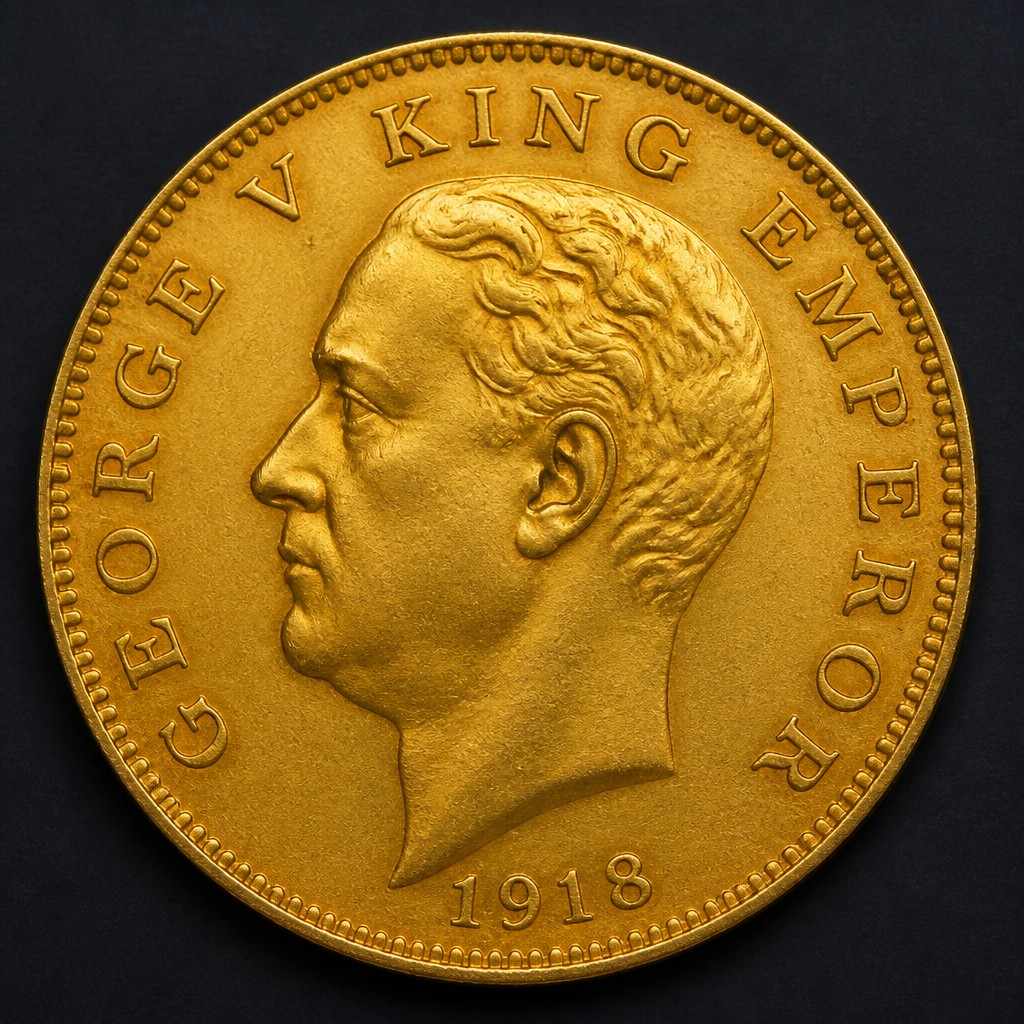
What It Is
The gold mohur was a coin denomination used across British India, valued at 15 rupees, issued under East India Company authority (and later the British Crown) across multiple presidencies including Bengal, Bombay, and Madras, with designs that changed considerably over the 18th and 19th centuries. As the Company gradually consolidated political control over the subcontinent, its coinage evolved from designs that deferred to Mughal imperial authority toward increasingly explicit British and, later, Crown imagery, making the mohur a useful visual timeline of that transition.
Obverse Design & Inscriptions
Designs vary by presidency and period. Many earlier Company-period mohurs from the Bengal Presidency carry Persian or Urdu inscriptions citing the nominal Mughal emperor's name and regnal year rather than a portrait. Later 19th-century issues under Crown rule show a portrait bust of Queen Victoria with the legend "VICTORIA QUEEN" and a date.
Reverse Design & Inscriptions
Earlier Company mohurs often carry Persian legends naming the mint city and denomination. Some issues, such as the 1835-41 series, show a standing lion before a palm tree, while later Victorian-era coins display "ONE MOHUR" within a wreath.
Size, Weight, Metal & Edge
It is a gold coin roughly 25mm in diameter, weighing about 11.66 grams, typically .916 fine (22 karat). Edges are reeded on later milled 19th-century issues, while earlier hand-struck Company pieces may have plain edges.
Mint Marks & Where to Find Them
Earlier Persian-legend mohurs generally name the specific mint city (such as Calcutta, Murshidabad, or Farrukhabad) within the inscription itself. Later Crown-era coins may include a small mint mark or none at all, depending on the specific issue. Reading the calligraphy carefully, rather than skimming it as pure decoration, is essential, since the mint city and regnal year encoded there are the main tools for placing an early mohur within its correct series.
Telling It Apart from Similar Coins
Compare the presence or absence of a portrait and the legend language: Persian-only legends indicate earlier Company-Mughal-style issues, while English legends paired with a monarch's portrait indicate later 19th-century coinage. Checking weight and diameter against published standards helps rule out unrelated regional gold pieces.
Judging Condition at a Glance
On portrait issues, look at the sharpness of the monarch's profile and hair detail. On Persian-legend types, examine the clarity of the calligraphy strokes in the central cartouche, since fine detail there wears down first. Because gold is soft, even lightly circulated mohurs can pick up small marks and rim nicks from handling, so overall surface preservation is often as informative as the sharpness of any single design element.
Authenticity Red Flags
Gold mohurs are valuable and have long attracted forgeries, including gold-plated base-metal fakes and coins with re-engraved dates. Verify weight and specific gravity, check the edge for file marks or solder seams, and compare the font style and legend spacing against documented genuine dies.
Frequently asked questions
How much was a gold mohur worth?
It was valued at 15 rupees under the British India monetary system, making it a high-value denomination compared to the standard silver rupee.
Why do some mohurs lack a portrait?
Earlier East India Company issues followed Mughal-era conventions and used Persian inscriptions naming the nominal ruler instead of a portrait, in line with Islamic artistic tradition.
How can I tell the mint city of an older mohur?
The mint city is typically named directly within the Persian inscription on earlier Company-period coins, such as Calcutta or Murshidabad.
What gold purity should a genuine mohur have?
Most mohurs were struck at approximately .916 fine gold (22 karat), and checking weight and purity against this standard helps identify altered or fake pieces.
What is the biggest authenticity concern with this coin?
Gold-plated base-metal fakes and coins with altered dates are the most common concerns; checking weight, specific gravity, and edge condition helps catch these.