
How to Identify the British Honduras 10 Cents
A collector's guide to recognizing the British Honduras 10 Cents by its plain 10 CENTS reverse, country legend, date, monarch portrait, size and metal.
Read the full British Honduras 10 Cents encyclopedia entry →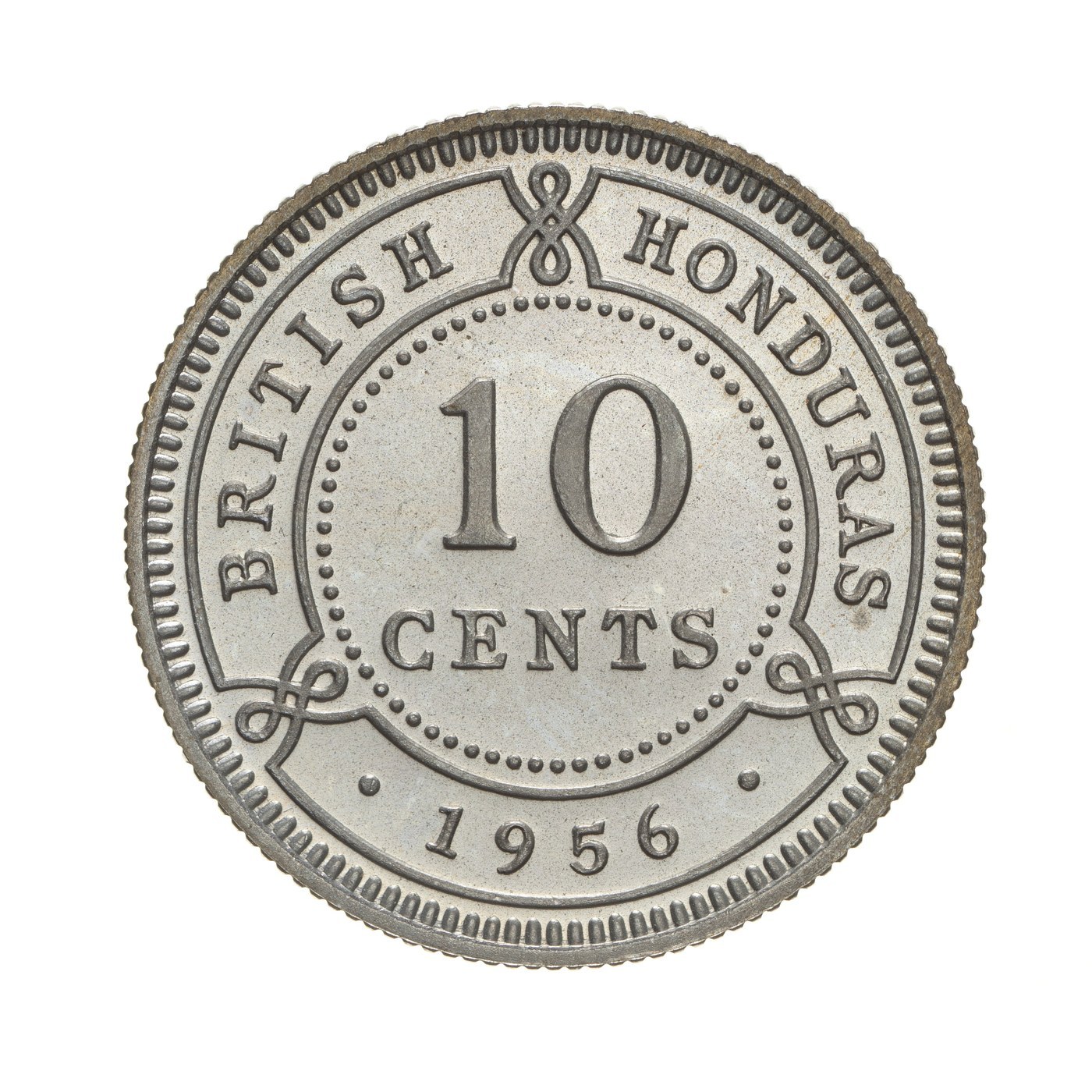
Begin with the reverse, which is the easiest side to read. Confirm the value spelled out as 10 CENTS in the center of the coin, the country name BRITISH HONDURAS curving around the rim, and a four-digit date at the bottom—1956 on this example. This clean, inscription-only reverse, with no large crest or animal, is a hallmark of the type and immediately separates it from emblem-heavy colonial coins.
Turn to the obverse to confirm the reign. A 1956 coin shows the laureate portrait of Queen Elizabeth II with a royal legend around the edge. Reading the exact date and identifying the monarch is important, because British Honduras used the same 10 CENTS reverse format across several reigns; the portrait and date together pin down which coin you have.
Use size and metal as a cross-check. This is a small, silvery-gray coin struck in a base nickel-silver / cupro-nickel type alloy, not silver, so it lacks the warm luster of a precious-metal piece and should not be confused with the earlier silver 10 cents of the series. Measure the diameter and weigh the coin against published specifications for the date if you need to be certain.
Watch for look-alikes and mint details. Other Caribbean and Central American 'ten cents' coins share a similar silvery look, so always read the full BRITISH HONDURAS legend rather than relying on size alone. British Honduras coins of this era were struck at the Royal Mint and typically do not carry a prominent mint mark, so use the country name, denomination and date as your primary attribution points.
Finally, apply basic authentication caution. Genuine wear appears as smooth, even loss on the high points of the portrait and lettering, not as tooling marks or a grainy cast surface. Be wary of coins with the wrong weight or diameter, mushy detail, seam lines or artificial toning, and compare any questionable piece to trusted reference images of the same date. For a higher-value example, seek a specialist or third-party opinion.
Frequently asked questions
How do I tell the 10 cents from other British Honduras denominations?
Read the central value. The reverse states the denomination in words as 10 CENTS; the 5, 25 and other cent coins spell out their own values, so the written figure is the quickest way to separate them.
Does the coin have a mint mark?
British Honduras coins of this period were struck at the Royal Mint and generally do not show a prominent mint mark. Use the BRITISH HONDURAS legend, the 10 CENTS value and the date to attribute the coin.
Should a 1956 British Honduras 10 Cents be magnetic?
No. It is a cupro-nickel type base alloy and should not respond to a magnet in the way iron or steel would. Strong magnetic attraction is a warning sign of a replica or altered piece.
How can I spot a fake or altered example?
Check the weight and diameter against published specifications, look for crisp lettering rather than mushy or grainy detail, and watch for casting seams or artificial toning. Compare against reference images of the same date, and get a specialist opinion on valuable pieces.