
How to Identify the British Guinea
A gold coin of the Kingdom of England and later Great Britain, struck from 1663 to 1814, identified by the reigning monarch's portrait and a crowned shield with four quartered arms.
Read the full British Guinea encyclopedia entry →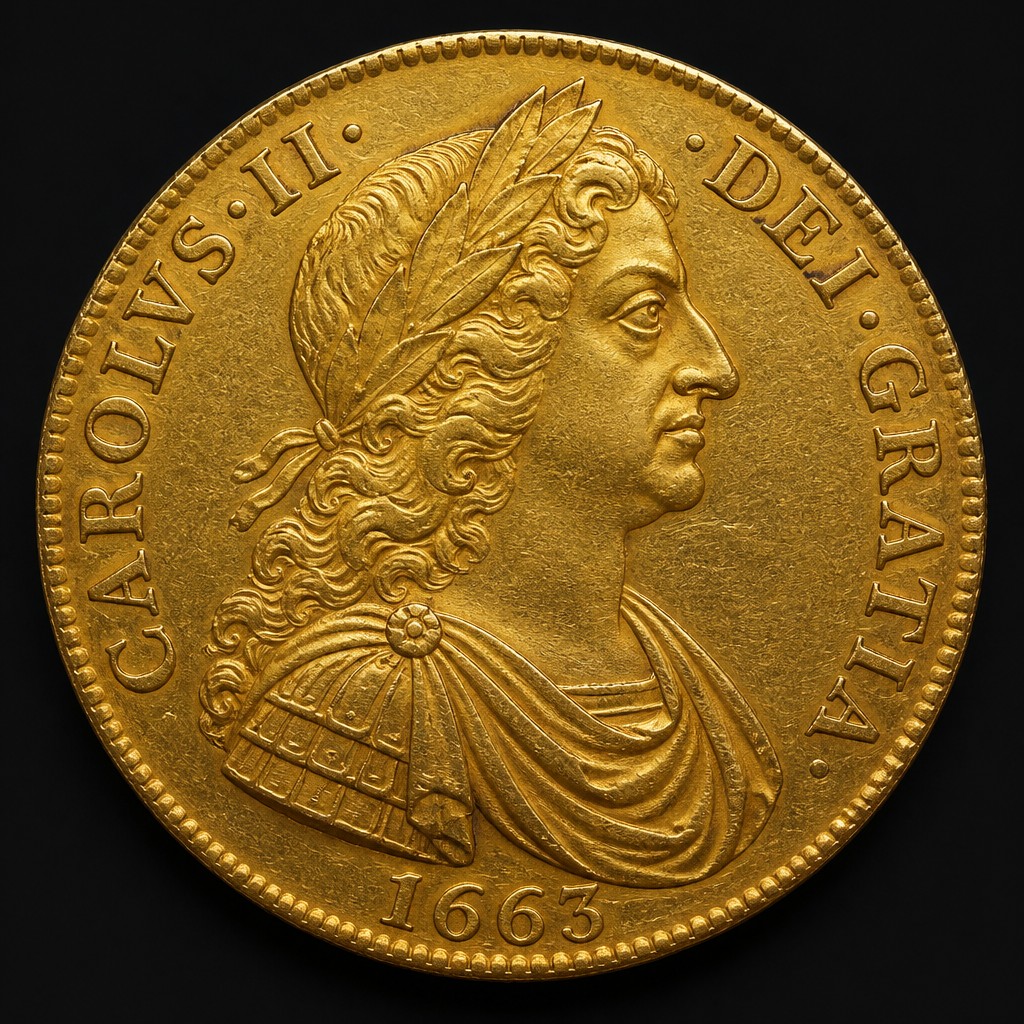
What It Is
The British Guinea was a gold coin first struck in 1663, named after the West African region that supplied much of the gold used in its production. It became the standard British gold coin for well over a century before being replaced by the sovereign in the early 19th century.
Obverse Design
The obverse shows a right-facing (or in some reigns left-facing) portrait bust of the reigning monarch, with a Latin legend giving the ruler's name and titles around the border, such as "GEORGIUS III DEI GRATIA" for George III issues.
Reverse Design
The reverse displays a crowned shield divided into four quarters bearing the arms of England, Scotland, France (in earlier issues), and Ireland, with the legend giving the monarch's additional titles and the date below.
Size, Weight, and Metal
Struck in 22-karat gold (.9167 fine), the guinea measures approximately 25mm in diameter and weighs about 8.4 grams, though slight variations occur across different reigns and years. The edge is milled with reeding or, on some early issues, a decorative edge design.
Mint Marks
Guineas were struck at the Royal Mint in London, so there is generally no separate branch mint mark; however, an elephant, elephant-and-castle, or similar small symbol sometimes appears beneath the monarch's bust on certain issues, indicating gold supplied by the Royal African Company rather than a mint location.
Telling It Apart From Similar Coins
The guinea is often confused with the later sovereign, but the guinea predates it and has a distinctly different reverse (a quartered shield rather than St. George slaying the dragon). Comparing the specific monarch's portrait and title legend helps pinpoint the exact reign and narrows the approximate date range.
Judging Condition at a Glance
Look for crisp detail in the monarch's hair or wig curls and clear lettering in the legend for higher-grade pieces. Because guineas circulated as everyday gold currency for over a century, many surviving examples show notable wear, smoothing the portrait's finer features and softening the shield's quartering lines.
Authenticity Red Flags
Given its long production run and historical value, guineas have been counterfeited and also frequently mounted in jewelry, which can damage or alter the coin. Check for correct weight and diameter, watch for solder marks or bezel damage from jewelry mounting, and be cautious of portraits that don't match the style expected for the named monarch and date combination.
Frequently asked questions
Why is it called a guinea?
It takes its name from the Guinea region of West Africa, a major source of the gold originally used to strike the coin.
What symbol sometimes appears beneath the monarch's bust?
An elephant or elephant-and-castle mark, indicating the gold was supplied by the Royal African Company rather than denoting a mint location.
How is the guinea different from the later British sovereign?
The guinea has a crowned, quartered shield on its reverse, while the sovereign shows St. George slaying a dragon; the guinea also predates the sovereign by well over a century.
What is the gold purity of a British Guinea?
It is struck in 22-karat gold, or .9167 fine.