
How to Identify the British Gold Sovereign
A visual guide to the British Gold Sovereign, covering its Saint George and the Dragon reverse, monarch portraits, weight and fineness, and how to spot fakes.
Read the full British Gold Sovereign encyclopedia entry →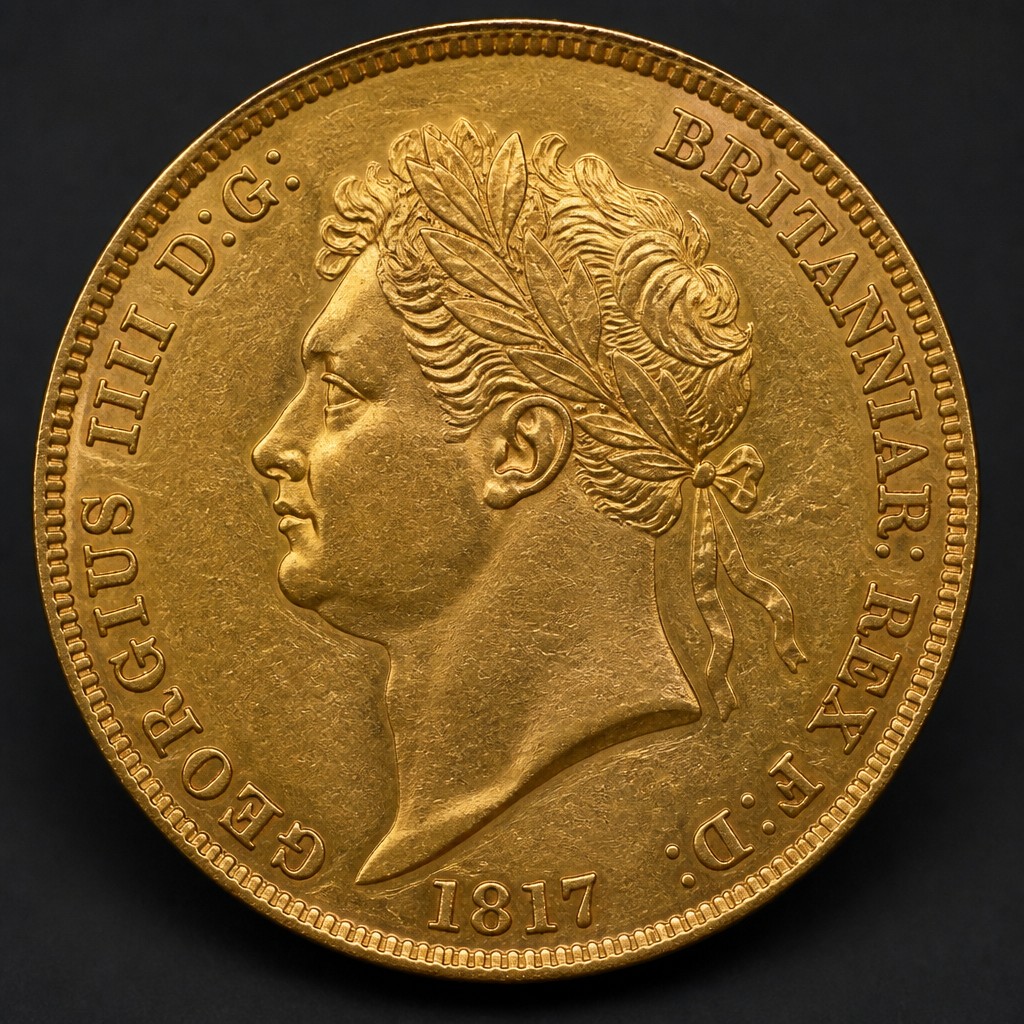
What It Is
The British Gold Sovereign is a gold coin with a nominal face value of one pound sterling, first struck in its modern form in 1817 and still produced today by the Royal Mint, primarily as a bullion and collector coin. Over its long history it has also been struck at various points by branch mints across the former British Empire, giving the series a broad range of dates, monarchs, and mint-mark varieties for collectors to sort through.
Obverse (Front)
The obverse carries a profile portrait of the reigning British monarch at the time of striking, so the design changes across reigns (for example, Queen Victoria, King Edward VII, King George V, Queen Elizabeth II, or King Charles III), with the monarch's name in Latin around the rim and the date typically below the bust.
Reverse (Back)
The most common reverse design, created by Benedetto Pistrucci, shows Saint George on horseback slaying a dragon, with a broken lance beneath the horse. Some commemorative or older issues use a crowned shield design instead of Saint George.
Size, Weight, Metal, and Edge
A modern Sovereign weighs 7.98 grams, measures 22.05 mm in diameter, and is struck in 22-karat gold (91.67% fine), the remainder being an alloy of silver and copper for durability. The edge is milled (reeded).
Mint Marks
Sovereigns struck outside London at branch mints (such as Sydney, Melbourne, Perth, Ottawa, Bombay, or Pretoria) carry a small mint mark letter on the ground line beneath the horse's hooves on the reverse; coins with no letter were struck at the Royal Mint in London (or Tower Hill/Llantrisant in later years).
Telling It Apart From Similar Coins
The Sovereign is often confused with other gold coins of similar size, such as foreign 20-franc or 20-lire gold pieces; the giveaway is the Saint George and dragon reverse (or crowned shield) combined with a British monarch's portrait and Latin legend on the obverse. A Half Sovereign shares the same design but is roughly half the diameter and weight.
Grading at a Glance
Because gold is soft, look at the high points of the monarch's hair or crown and the horse's flank and Saint George's leg on the reverse for flattening from wear. A sharp, lustrous coin with full definition in the horse's mane and Saint George's armor suggests light or no circulation.
Authenticity Red Flags
Counterfeits are frequently made in base metal with a gold-colored plating, so a coin that seems too light, shows a silvery color at a scratch or edge nick, or fails a simple weight and diameter check should be treated with suspicion. Some fakes also get the design details wrong, such as an incorrect number of dragon coils or a poorly rendered lance, and cast fakes often show a grainy surface rather than sharp, fluid design lines. The portrait style should also match the claimed monarch and date range; a mismatched obverse portrait paired with an inconsistent date is a clear sign of a fantasy piece rather than a genuine Sovereign.
Frequently asked questions
What is on the back of a British Gold Sovereign?
Most Sovereigns show Saint George on horseback slaying a dragon; some historical and commemorative issues instead show a crowned shield.
Where is the mint mark on a Sovereign?
On the reverse, on the ground line beneath the horse's hooves; no letter indicates it was struck in London.
How much gold is in a Sovereign?
It weighs 7.98 grams and is 22-karat (91.67% fine) gold, so it contains roughly 7.32 grams of pure gold.
How can I tell a fake gold-plated Sovereign from a real one?
Check the weight and diameter against genuine specifications, and look for a silvery or brassy color showing through at any nick, scratch, or the edge, which indicates plating over a base metal core.