
How to Identify the British Gold Guinea
A guide to the historic English and British gold guinea, covering its monarch-portrait obverse, cruciform shield reverse, the elephant and castle mintmark, and how it differs from related gold denominations of the era.
Read the full British Gold Guinea encyclopedia entry →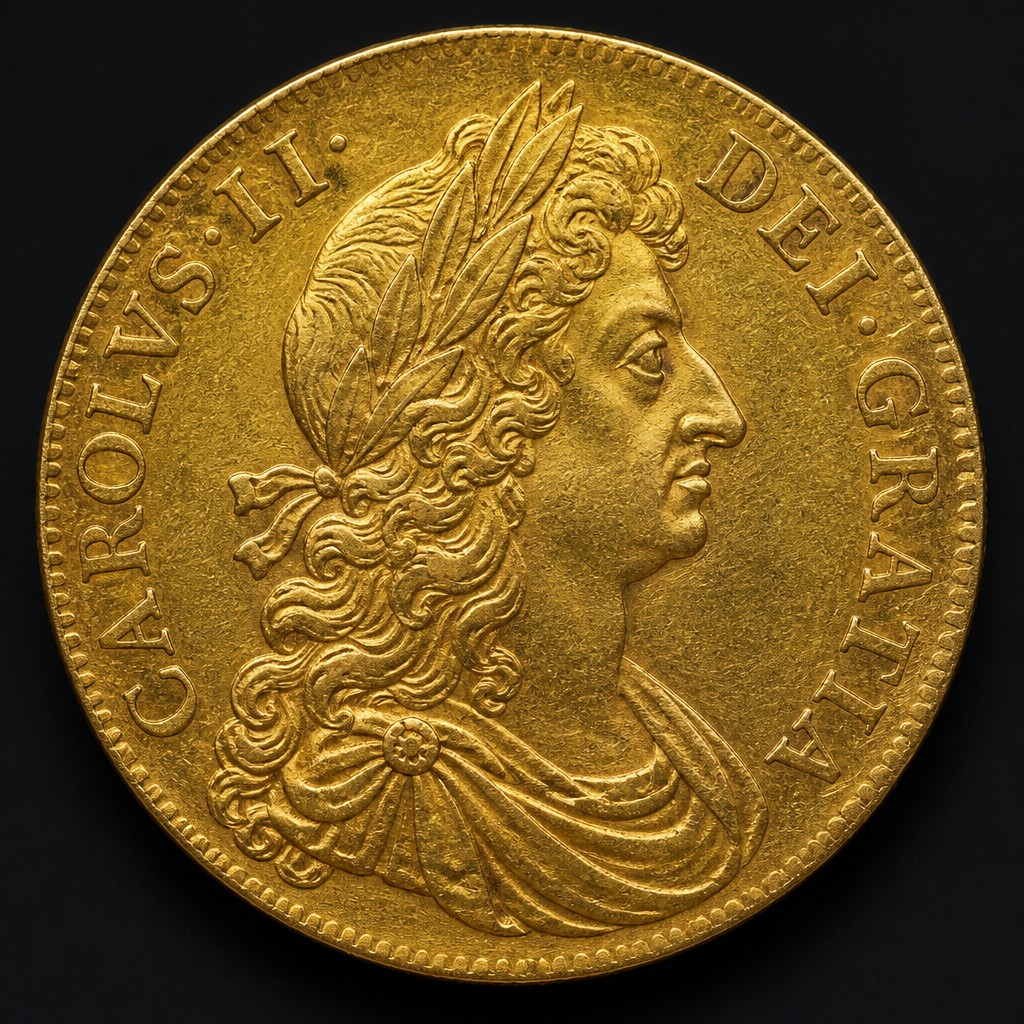
What This Coin Is
The guinea was a gold coin of England and later Great Britain struck from 1663 to 1814, originally valued at 20 shillings and later settled at 21 shillings due to fluctuations in the gold-to-silver price ratio. It takes its name from the West African region that supplied much of the gold used in early issues.
Obverse Design
The obverse shows a portrait of the reigning monarch in profile, spanning designs of Charles II through George III, with a Latin legend giving the monarch's name and royal titles.
Reverse Design
The reverse typically shows a crowned shield of arms arranged in a cruciform (cross-shaped) pattern representing the various kingdoms under the monarch's rule, with the date included in the design or legend.
Size, Weight, Metal, and Edge
The guinea is a small gold coin weighing about 8.4 grams, roughly 25mm in diameter, struck in .917 fine gold (22 carat). The edge is typically milled with fine reeding to deter clipping.
Mint Marks and Where to Find Them
Some guineas struck with gold supplied by the Royal African Company show a small elephant, or elephant-and-castle, symbol beneath the monarch's bust — this is a privy mark rather than a mint mark, since all guineas were produced at the single Royal Mint in London. Its presence or absence, along with the specific date, helps identify particular issue varieties.
Telling It Apart From Similar Coins
The guinea should not be confused with its own fractional denominations, the half guinea and third guinea, which share similar designs at smaller sizes, or with the gold sovereign that replaced the guinea system after 1817 following Britain's currency reform. Comparing diameter and the specific denomination implied by the design details helps distinguish them.
Judging Condition
Look at wear on the monarch's hair curls and facial features, which are usually the first areas to show flattening, along with the sharpness of the crowned shields on the reverse.
Authenticity Red Flags
Contemporary counterfeits from the 17th and 18th centuries exist, often as base metal cores with a thin gold plating, which can be revealed by wear at the high points showing a different color underneath. Modern replicas and jewelry-grade copies are also encountered; checking weight and diameter against the genuine 8.4 gram, 25mm standard is a reliable first check.
Frequently asked questions
Why is it called a 'guinea'?
The coin takes its name from the Guinea region of West Africa, which supplied much of the gold used to strike early issues in the 1660s.
What is the elephant and castle mark on some guineas?
It's a privy mark indicating the gold was supplied by the Royal African Company, not a separate mint location, since all guineas were struck at the Royal Mint in London.
How much was a guinea worth?
It was originally valued at 20 shillings and later settled at 21 shillings due to gold-to-silver price fluctuations, before being replaced by the sovereign after 1817.
How do I tell a guinea apart from a half guinea?
Compare the diameter and weight; the half guinea is noticeably smaller and lighter than the full guinea's 25mm, 8.4 gram standard, though the design style is similar.