
How to Identify the British Florin
A collector's guide to confirming a Victorian silver florin — its crowned, veiled Victoria portrait, crowned-shields reverse, size, edge, and legends.
Read the full British Florin encyclopedia entry →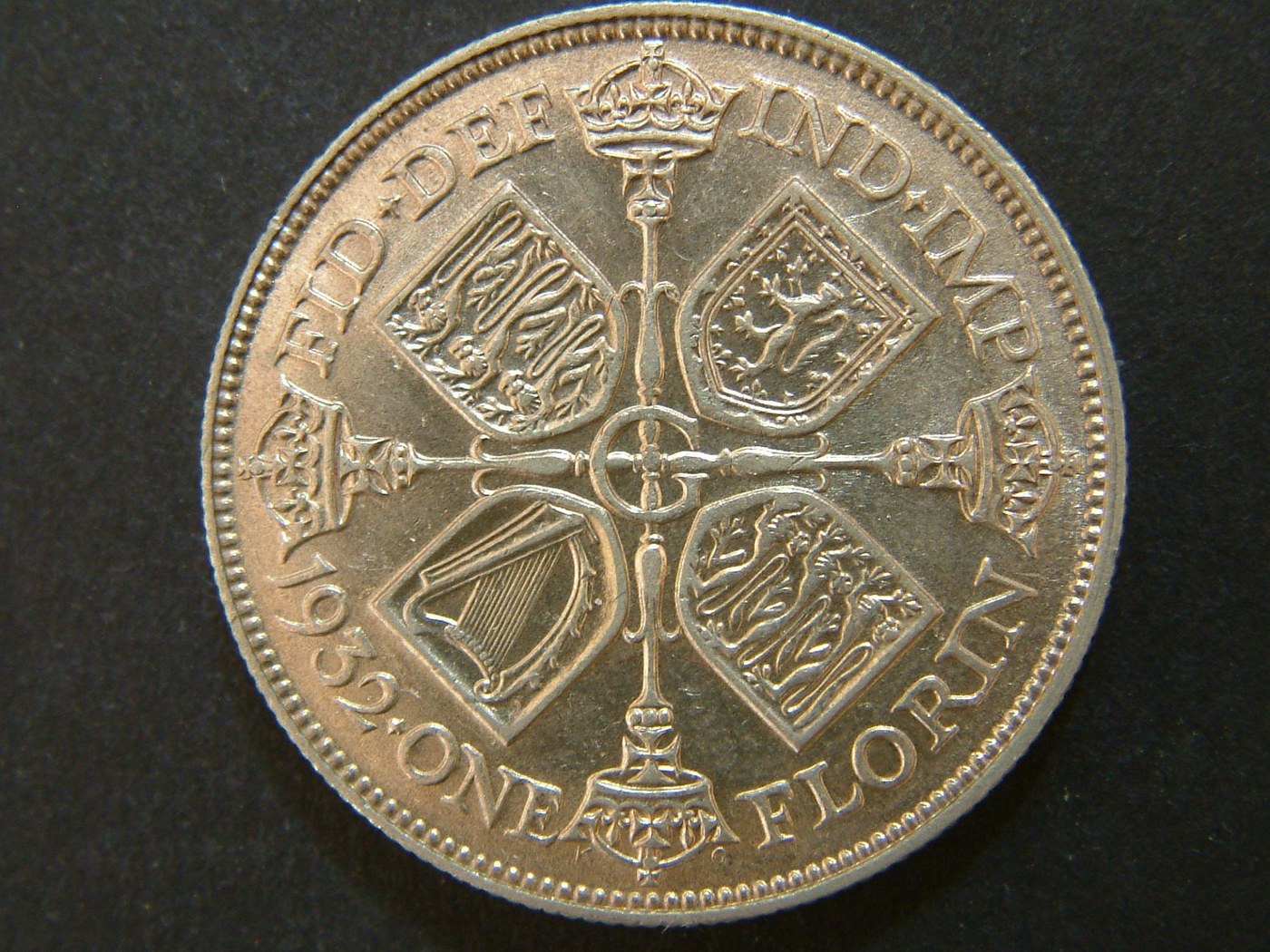
What It Is
The British florin is a silver two-shilling coin worth one-tenth of a pound. The piece shown here is a Victorian issue dated 1890, with a crowned and veiled portrait of Queen Victoria on the obverse and an ornate heraldic reverse of crowned shields. Identifying it means checking the portrait style, the reverse layout, the physical specifications, and the legends together.
Obverse (Front)
Look for Queen Victoria facing left, wearing both a crown and a draped veil — the older, "Jubilee Head" style portrait used in her later coinage. The legend VICTORIA DEI GRATIA ("Victoria, by the Grace of God") runs around the bust, with the remainder of her Latin titles and the date completing the inscriptions. The veiled-and-crowned bust is the quickest way to place the coin in the later part of Victoria's reign rather than her earlier young-head or Gothic issues.
Reverse (Back)
The reverse is the strongest diagnostic. Rather than a single shield, it shows a symmetrical group of crowned royal shields arranged around the center, separated by crosses and accented with crowns, sceptres, and other heraldic emblems. This crowned-shields design is distinctive to the later Victorian florins and helps separate the coin from other British silver denominations and from earlier florin types.
Size, Metal, and Edge
Expect a silver coin about 28–30 mm in diameter with a reeded (grooved) edge — noticeably larger than a shilling and sixpence, smaller than a crown. Genuine Victorian florins are sterling-standard silver and are non-magnetic, so a magnet test is a useful first screen. A diameter or weight well off the expected figures is a warning sign of a replica or a different denomination altogether.
Mint Marks, Look-alikes, and Authentication
Royal Mint florins of this era generally do not carry a branch mint letter, so identification relies on the date, legends, portrait style, and reverse layout rather than a mint mark. Beware of common look-alikes: other British silver such as the halfcrown and shilling share Victorian portraits, and modern replicas or cast copies exist. Check for crisp, well-defined lettering and heraldic detail, a struck (not grainy or seamed) surface, and correct size and weight. Cleaned, tooled, or altered-date pieces should be treated with caution, and high-value or doubtful coins are best confirmed by a specialist or third-party grader.
Frequently asked questions
How do I tell a florin from a halfcrown or shilling?
Compare size and design. The florin (two shillings) is about 28–30 mm with a crowned-shields reverse; the halfcrown is larger, and the shilling is smaller. Reading the denomination and matching the reverse layout confirms which coin you have.
Does a Victorian florin have a mint mark?
Generally no. These florins were struck at the Royal Mint without a branch mint letter, so you identify the exact issue from the date, the legends, the portrait style, and the reverse design rather than a mint mark.
How can I check that a florin is genuine silver?
Confirm the size and weight are close to the expected figures, verify the coin is non-magnetic, and look for crisply struck lettering and heraldic detail rather than a soft, grainy cast surface. Have suspect or valuable pieces examined by a specialist.
Why does Victoria look older on this coin than on other florins?
Victoria's coinage used several portraits over her long reign. The crowned, veiled bust here is her later "Jubilee Head" style; earlier florins show a young head or the ornate Gothic portrait. Match the portrait, legend, and date to pin down the exact type.