
How to Identify the British Crown
A collector's walkthrough for confirming a George V wreath crown, reading its legends, and spotting altered dates.
Read the full British Crown encyclopedia entry →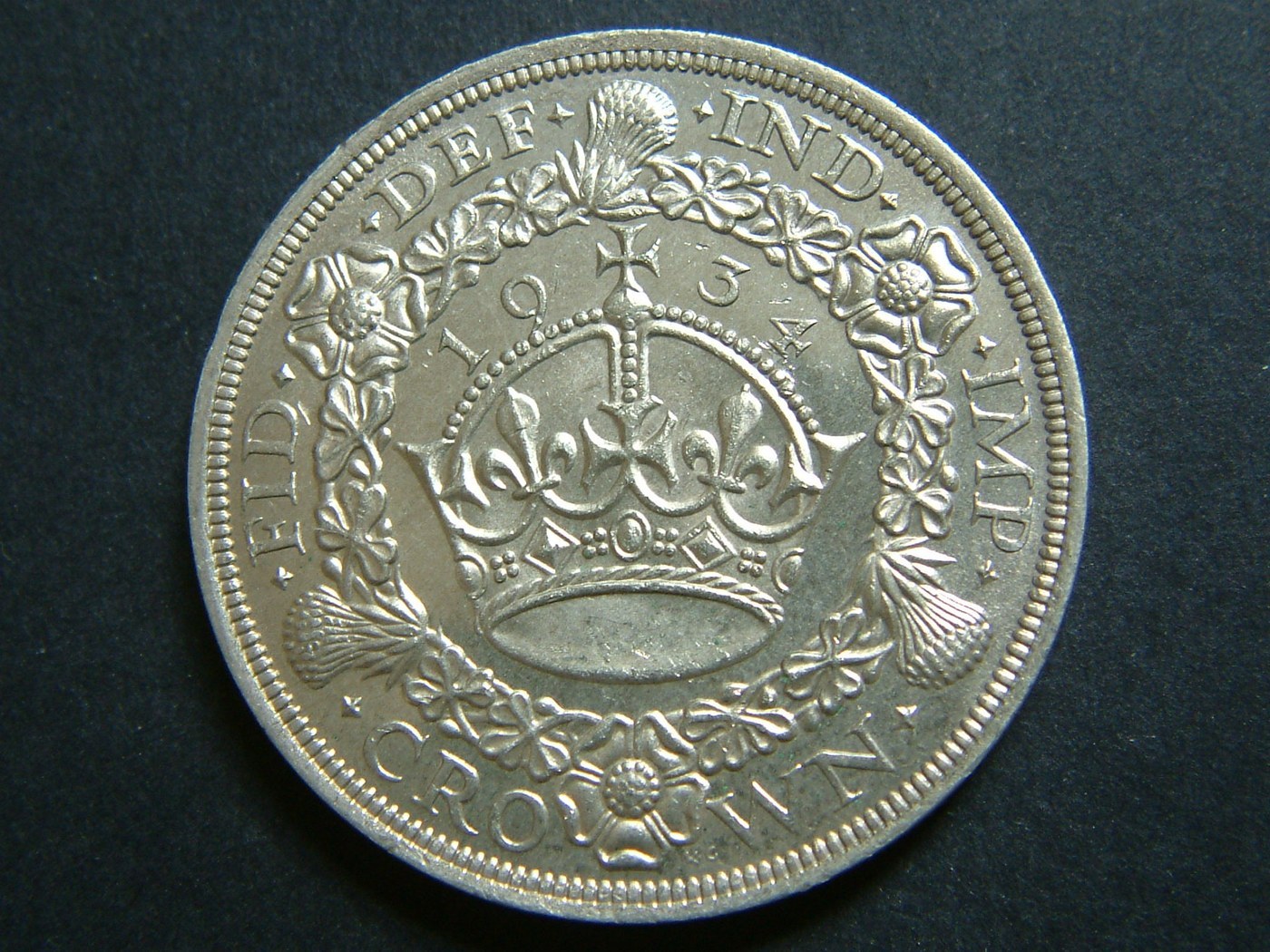
Begin with size and weight, because the crown is easy to confirm by scale. A genuine wreath crown measures about 38–39 mm across and weighs roughly 28 grams in .500 silver—noticeably larger and heavier than a half-crown or florin. If a coin the size of an old silver dollar carries British legends, you are almost certainly holding a crown.
Read the obverse next. The left-facing bare head of George V is surrounded by an abbreviated Latin titling; the D.G.BR.OMN REX seen on this coin stands for 'by the Grace of God, King of all the Britains, King.' Confirm the portrait matches George V (a mature, bare-headed profile) rather than the crowned or veiled busts of Victoria, the older Edward VII head, or the later George VI and Elizabeth II portraits.
The decisive feature is the reverse. The wreath crown shows one royal crown centered inside a full ornamental wreath, with the date in the field—here, 1934. This wreath-and-crown reverse, paired with the George V head, pins the coin to the 1927–1936 series and separates it from the St George-and-dragon reverse used on other British crowns.
Be cautious with the date. Because 1934 is by far the most valuable date in the series, it is a known target for date alteration—commonly by reworking a more common year's final digit—and for outright forgery. Examine the last digit under magnification for tooling, unnatural spacing, or a mismatched font, and weigh the coin precisely; underweight or non-magnetic-checking pieces are red flags.
When value hinges on the date, defer to authentication. A reputable dealer or a third-party grading service can verify the strike, silver content, and originality of the 1934 date, which is the single most important safeguard for this particular crown.
Frequently asked questions
How can I tell a crown from a half-crown?
Size and weight. A crown is about 38–39 mm and ~28 g, while a half-crown is markedly smaller (about 32 mm). Setting the two side by side makes the difference obvious.
How do I spot a faked 1934 date?
Inspect the final digit under magnification for signs of tooling or an altered font, check that digit spacing matches genuine examples, and confirm the coin's weight and diameter. When in doubt, have it professionally authenticated.
Does the wreath crown have a mint mark?
No mint mark is needed; all wreath crowns were struck at the Royal Mint. Identification relies on the George V portrait, the wreath reverse, and the date rather than a mint letter.