
How to Identify the British Britannia
A guide to the Royal Mint's Britannia bullion coin, covering the monarch obverse, Britannia reverse, purity changes over time, and modern security features.
Read the full British Britannia encyclopedia entry →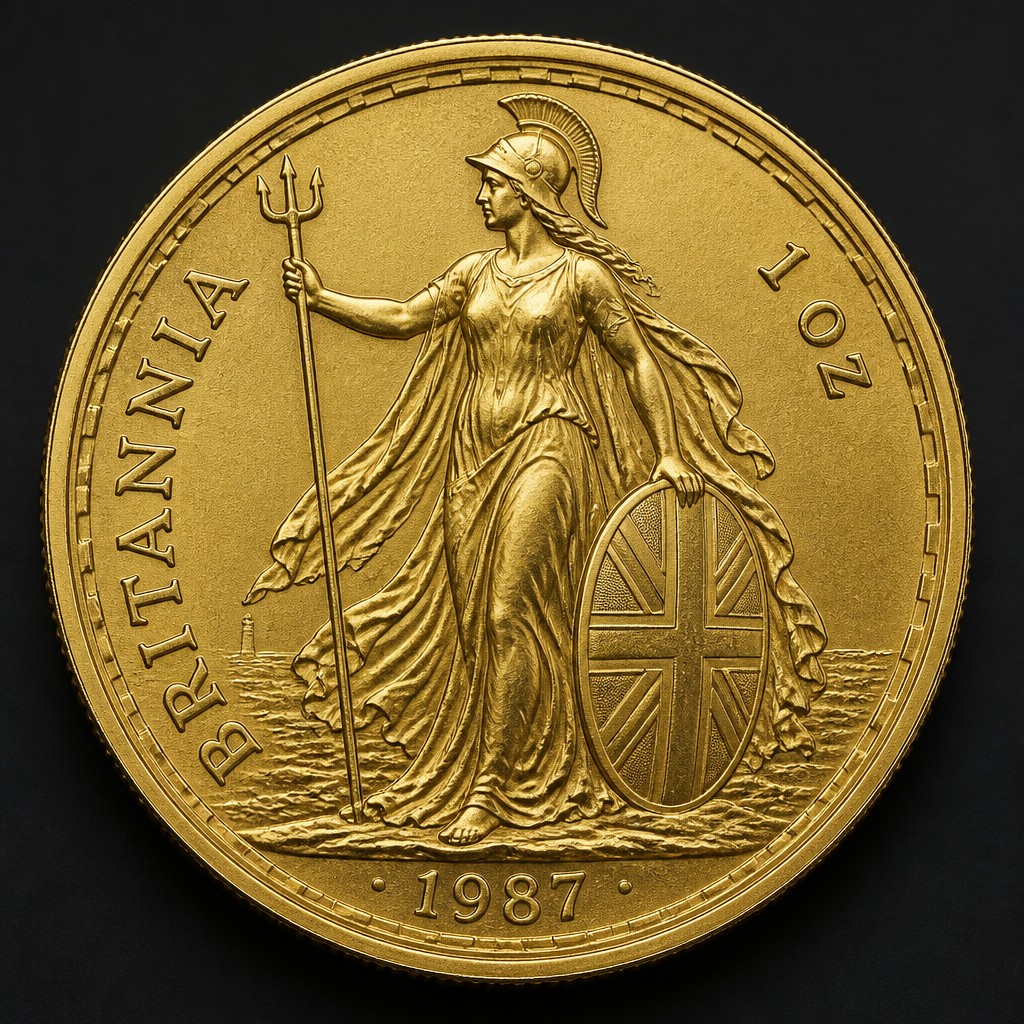
What Is the Coin
The Britannia is a bullion coin issued by the Royal Mint of the United Kingdom, first struck in gold in 1987 and in silver starting in 1997. It takes its name and reverse imagery from Britannia, the classical female personification of Britain.
Obverse Design
The obverse carries a portrait of the reigning monarch. Coins have shown several Queen Elizabeth II effigies over the decades, and coins dated 2023 onward feature King Charles III. The monarch's name and title appear in the surrounding legend along with the face value and date.
Reverse Design
The reverse depicts Britannia, typically shown standing or striding, holding a trident and shield (sometimes a lion at her side), with the sea and rays of light in the background. The specific artistic treatment has changed periodically since 1987, so the pose and background details vary somewhat by year while always retaining the trident-and-shield figure.
Size, Weight, Metal & Edge
From 2013 onward, both gold and silver Britannias are struck in .9999 fine metal; earlier gold issues were 22-carat (.9167 fine) and earlier silver issues were .958 fine (Britannia silver standard). The standard 1 oz gold coin weighs 31.10 g with a diameter of about 32.7 mm; the 1 oz silver coin has similar weight with a slightly larger diameter. Edges are reeded.
Security Features and Mint Identification
Since 2019, the Royal Mint has added advanced security features to Britannias, including a hidden animal privy mark that changes yearly (rotating through symbols such as a bee), a textured surface pattern, latent images, and micro-text around the design. These features sit within the coin's fields rather than a separate mint mark, since the Royal Mint is the sole producer.
Telling It Apart From Similar Coins
Because the Britannia figure has appeared on British coinage in various forms for centuries, collectors should be careful not to confuse the modern bullion Britannia with older pre-decimal pennies or halfpennies that also carry a seated Britannia design; those older coins are circulating coinage, not bullion, and have very different size, denomination, and metal content.
Grading and Condition at a Glance
For bullion-grade examples, check for strong, unbroken luster across Britannia's robes and shield, and inspect the fields for hairlines or bag marks. Sharpness in the fine wave lines behind Britannia is a useful indicator of an unworn, well-preserved example.
Authenticity Red Flags
Fakes often fail to reproduce the post-2019 micro-text and hidden privy mark accurately, or show soft, indistinct detail in Britannia's face and drapery folds. Incorrect weight or diameter, plating over a base-metal core, or a coin that reacts to a magnet are also clear warning signs. Because the design and security features have changed several times since 1987, comparing a coin against reference images for its specific year is more reliable than assuming every Britannia looks the same.
Frequently asked questions
What purity is the modern Britannia?
Coins from 2013 onward are .9999 fine in both gold and silver; earlier issues were 22-carat gold or .958 fine silver.
What security features help verify authenticity?
Since 2019, look for a hidden rotating animal privy mark, textured surface pattern, and micro-text worked into the design.
Is the seated Britannia on old pennies the same coin?
No, older British pennies and halfpennies with a Britannia design are historic circulating coinage, unrelated to the modern bullion Britannia series.
Whose portrait appears on current issues?
King Charles III appears on coins dated 2023 and later; earlier coins show various Queen Elizabeth II portraits.